Tether (USDT) news
$153.55 million in leveraged positions liquidated in 24 hours, 76% longs
Why it matters: The predominance of long liquidations and outflows from BTC ETFs point to trader caution ahead of the Fed's rate decision.

Binance sees $165M net USDT inflow in 24 hours
Why it matters: Stablecoin inflows to exchanges are often seen as a sign of growing buying power, but one platform's data is not enough to draw conclusions about the market.

Circle buys Tazapay for $400 million to expand USDC in emerging markets
Why it matters: The deal strengthens USDC's competition with USDT in developing countries and could accelerate growth in Circle Payments Network volumes.
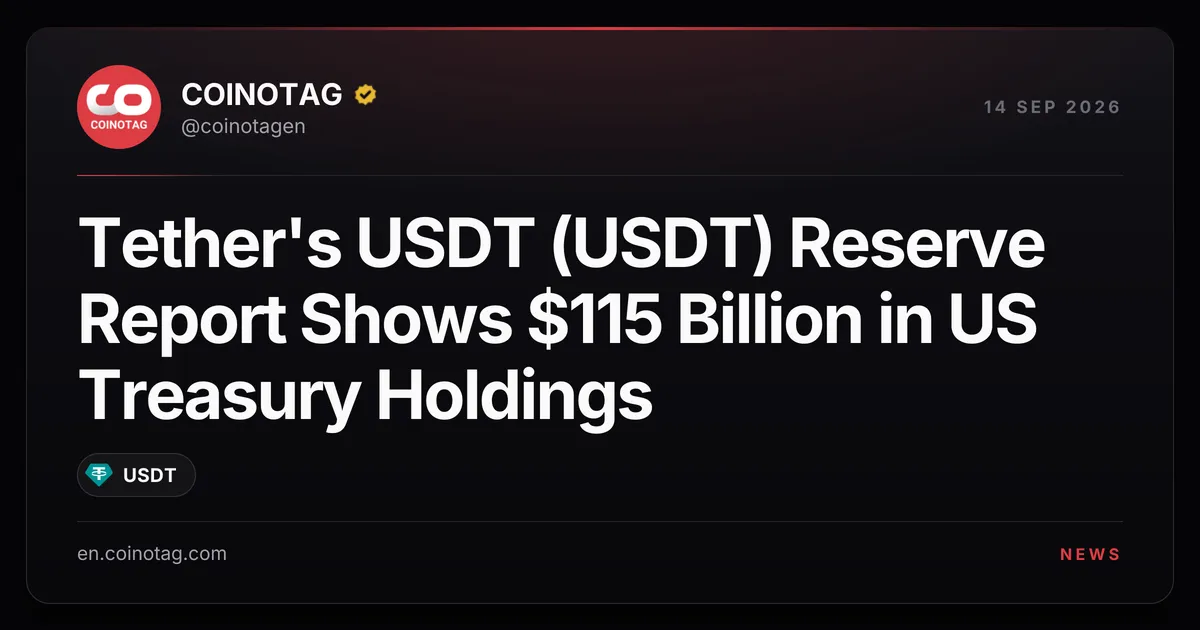
Tether reports $115 billion in short-term US Treasuries
Why it matters: Tether's growing reserves strengthen confidence in USDT, while new US and Thai rules set a standard for the stablecoin market.

206 BTC Withdrawn From Exchanges in a Day, US BTCUSDT Volume Jumps 297%
Why it matters: Rising U.S. volumes and a weekly inflow to exchanges may indicate increased trading activity by American investors.
Binance to support USDT contract swap on Optimism from September 17
Why it matters: Holders of USDT on Optimism do not need to do anything, but deposits and withdrawals on that network are temporarily unavailable.

Uniswap launches StablePair Hook to challenge Curve in stablecoins
Why it matters: Uniswap is challenging Curve's dominance in the stablecoin market, which could change the distribution of fees and liquidity in DeFi.
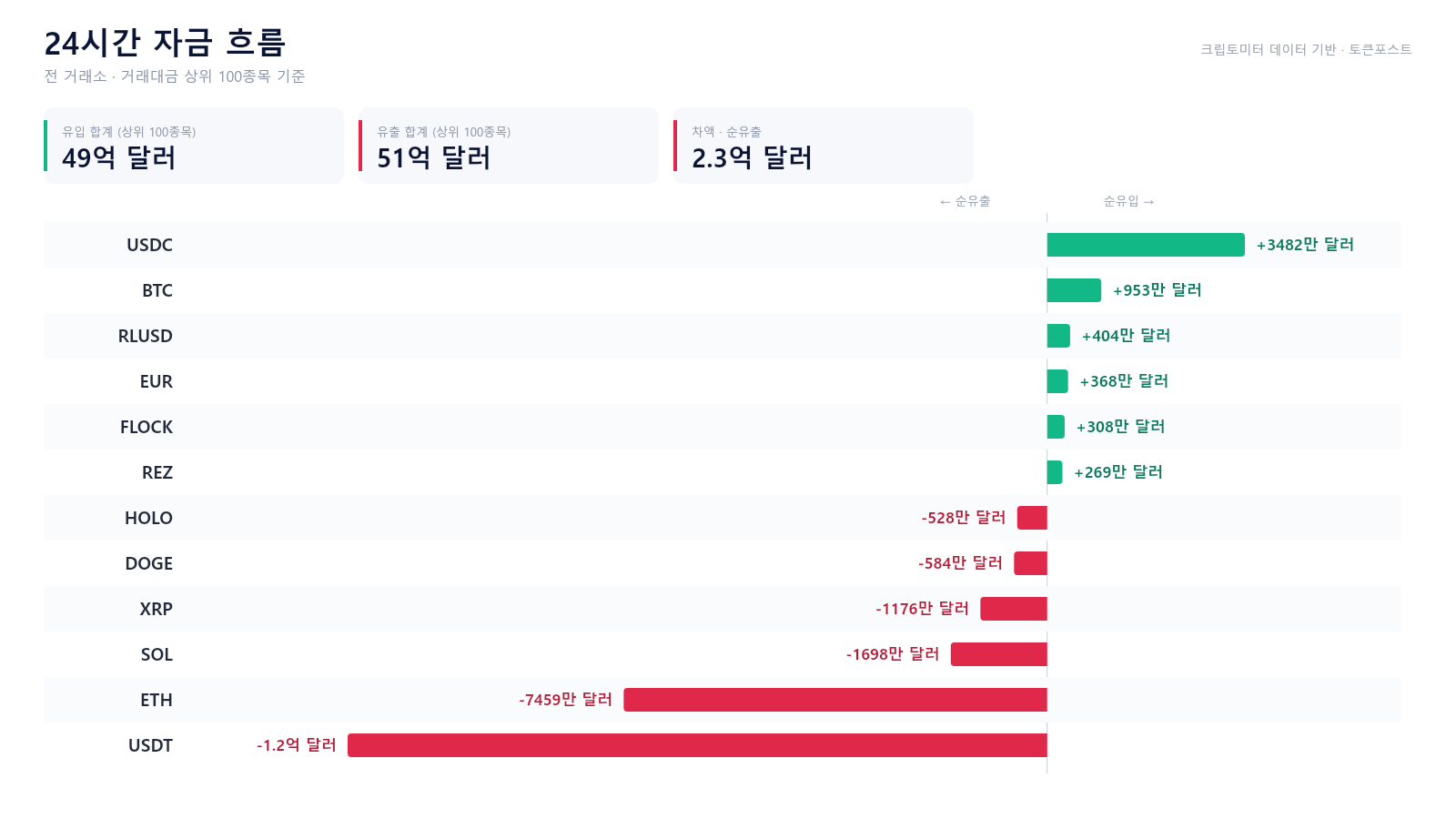
USDT and ETH see net outflows in 24 hours, USDC and BTC inflows
Why it matters: Capital shifting from USDT and ETH into USDC and BTC may indicate a change in investor preference toward more regulated stablecoins and bitcoin.

Circle buys Tazapay for $400M to expand USDC into new markets
Why it matters: Circle is strengthening USDC in developing markets where USDT dominates, which could shift the balance of power among stablecoins.
Bitcoin Retreats to $76,800 After U.S. Core Inflation Rises
Why it matters: Accelerating core inflation strengthens expectations of Fed tightening, weighing on Bitcoin and high-risk assets.

Upbit weekly trading volume rises to $800 million, XRP overtakes BTC
Why it matters: This shows that demand for XRP in Korea is consistently higher than for BTC, and local volumes can diverge from global ones.

Upbit: weekly trading volume $8 billion, XRP overtakes bitcoin
Why it matters: Demand for XRP/KRW on the Asian exchange supports the price and reduces volatility outside dollar order books.

Stablecoin market cap falls to $305.25 billion
Why it matters: A shrinking stablecoin market cap could signal an outflow of liquidity from the crypto market.

Crypto billionaires donated £72 million to Reform UK in two days
Why it matters: Britain may ban crypto donations, setting a regulatory trend for political finance in crypto.
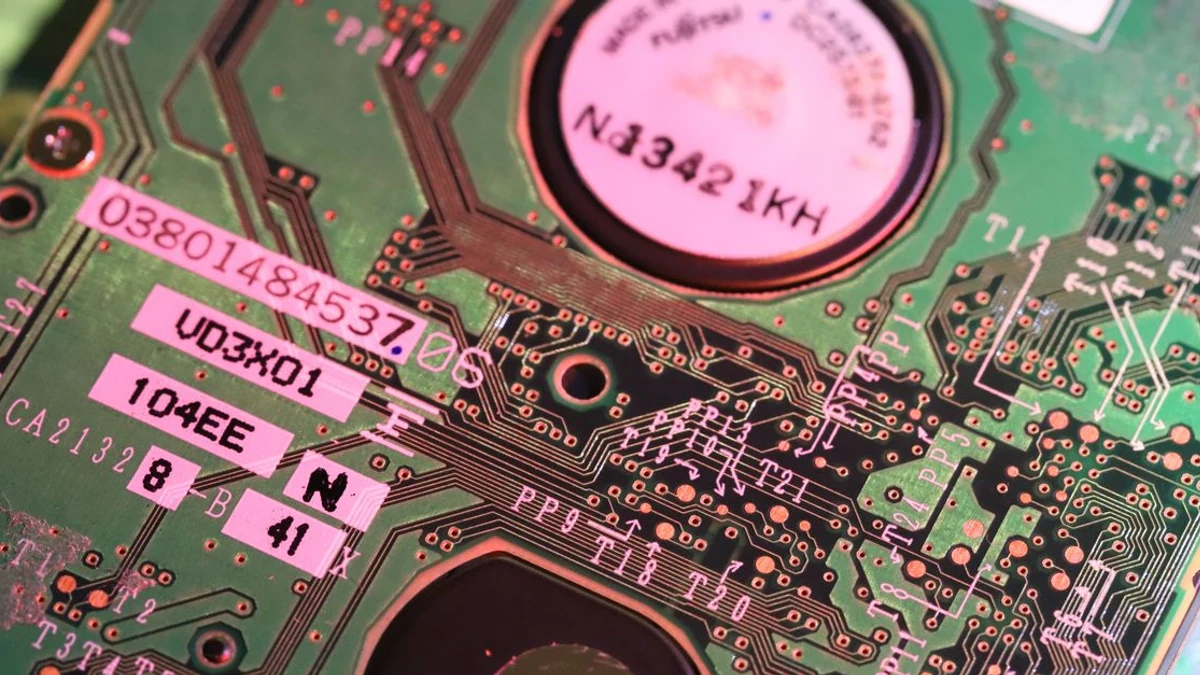
Mexican cartels mining crypto on GPUs, Tom's Hardware reports
Why it matters: Regulatory scrutiny of illegal mining and cartel crypto transactions could increase.

Lightchain AI selects five signers for DAO wallet
Why it matters: It shows how DAOs are building control over treasury payments through multisignature and KYC.

Chainflip loses $736K USDT in exploit tied to TRON integration
Why it matters: The incident highlights the risks of differences between blockchain integrations, and the network pause affects Chainflip users' swaps and liquidity.

Warren Davidson demands removal of Section 305 from CLARITY Act before Senate vote
Why it matters: The dispute over Section 305 could delay passage of the crypto market structure law and affect rules for freezing stablecoins.

Weekly recap: LAPTOP crashes 98%, Liquid resumes after 4,000 BTC theft, $245M stolen
Why it matters: Major exploits and the memecoin collapse are further eroding market confidence and drawing regulators' attention to security.
Thailand proposes $151,000 daily limit on stablecoin transfers
Why it matters: Thailand is tightening control over stablecoin flows between local platforms and the external market, which could complicate cross-border transfers.