Crypto regulation news
Regulators and lawmakers, SEC and CFTC decisions, court rulings, licences and ETF approvals in the US, Europe and Asia.

Vietnam targets 2026 launch for first licensed crypto service providers
Why it matters: Vietnam is building one of Southeast Asia's largest regulated crypto markets, potentially opening local capital to exchanges and investors.
ECB to Buy Tokenized Bonds With Own Funds as Pontes Goes Live
Why it matters: The ECB becomes the first major central bank to trade tokenized assets, accelerating institutional adoption of tokenization in Europe.

OCC Approves Three Crypto Trust Banks, Eroding Ripple's Regulatory Edge
Why it matters: A federal banking charter is becoming less scarce, weakening the exclusivity of Ripple's approval and intensifying competition in stablecoin infrastructure.

South Africa Plans to Extend FX Controls to Crypto Assets
Why it matters: If adopted, the rules would make South Africa a test case for strict FX oversight of crypto, pressuring exchanges and P2P transfers.
Bloomberg analyst: Clarity Act failure is politics and media bias, not industry's fault
Why it matters: The Clarity Act's failure leaves US crypto regulation to the SEC and CFTC, raising uncertainty for the market.

Russia's Central Bank in talks on mutual market access for Belarusian crypto platforms
Why it matters: Mutual access would give Belarusian platforms entry to Russian clients, but requires aligning rules and accounting for EU sanctions.

Bitcoin Holds Above $81,000 Despite CLARITY Act Failure and Fed Rate Hike
Why it matters: Markets showed agency rulemaking matters more than the stalled bill; $82,500 is the key resistance for further upside.

CFTC Sends Crypto Market Structure Rulemaking to White House Two Days After Clarity Act Failure
Why it matters: US regulators are racing to deliver crypto clarity through agency rulemaking after the Clarity Act failed, shaping oversight for years to come.

Russia's Central Bank Says First Licensed Crypto Firms May Appear by Year-End
Why it matters: A legal crypto market in Russia would open regulated access to BTC, ETH and USDT and set the framework for the industry.

MAS names AI, tokenization and quantum computing as key financial shifts for the next decade
Why it matters: Singapore is setting a regulatory benchmark for tokenization and AI in finance, shaping crypto infrastructure standards across Asia.

Russia Expands Regulated Crypto Access as Banks Prepare New Services
Why it matters: Regulated bank access opens the market to Russian investors, but strict limits and the payment ban are likely to cap demand.

ECB's Pontes Goes Live With One of Four Day-One DLT Platforms Running on XRP Ledger Tech
Why it matters: Institutions can adopt XRPL-derived rails without buying public XRP — 21Shares warns utility can scale without driving token demand.

21Shares Refines Injective ETF Plans: Nasdaq Listing, FTSE Index, 40–60% Staking
Why it matters: An ETF would broaden institutional access to INJ, a token with a market cap under $800 million, though approval timing remains unclear.
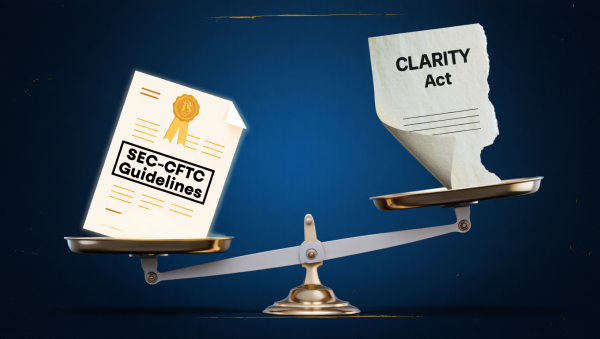
Coinbase: after CLARITY Act failure, SEC and CFTC will shape crypto policy
Why it matters: Without market legislation, the SEC and CFTC will set crypto rules through guidance and enforcement, increasing uncertainty for exchanges and tokens.

SEC's Tokenized Stocks Test Shifts to Market Structure, Not Novelty
Why it matters: If the tests succeed, tokenized equities could become regulated market infrastructure rather than a demonstration product.

Russia's central bank moves to give security services full access to crypto platform client data
Why it matters: Russia's regulated crypto market would face bank-level surveillance, sharply reducing user privacy and raising compliance costs for platforms.

Bitcoin holds near $84,000 after Fed hike: Crypto Week Ahead
Why it matters: The SEC's tokenized-stock pilot sets the tone for institutional demand, while U.S. macro data will shape the path of interest rates.

Eugene Investment and Vitoz to test stablecoin payment for tokenized stock subscriptions
Why it matters: The case shows traditional brokers moving toward on-chain settlement for tokenized assets, expanding stablecoin use.

Saylor: CLARITY Act failure is good for crypto industry
Why it matters: The CLARITY Act's failure shifts US crypto regulation toward SEC and CFTC rulemaking, accelerating tokenization while leaving the industry without permanent rules.

Study: Military Bets on Polymarket Win 52% of the Time vs 14% Platform Average
Why it matters: Polymarket's public on-chain ledger lets informed traders send a copyable signal, raising the risk of leaking sensitive operational details.