Uniswap (UNI) news

Bitcoin holds above $77,000 as NEAR and UNI post double-digit gains
Why it matters: NEAR and UNI gains against a steady bitcoin point to capital rotation into DeFi and L1 altcoins.
Crypto Market Rises 2-7%, Led by DeFi With a 6.8% Gain
Why it matters: A broad rebound following the Fed decision and the SEC's tokenization exemption signals a return of risk appetite in altcoins.

1.07M UNI worth $8.38M withdrawn from Binance, Bybit and OKX
Why it matters: A large UNI withdrawal from exchanges may point to preparation for long-term holding or an over-the-counter deal, reducing available supply.
UNI gains over 15%, NEAR over 20% in 24 hours
Why it matters: The accelerated gains in UNI and NEAR point to capital rotating into DeFi and L1 tokens amid the market recovery.
Weekly DEX volume falls 3.24% to $62.39 billion
Why it matters: The decline in DEX volumes signals weakening trading activity in the on-chain segment amid a broader market correction.
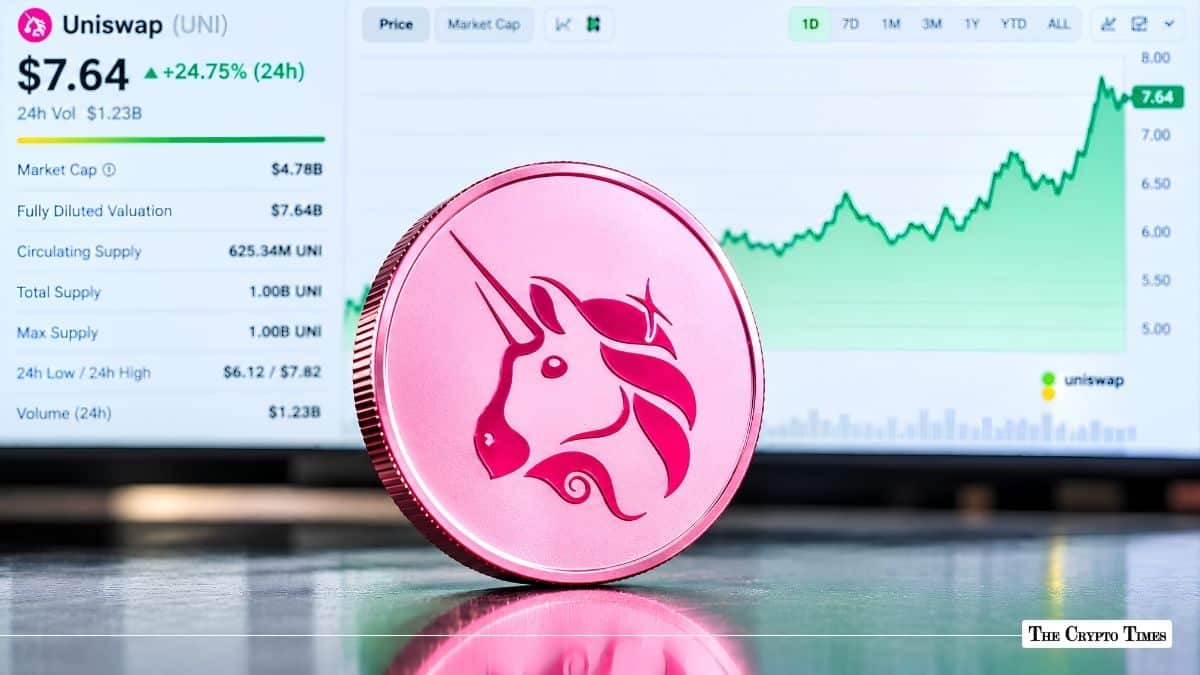
UNI jumps 23.5% to $7.65 on $1.27 billion in volume
Why it matters: The falling-wedge breakout and rising open interest point to a trend change; a weekly close above $7.78 opens the way to a $12.70 target.

Uniswap Unveils Permissioned Pools for DeFi Compliance
Why it matters: If institutions adopt the mechanism, it could accelerate the inflow of regulated capital into DeFi and set a compliance standard for DEXs.
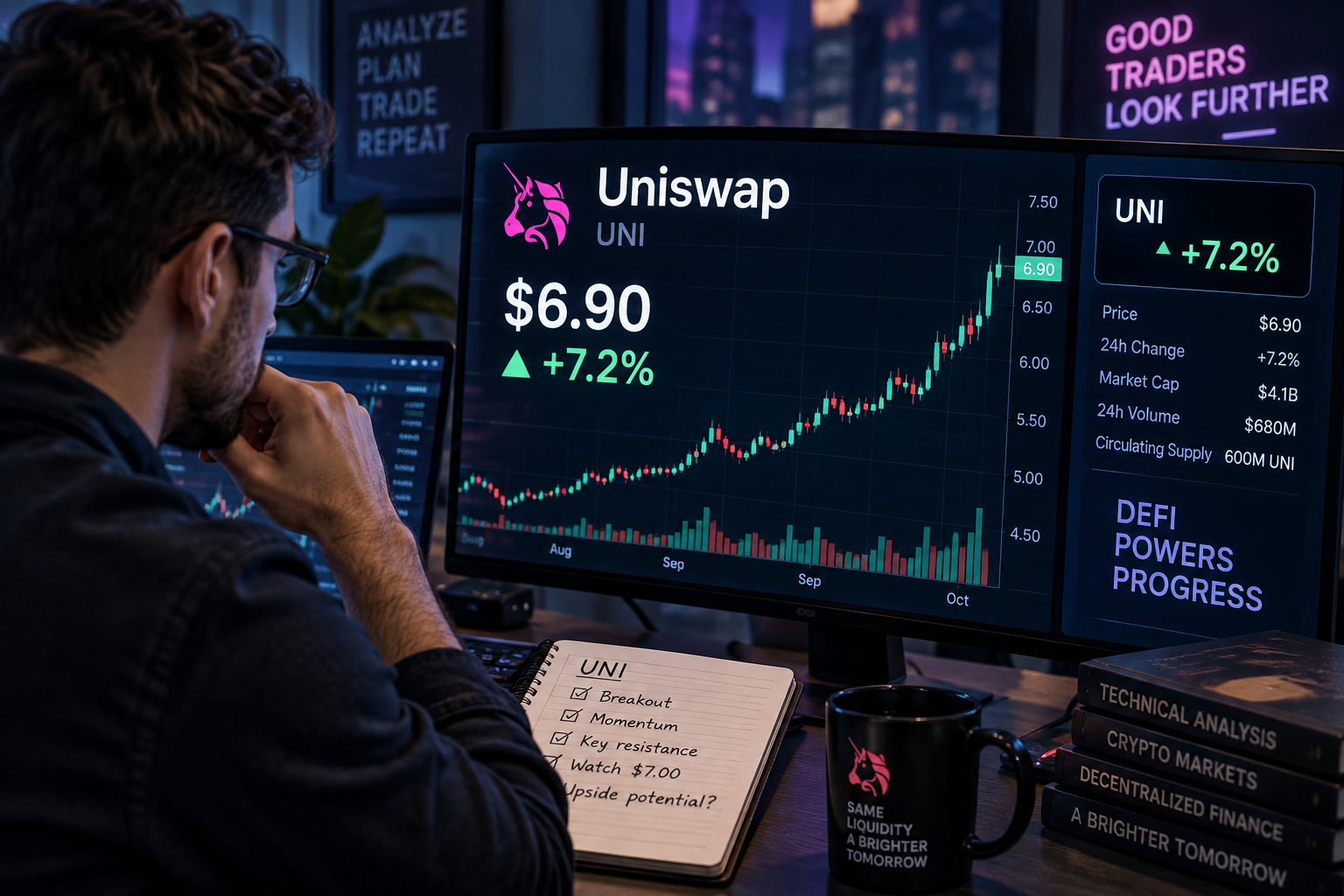
Uniswap breaks out of falling wedge: analysts eye UNI at $12.70
Why it matters: The wedge breakout and deflationary burn mechanism could boost demand for UNI, but the rally will only be confirmed by a weekly close above $7.78.

SEC Commissioner Peirce backs unimpeded trading on Uniswap
Why it matters: The SEC's signal of a softer approach to DeFi could open the way for Uniswap to operate legally in the U.S. and set a standard for other DEXs.
SEC grants Uniswap v4 exemption for permissioned pools in the U.S.
Why it matters: It sets a regulatory precedent for AMMs in the U.S. and could speed up DeFi protocols' access to American users.

Crypto market breadth flips: 89 of 100 assets gained for the week, bitcoin lags
Why it matters: Broadening participation with bitcoin lagging signals capital rotation into altcoins; confirmation would require several sessions of rising volume.

HTX Research: Memecoins Tied to Stock Tokens Emerge on Robinhood Chain
Why it matters: The pairing of tokenized stocks and memecoins creates a new speculative DeFi segment, but the model's sustainability depends on organic volume after incentives wind down.

UNI falls 3.34% to $6.42 after 97% monthly gain
Why it matters: UNI remains 85.7% below its all-time high of $44.95, and holding the 20-day SMA will determine whether the DeFi sector's correction continues.

UNI falls 6% to $6.23 amid broad market correction
Why it matters: The correction looks like profit-taking within an uptrend: UNI holds above SMA-30 ($5.36) and SMA-200 ($3.69), but MACD has given its first weakening signal.

Uniswap integrates Arc across all protocol versions
Why it matters: Growing stablecoin liquidity on Arc will intensify DEX competition and could increase Uniswap's trading volumes.

Uniswap tops 50% of spot tokenized asset trading volume
Why it matters: Growing RWA volumes strengthen Uniswap and UNI, but concentration among 1,400 wallets creates a risk of seller pressure.

FastLane launches public testing of onchain aggregator Moose on Monad
Why it matters: The test will show whether onchain routing can reduce slippage and MEV risks on Monad, but real volumes and execution quality are yet to be confirmed.

UNI Falls 2.62% to $6.22 Amid Senate CLARITY Act Vote
Why it matters: The CLARITY Act vote will determine the status of governance tokens like UNI, so the outcome could set the direction of movement.

Dragonfly and Uniswap defend Robinhood Chain against critics
Why it matters: The debate over Robinhood Chain's low-fee model matters for assessing L2 sustainability and revenue for Arbitrum and Uniswap.

UNI up 91% since August as annualized burn rate tops $250M
Why it matters: UNI's rally is now tied to real fees and burning, but its durability depends on whether Robinhood Chain volume becomes the norm rather than a one-off record.