Uniswap (UNI) news

Hyperliquid breaks $90 as ARB, UNI and NEAR jump 25% in a day
Why it matters: The altcoin rally amid SEC regulatory easing signals capital rotating out of bitcoin into DeFi and L2 tokens.
Bitcoin breaks $80,000 on SEC regulatory relief, altcoins rally
Why it matters: The SEC's regulatory relief strengthens expectations for growth in blockchain infrastructure for tokenized equities, supporting altcoins.
UNI Rises 48% to $8.87 After SEC Opens Door to Tokenized Stocks
Why it matters: Regulatory recognition of the AMM model could give Uniswap a new use case, but it does not guarantee a rise in the value of the UNI token.

UNI and HYPE surge 30% and 13% on SEC tokenization rules
Why it matters: The rally in DEX tokens shows tokenized stocks are becoming a key driver of volume on on-chain venues.
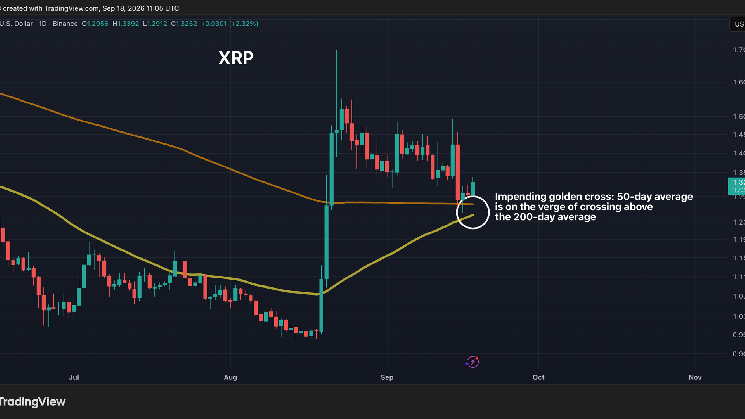
XRP nears golden cross as Bitcoin dominance falls below 59%
Why it matters: Rotation into altcoins may accelerate, but XRP's history shows the golden cross provides only short-term momentum.
DeFi and L2 lead rally: UNI +25%, ARB +25%, open interest hits $141.2B
Why it matters: Rising open interest on falling volume points to new positions rather than short-term speculation, signaling that risk appetite is returning to altcoins.
Whale with 1.97M UNI turns $13M loss into $293K profit
Why it matters: A large holder returning to profit signals recovering demand for UNI after the token's rally.
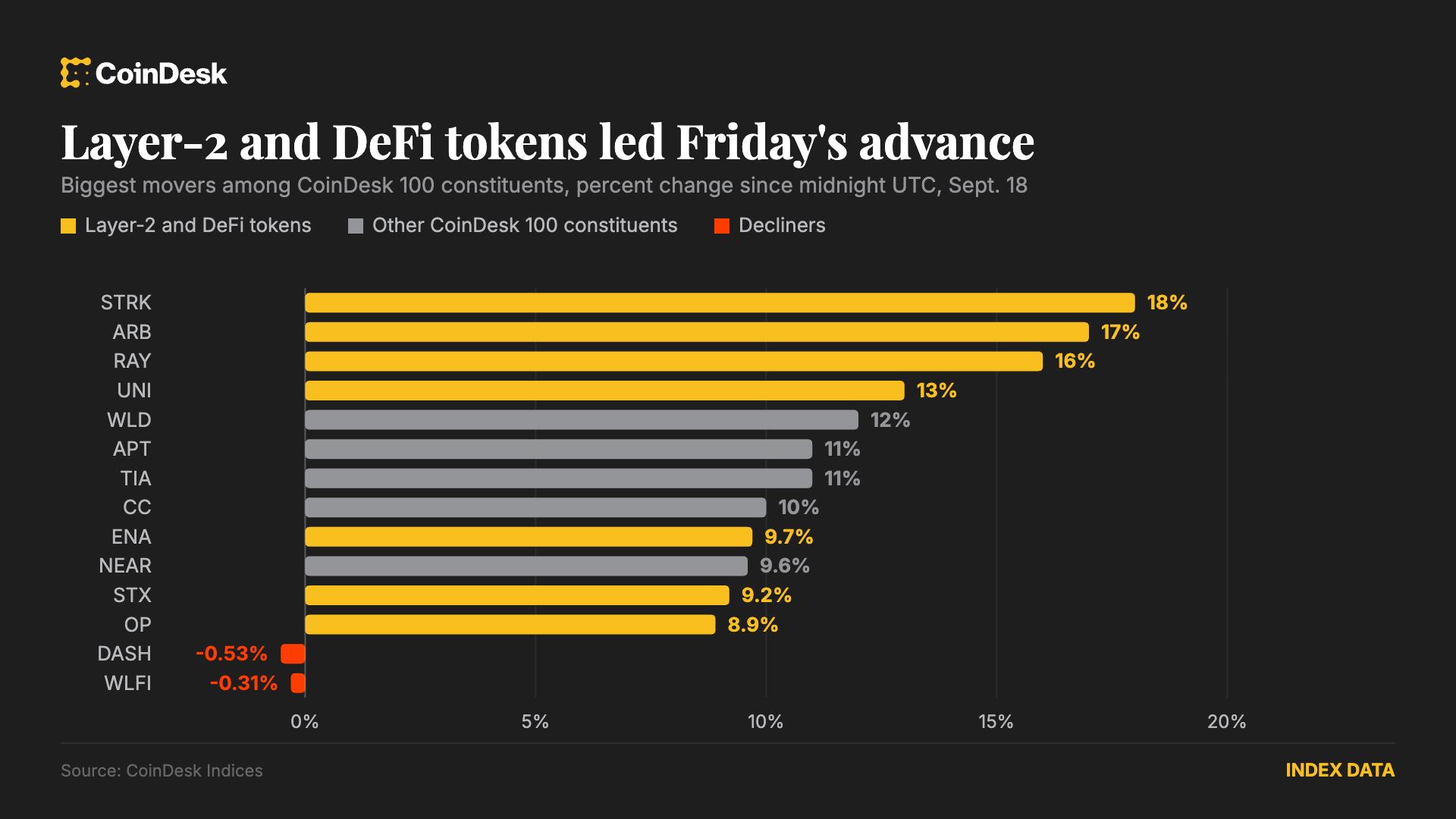
L2 and DeFi tokens lead market rally as Fed rate nerves ease
Why it matters: The rotation of capital into L2 and DeFi tokens signals a return of risk appetite after the shock of the Fed rate hike.

Bitcoin back at $78,000 as altcoins lead rally: UNI +33%, ARB and NEAR +27%
Why it matters: Broad altcoin gains after easing macro pressure point to a return of risk appetite; sustainability depends on bitcoin holding $78,000.

UNI breaks $9.15 with 33.83% daily gain
Why it matters: UNI accelerates its rally amid SEC regulatory easing and rising DeFi activity, boosting interest in DEX tokens.
Uniswap and Arbitrum surge nearly 30% after US tokenized stocks approval
Why it matters: The SEC exemption opens the way to mass tokenization of stocks in the US, boosting demand for DeFi protocols and L2 networks.

Wallet sells 500K UNI after accumulating 1M over six months
Why it matters: Large whale sales could add pressure on the UNI price, but a single transaction is not enough to judge the trend.
UNI jumps 37% in a week to $8.59 amid SEC opening tokenized stocks
Why it matters: UNI's rally is supported by the SEC opening access to tokenized stocks, which expands the protocol's potential utility.

UNI jumps 27% in a day to $8.85 on Arc launch and SEC exclusion
Why it matters: The rally is supported by the Arc launch and the SEC's allowance for tokenized equities, but an RSI near 76 signals overheating.

Trader earns $1.59M on UNI and LIT longs, with 991% return on UNI
Why it matters: Large unrealized profits on UNI longs reflect the sharp rally in the Uniswap token and elevated risk appetite in the DeFi sector.
UNI jumps 170% in a month, from $3.2 to $8.5 on token burns and Robinhood Chain
Why it matters: The UNI burn model ties the token's price to protocol revenue, which could change how DeFi assets are valued and attract institutional capital.

Bitcoin at $77,681: NEAR, UNI and ARB Jump 20–30% After SEC Exclusion
Why it matters: The post-Fed rebound and SEC regulatory easing restored risk appetite; holding $77,000 would open the path to $80,000.
Whale Sells 600K UNI for $5.1M, Sends Another 100K to OKX
Why it matters: Pressure from a large holder on UNI's price could intensify the sell-off if they continue moving tokens to exchanges.
Uniswap: 80% of Robinhood tokenized stock volume goes through protocol, total $10B
Why it matters: Uniswap's growing share in tokenized stocks strengthens the position of DEXs in the RWA and tokenization of traditional finance assets segment.
ARB jumps 32.7% to $0.22, NEAR and UNI gain about 26%
Why it matters: Broad altcoin gains indicate a return of risk appetite following the market rebound.