Bitcoin (BTC) news
Ned Davis Research forecasts bitcoin at $170,000 by 2030 and $230,000 by 2035
Why it matters: The long-term targets contrast with the $450 million outflow from spot BTC ETFs on September 15 and the price's proximity to mining costs.

XRP falls nearly 8%, Bitcoin drops to $75,800 after CLARITY Act fails in Senate
Why it matters: The CLARITY Act's failure hits altcoins and exchanges harder than BTC; a return above $78,189 would signal the removal of the regulatory premium.

Bitcoin rebounds to $76,628 after CLARITY Act fails; ETF outflows hit $1.11B
Why it matters: The divergence between rising prices and ETF outflows points to weak institutional demand; key BTC resistance sits at $77,296.

Bitfinex: bitcoin recovers to $76,500 after Fed rate hike
Why it matters: The $77,100 and $75,000 levels will determine bitcoin's direction in the coming days after the hawkish Fed decision.

Bitcoin ETFs see $328 million in daily outflows, $920 million for the week
Why it matters: Sustained ETF outflows signal weakening institutional demand and could amplify volatility in bitcoin and ether.
Pentagon runs classified bitcoin projects for 'strategic advantage'
Why it matters: The signal of U.S. military involvement in crypto reinforces the narrative of state interest in bitcoin.

Gary Gensler: bitcoin is the only crypto that resembles a commodity
Why it matters: The former SEC chair's remarks reaffirm bitcoin's commodity status and widen the regulatory gap between bitcoin and altcoins.

CLARITY Act failure fails to halt growth of tokenized equities to $2.95B
Why it matters: Institutional demand for tokenization is growing regardless of regulatory decisions, which could support market risk appetite.

Warsh Chooses Market Stability Over Trump's Demands
Why it matters: The unanimous decision signals Fed independence under Warsh, reducing the risk of political pressure on rates, but tightening weighs on crypto and risk assets.

Deutsche Bank expects MiCA license to launch BTC and ETH custody by year-end
Why it matters: A major systemically important EU bank entering regulated crypto custody strengthens institutional access to BTC and ETH.

Bitdeer sold 1,506 BTC for $105M in August, reserves fell to 61 BTC
Why it matters: Regular monthly miner sales add BTC supply to the market, while the pivot to AI reduces dependence on the bitcoin price.
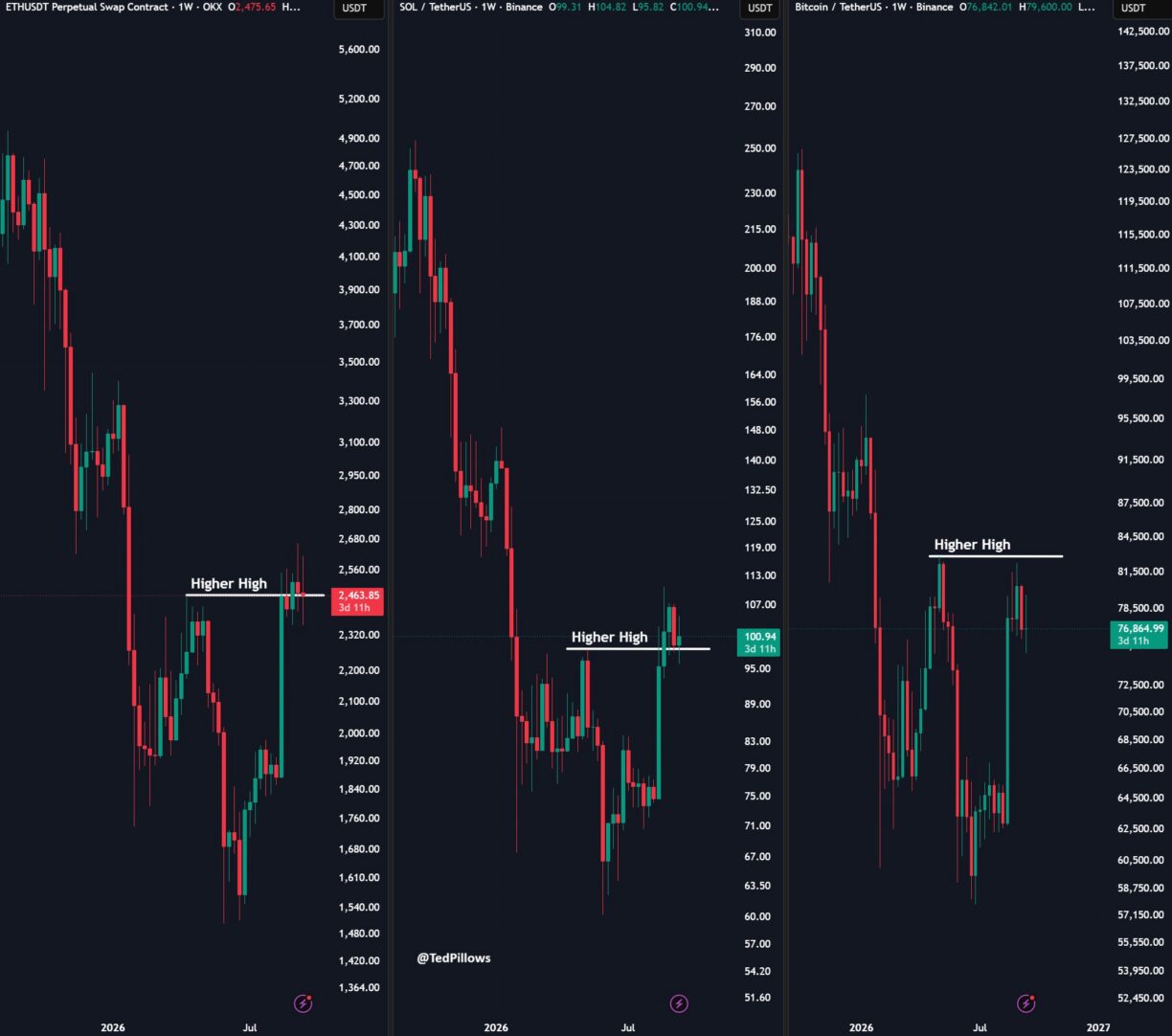
US jobless claims fall to 196K, bitcoin briefly hits $76,800
Why it matters: A strong labor market reduces the chances of near-term Fed easing, weighing on risk assets including bitcoin.

Dudley: Fed's 0.25 pp rate hike is too little
Why it matters: A longer tightening cycle weighs on risk assets including bitcoin, but boosts revenues for stablecoin issuers.

$369 million liquidated in 24 hours, 61.5% in shorts
Why it matters: The dominance of short liquidations points to a market rebound and pressure on bearish positions.

Coinbase Institutional Moves 679 BTC Worth $51.7M to Unknown Wallet
Why it matters: A large exchange withdrawal may indicate preparation for a sale or a transfer to custody, affecting BTC supply on the market.

Experimental rust-lightning Fork Adds Post-Quantum Protection for Lightning
Why it matters: It shows that Lightning infrastructure could get quantum protection earlier than the main blockchain, but at the cost of higher node requirements.

BIS: Bitcoin transfer volume estimates vary by up to six times
Why it matters: On-chain metrics should be read as rough estimates rather than direct measurements of economic activity.

JPMorgan expands digital assets team in consumer bank
Why it matters: The largest US bank is building a consumer layer on top of blockchain infrastructure, accelerating the integration of digital assets into traditional banking.

Crypto millionaires fall to 135,694; crypto owners reach 742 million
Why it matters: The decline in large holders reflects the market correction, but growth in the owner base to 742 million points to expanding adoption.

AI doesn't create Bitcoin vulnerabilities, it just makes finding them cheaper
Why it matters: It underscores the importance of early auditing and testing for crypto infrastructure security amid growing AI capabilities.