Crypto regulation news
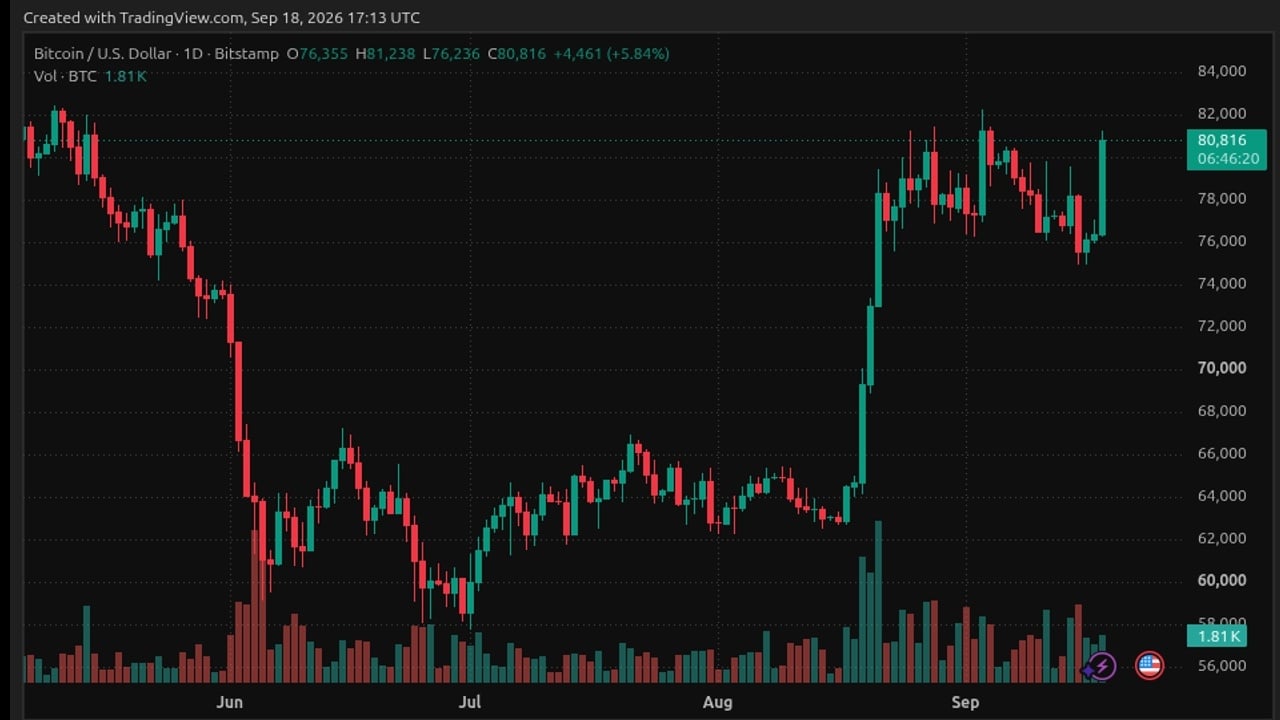
Bitcoin breaks $81,000 after CFTC sends crypto rules to White House
Why it matters: The return above $80,000 after the CLARITY Act's failure shows the market is betting on SEC and CFTC regulatory action bypassing Congress.

CFTC and SEC ease rules for crypto developers and tokenized stocks on same day
Why it matters: It reduces regulatory uncertainty for infrastructure and opens the path to on-chain stock trading in the U.S.
Bitcoin climbs to $81,000, NEAR adds 32% on tokenization news
Why it matters: The SEC exemption opens the way for tokenized stocks on DeFi platforms, boosting demand for infrastructure tokens like UNI, ARB and NEAR.

CLARITY Act failure could bring intermediaries back to crypto, GenLayer CEO says
Why it matters: Without legislation, rules remain with the SEC and CFTC, increasing the risk of centralized access to DeFi for U.S. users.
Tom Lee: crypto market will keep growing even without CLARITY Act
Why it matters: A signal to investors that the U.S. regulatory deadlock does not block market growth.

U.S. court: ex-SVB executives liable for risk management failure, $1.71 billion claim offset
Why it matters: The precedent on risk management liability matters for assessing the resilience of stablecoin custodian banks: in 2023, USDC lost its peg due to Circle's $3.3 billion in reserves held at SVB.

CFTC extends Phantom relief to all passive crypto wallets and DeFi interfaces
Why it matters: It reduces regulatory risk for wallets and DeFi frontends in the U.S., but does not resolve the question of criminal liability for developers.

Brazil's crypto community sets election priorities as only 8% of lawmakers take a crypto stance
Why it matters: Pressure on candidates could speed up balanced crypto regulation in Brazil, Latin America's largest market.

Tunica-Biloxi tribe launches first tribal prediction market app in the US
Why it matters: Prediction markets are gaining a new distribution channel through tribal structures, expanding the market and setting a regulatory precedent.

Lummis blasts Democrats over failed investor protection bill
Why it matters: The bill's failure prolongs regulatory uncertainty in the U.S. and heightens risks for digital asset investors.

Ohio begins accepting cryptocurrency for business registrations and fees
Why it matters: The expansion of crypto acceptance by U.S. government agencies strengthens the legitimacy of digital assets as a means of payment.

CFTC sends crypto asset rule for interagency review
Why it matters: The rule could accelerate the emergence of clear requirements for crypto asset trading in the U.S. and affect exchanges and brokers.

Banks double MiCA registry presence, share reaches 23%
Why it matters: The growing share of banks in the MiCA registry shows traditional financial institutions are increasingly entering the EU's regulated crypto market.

CFTC eases launch of prediction markets in apps without broker registration
Why it matters: Prediction markets could be embedded in any app, intensifying competition with Robinhood and Coinbase and widening access to crypto derivatives.
Chainalysis: Global crypto tax base reaches $457 billion
Why it matters: Growing tax oversight through on-chain data increases pressure on holders and exchanges, boosting the transparency of crypto operations.

Bitcoin breaks $80,000 on SEC regulatory relief, altcoins rally
Why it matters: The SEC's regulatory relief strengthens expectations for growth in blockchain infrastructure for tokenized equities, supporting altcoins.
CFTC sends new crypto market regulation proposal to White House after CLARITY Act fails
Why it matters: The CFTC is taking the initiative on crypto regulation amid the stalled legislation, which will speed up the emergence of market rules.

Bitcoin Falls Below $76,000 After CLARITY Act Vote Fails
Why it matters: The CLARITY Act's failure delays regulatory clarity in the U.S., adding pressure on bitcoin ahead of the Fed's decision.

UNI Rises 48% to $8.87 After SEC Opens Door to Tokenized Stocks
Why it matters: Regulatory recognition of the AMM model could give Uniswap a new use case, but it does not guarantee a rise in the value of the UNI token.

US Labor Dept proposes rules for private assets in 401(k) plans
Why it matters: The rules could open private assets to 90 million 401(k) participants, but they do not guarantee returns or remove investment risks.