Crypto regulation news

Hong Kong to pilot tokenization of Exchange Fund bills by end-2026
Why it matters: Expanding tokenization of government debt and regulated stablecoins strengthens Hong Kong as an institutional crypto hub and sets a benchmark for other jurisdictions.

Han Dong-hoon calls for another delay to South Korea's digital asset tax
Why it matters: A tax delay would ease pressure on Korean crypto investors, but it postpones the formation of market regulation.

India orders Truecaller to share spam reports via carriers' blockchain platform
Why it matters: The regulation hits Truecaller's largest market and sets a precedent for transferring private services' data into carriers' blockchain infrastructure.
Coinbase CEO denies WSJ claims on CLARITY Act failure, backs final version
Why it matters: The public clash between the largest U.S. exchange and the media and banking lobby reflects the battle over crypto regulation rules after the CLARITY Act's failure.
Ripple lawyer urges crypto industry unity after CLARITY Act fails
Why it matters: The failure of the market structure bill leaves crypto without federal rules, and a fragmented lobbying effort reduces the chances of a new compromise.

OCC grants Bastion conditional national trust bank charter
Why it matters: A federal charter replaces dozens of state licenses and signals that stablecoin infrastructure is being brought inside the U.S. banking perimeter.

Visa closes loophole for earning cashback on memecoin purchases
Why it matters: The cashback restriction could reduce memecoin purchase volumes via credit cards and set a precedent for other payment systems.

Whale opens $90M bitcoin long ahead of CFTC crypto rules sent to White House
Why it matters: CFTC rules could give the market partial clarity, but their scope is narrower than legislation and they are vulnerable to policy shifts.

CLARITY Act failure preserves stablecoin rewards as banks push back
Why it matters: The fate of stablecoin rewards hinges on whether regulators deem them a workaround for interest, which will determine revenue for Coinbase and Circle.

SEC and CFTC back crypto innovation after CLARITY Act failure
Why it matters: A softer regulatory tone could accelerate institutional inflows and the launch of new crypto products in the U.S.
SEC receives updated 21Shares spot Injective ETF filing
Why it matters: Expanding the lineup of U.S. spot crypto ETFs to altcoins strengthens institutional access to INJ.

Argentina to start CARF crypto data exchanges in 2029
Why it matters: It expands tax transparency for crypto transactions and tax authorities' access to foreign exchange data, increasing pressure on tax evasion.
CoinShares: bitcoin unlikely to hold above $80,000 by year-end
Why it matters: The absence of rate cuts and the delay of market structure legislation limit capital inflows into bitcoin through year-end.
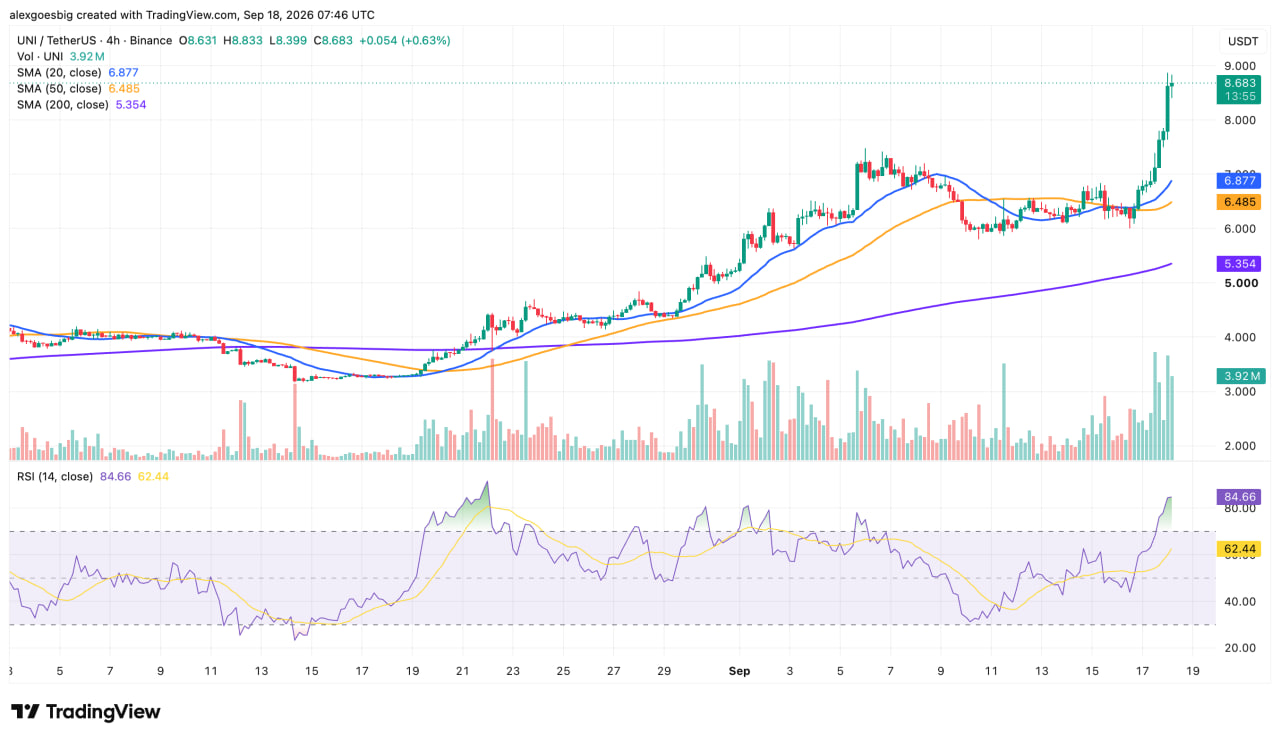
ARB, UNI and NEAR lead gains after SEC exemption for tokenized stocks
Why it matters: The SEC exemption turns Uniswap and Arbitrum into key infrastructure for on-chain stocks, which could sustainably re-rate the DeFi sector.

UNI jumps 19% to $7.91 on SEC exemption for tokenized stocks
Why it matters: The SEC's recognition of Uniswap v4 pools strengthens the tokenized stocks narrative and could attract institutional demand for UNI.

Paul Barron: SEC exemption for tokenized stocks will make Solana the biggest beneficiary
Why it matters: Growth in stock tokenization could increase transaction load and demand for SOL, intensifying Solana's competition with Ethereum for institutional flows.

Coinbase shares jump 12% after SEC approves tokenized stocks
Why it matters: It opens a legal path for trading tokenized stocks on crypto platforms, strengthening the link between TradFi and crypto.

XRP bounces 7% to $1.39 after CFTC rule filings
Why it matters: The bounce rests on short covering rather than sustained demand: without new buying, XRP may fail to hold $1.40.

Bitwise CIO compares tokenization boom to early Nvidia AI rally
Why it matters: A signal of institutional recognition for tokenization: the S&P deal and SEC rules could accelerate capital inflows into on-chain assets.

Banks take nearly a quarter of the MiCA register: 80 credit institutions out of 349
Why it matters: Banks are entering the crypto market faster through the simplified Article 60 pathway, intensifying competition with CASPs ahead of the Dec. 30, 2026 end of transitional regimes.