Crypto news today
Bitget institutional client assets up 45%
Why it matters: Bitget's institutional segment growth reflects intensifying competition among exchanges for large clients and demand for professional infrastructure.
White House lobbies Republicans ahead of CLARITY Act vote
Why it matters: The vote's outcome will determine the structure of US crypto regulation and affect the stablecoin market.
Large wallet withdraws 453,700 SOL worth $46.6M from Coinbase and stakes it
Why it matters: The outflow of SOL from exchanges into staking reduces available supply and may indicate a long-term position by a large holder.

HYPE hits all-time high on $400M buyback, but Binance threatens revenue
Why it matters: The sustainability of HYPE's buyback depends on fee revenue that is flowing to Binance — a key risk for the token's price.

Bitcoin Core 32.0 to launch October 10: 60% of nodes will lose support
Why it matters: Node operators should upgrade to 31.x before October 10, or they will be left without security fixes.

Tonkeeper rebrands to Keeper with support for 7 networks, including BTC and ETH
Why it matters: The TON ecosystem wallet is entering the multi-chain market, intensifying competition among non-custodial wallets.
SEC Chair: crypto rules will proceed regardless of Senate vote outcome
Why it matters: Crypto regulation in the US is now advancing on two tracks — through Congress and through the SEC — reducing the market's dependence on the vote outcome.
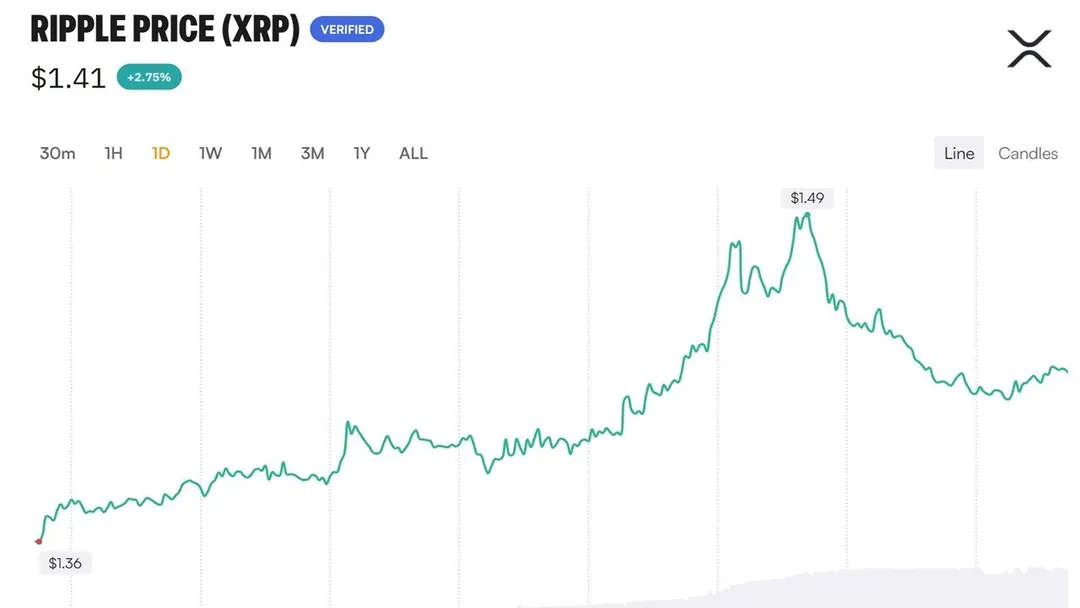
XRP rises 9.8% to $1.49 on CLARITY Act expectations, but Polymarket puts odds at 18%
Why it matters: The CLARITY Act vote and the Fed's decision on September 16 will determine XRP's direction in the coming days.
Binance Wallet to support Arc mainnet on launch day
Why it matters: Support from the largest wallet will accelerate the inflow of users and liquidity into the Arc ecosystem from day one.

Bulgaria passes law on crypto tax reporting under EU rules
Why it matters: Bulgaria is joining the DAC8 tax information exchange system, tightening oversight of crypto operations in the EU.
ECB invites merchants to digital euro pilot in 2027
Why it matters: The pilot brings the launch of a CBDC in the eurozone closer, which could change payment infrastructure and competition with stablecoins.

XRP at $1.41: trading volume up 139%, open interest at $3.05 billion
Why it matters: Rising volume and open interest while holding above $1.35–1.36 confirms the breakout; a close above $1.38 opens the path to $1.60.
Binance Alpha to launch apM Fashion (APM) airdrop on September 17
Why it matters: The new listing and airdrop on Binance Alpha draw attention to the APM token and boost activity among platform users.
US August inflation hits 3.4% as Fed weighs rate decision on Sept 15-16
Why it matters: The Fed's decision will shape the dollar and risk assets, including bitcoin, in the coming weeks.
Bessent: CLARITY Act key to US winning global crypto race
Why it matters: The Treasury's stance increases pressure on the Senate ahead of a vote that will determine regulatory certainty for the US crypto market.

Whales trim BTC positions as retail adds, market eyes return to $80,000
Why it matters: The shift from whales to retail without aggressive selling reduces the risk of cascading losses, but gains are only possible above $80,000.

Ripple unlocks 1 billion XRP but returns 700 million to escrow
Why it matters: Ripple's monthly XRP unlocks are predictable, and the market focuses not on the unlock size but on how much Ripple returns to escrow and sells.
Turnkey adds token swaps and yield products to wallet infrastructure
Why it matters: The expansion intensifies competition among infrastructure providers and makes it easier for fintech apps to launch crypto features.
Bitcoin at $76,800 as ETFs return to inflows before FOMC and CLARITY Act vote
Why it matters: The market awaits the Fed's Sept 17 decision and the procedural CLARITY Act vote, both of which could sharply increase volatility.
XRP ETFs draw $5.1 million as bitcoin funds lose $282.6 million
Why it matters: The flow divergence shows persistent institutional demand for XRP; a break above $1.40 opens the way to $1.60, while losing $1.30 is a bearish signal.