Crypto news today
Latin American regulators discuss where to hold USDT and USDC reserves
Why it matters: Reserve custody rules will determine whether local banks and exchanges can work with USDT and USDC without restrictions.
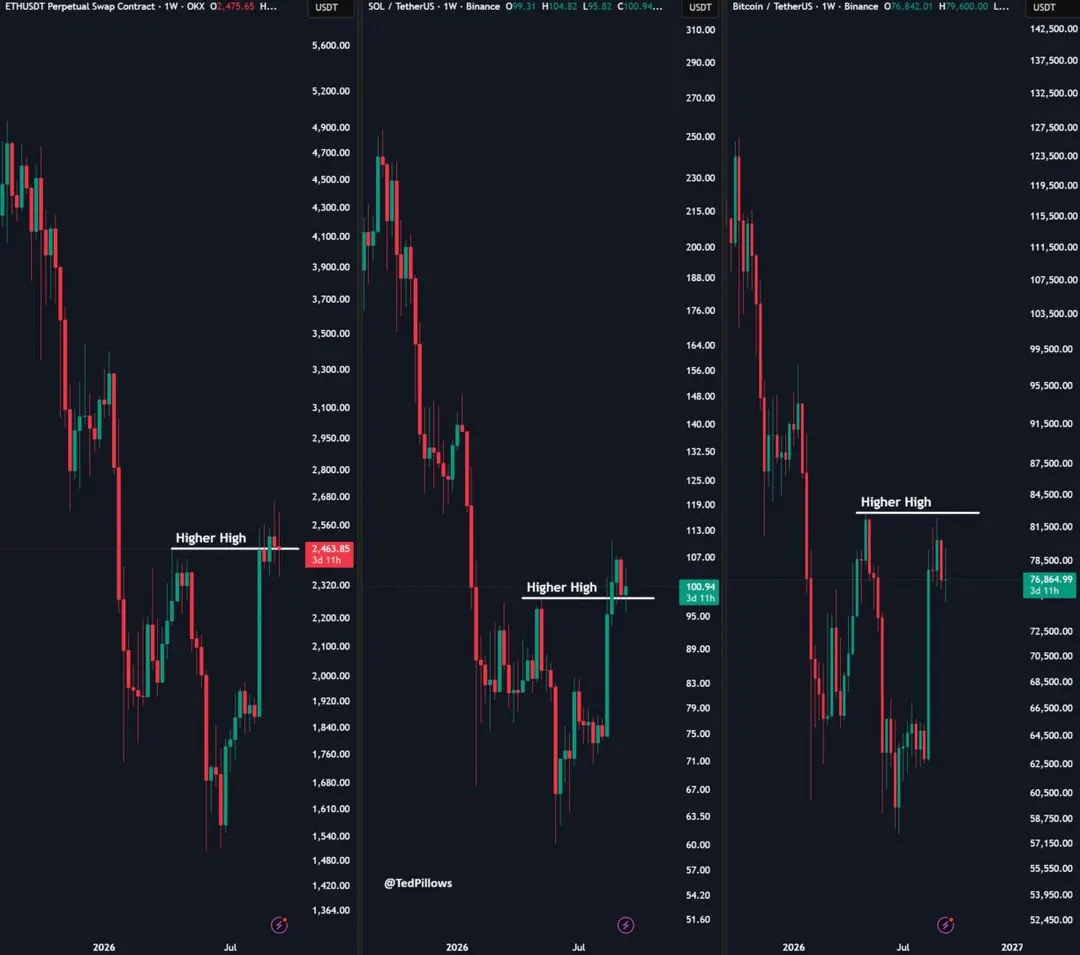
US jobless claims fall to 196K, bitcoin briefly hits $76,800
Why it matters: A strong labor market reduces the chances of near-term Fed easing, weighing on risk assets including bitcoin.

Wormhole confirms cross-chain capabilities for Ripple's stablecoin
Why it matters: Cross-chain support intensifies competition among stablecoins and could accelerate institutional adoption.

KuCoin suspends deposits on QKC and CAMP networks
Why it matters: Holders of QKC and CAMP should note that topping up accounts on KuCoin is temporarily unavailable.

CFTC issues no-action position for passive software providers
Why it matters: It reduces regulatory uncertainty for trading software developers and eases access to regulated derivatives markets.

PROSPER launches Performance Markets on Pharos with token buybacks funded by fees
Why it matters: The model separates a speculative token from a share in a strategy, creating a market for curator reputation without transferring rights to the assets.

Tenka raises pre-seed round led by Maven 11 for on-chain private credit infrastructure
Why it matters: The project targets the illiquidity of the private credit market, giving institutions an on-chain exit from positions before loans mature.

Bank of England cuts QT pace to £46 billion a year and drops direct long-gilt sales
Why it matters: A slower QT reduces pressure on long-term rates and global liquidity, which typically supports risk assets, including crypto.

Ethena shifts revenue model toward RWA instead of bitcoin dependence
Why it matters: Diversification into RWA and payments could make USDe more resilient in a bear market, but launching ENA buybacks requires more than doubling supply.

Blockworks launches AI compliance alerts for exchanges after Messari acquisition
Why it matters: Institutions gain automated oversight of the crypto market, lowering the barrier for banks entering digital assets.

Binance ends ONEUSDT price protection, moves to standard mark price calculation
Why it matters: The change in mark price calculation affects liquidations and margin on ONEUSDT positions, which could increase volatility in the contract.

IXS Finance launches tokenized high-yield bond vault on Avalanche based on BlackRock ETF
Why it matters: Tokenization is moving from government bonds to riskier credit, testing DeFi infrastructure's readiness for complex credit products.

S&P Global backs Kaiko's $110M Series B round
Why it matters: Major traditional financial institutions are expanding their presence in crypto infrastructure, boosting institutional demand for data and analytics.

Moscow court orders in absentia arrest of ex-communications minister Nikiforov in Finiko case
Why it matters: The case of the major crypto pyramid Finiko is back in the spotlight, increasing regulatory pressure on crypto schemes in Russia.

Dudley: Fed's 0.25 pp rate hike is too little
Why it matters: A longer tightening cycle weighs on risk assets including bitcoin, but boosts revenues for stablecoin issuers.

JPYC halts Ethereum stablecoin issuance after abnormal arbitrage
Why it matters: The issuance failure of a yen stablecoin and its abnormal price point to problems with JPYC's peg mechanism and centralized control.

HP: cybercriminals exploit agentic AI trend to attack crypto wallets
Why it matters: The growth of AI tools expands the attack surface for crypto holders, requiring caution when installing third-party services.

Hyperliquid overtakes Solana in USDC volume, becomes second after Ethereum
Why it matters: The growth of USDC on Hyperliquid strengthens its futures market and, through HYPE buybacks, creates pressure on the token, shifting the stablecoin balance between networks.

$369 million liquidated in 24 hours, 61.5% in shorts
Why it matters: The dominance of short liquidations points to a market rebound and pressure on bearish positions.
XRP Falls Below Ichimoku Cloud: $1.33 Becomes Key Resistance
Why it matters: Holding $1.2950 would preserve the structure, but a return above $1.33 is needed to cancel the bearish Ichimoku signal.