Crypto news today
Morpho TVL rises to $10.24B as top Binance traders hold 69.5% longs
Why it matters: Rising TVL and the Arc integration strengthen demand for MORPHO, but the price needs to break its downtrend line for a reversal.

Securitize boosts tokenized RWA on Avalanche to $769.9M
Why it matters: The growing share of a single issuer in Avalanche's RWA metrics distorts the picture of network activity, so investors should cross-check data from different providers.
Airsoft creator arrested: 440 fraudulent brokers collected €950M
Why it matters: The scheme shows how crypto investments are used for mass fraud, and the case could accelerate international cooperation among regulators.

ZEC sees $66.7M in liquidations in 24 hours, volatility at 20.84%
Why it matters: Mass short closures amplify ZEC's rally and raise the risk of sharp pullbacks on a reversal.
CLARITY Act fails in U.S. Senate: XRP at $1.28 as Ripple cites commodity status
Why it matters: The failed procedural vote leaves the market without federal regulation but does not overturn XRP's legal status, with further clarity depending on the SEC and CFTC.

XRP falls nearly 8%, Bitcoin drops to $75,800 after CLARITY Act fails in Senate
Why it matters: The CLARITY Act's failure hits altcoins and exchanges harder than BTC; a return above $78,189 would signal the removal of the regulatory premium.

SEC Commissioner Peirce poses six questions on 23/5 U.S. equity trading
Why it matters: Extended trading hours set standards for round-the-clock markets, including tokenized assets and crypto.

FDIC approves rule to level playing field for state banks in digital assets
Why it matters: It simplifies state banks' access to crypto services and reduces regulatory uncertainty in the U.S.
Bitcoin rebounds to $76,628 after CLARITY Act fails; ETF outflows hit $1.11B
Why it matters: The divergence between rising prices and ETF outflows points to weak institutional demand; key BTC resistance sits at $77,296.

SEC grants Uniswap v4 exemption for permissioned pools in the U.S.
Why it matters: It sets a regulatory precedent for AMMs in the U.S. and could speed up DeFi protocols' access to American users.

NEAR Protocol launches confidential perpetual futures trading
Why it matters: Privacy in derivatives could attract new traders, but the market impact is not yet confirmed by volumes.

Turkey detains Tera and Destek executives after $7.5B defaults
Why it matters: The crisis at Turkey's largest funds could hit confidence in the local market and trigger capital flight into crypto and foreign assets.
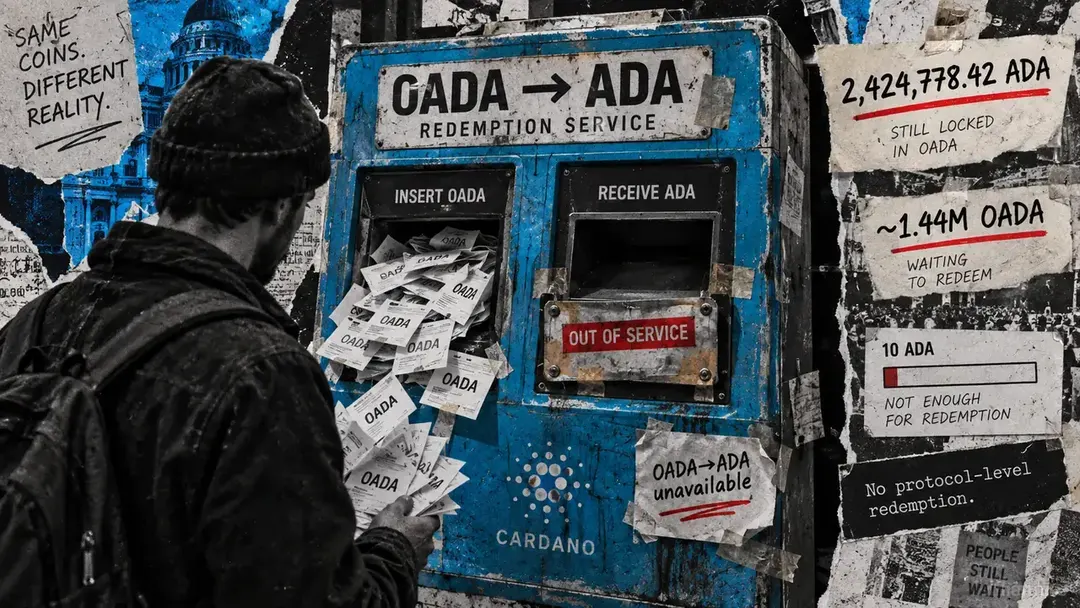
Splash patches Cardano exploit, but 2.4M ADA is gone and OADA holders are stuck
Why it matters: OADA holders cannot exit the token: a code patch does not restore liquidity, and without it the pool cannot be restarted.
SHIB jumps 7% as 202 billion tokens leave exchanges
Why it matters: Tokens leaving exchanges reduce selling pressure and could support a SHIB recovery after the CLARITY Act failure.
Whale Alert: 100M XRP worth $129.6M withdrawn from Uphold
Why it matters: A large exchange withdrawal could point to a major holder's strategy and affect XRP liquidity and sentiment.
NEAR Protocol unveils AI model to balance access and user sovereignty
Why it matters: If the model works, it will strengthen NEAR's position in AI-blockchain integration and could boost user engagement.
US to extend stock trading to 23 hours a day from December 6
Why it matters: Extending stock trading hours intensifies competition with the crypto market and accelerates the tokenization of traditional assets.

SEC: extended-hours trading is under 1% of volume, EDGAR overnight in question
Why it matters: Round-the-clock stock trading is part of the trend toward tokenization and 24/7 markets; overnight disclosure delays could become a risk for investors.
Ripple CTO and XRPL developers warn of scam surge targeting XRP holders
Why it matters: The rise in scams hits trust in the XRP ecosystem and could deter new users and investors.
Robinhood Chain surpasses 750 million transactions
Why it matters: Growing activity on the Robinhood network intensifies competition among L2s and confirms retail brokers' interest in their own blockchains.