USD Coin (USDC) news
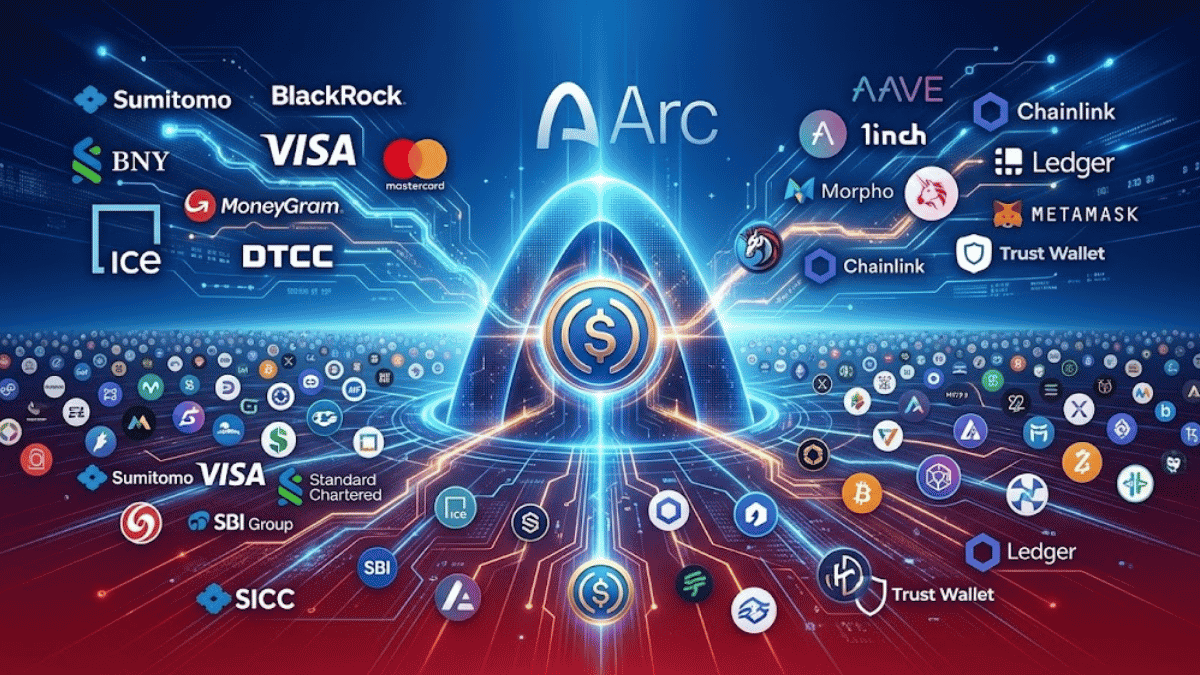
Over 100 companies and protocols join Circle's Arc network
Why it matters: The mass onboarding of participants strengthens the Arc ecosystem and competition for USDC liquidity across L1 networks.

US bank Column launches stablecoin rails with Solana as default
Why it matters: A federally licensed bank embedding stablecoins into its core accelerates their adoption in payments and competition with BVNK and Marqeta.

KuCoin, Morpho, Uniswap launch on Circle's Arc mainnet
Why it matters: The day-one launch of key DeFi and exchange protocols strengthens liquidity and trust in Arc, which competes with other L1/L2 networks.

US Treasury gathers banks to combat Iranian crypto flows
Why it matters: Stablecoin issuers and crypto infrastructure have for the first time been systematically classified as sanctions risks, threatening new restrictions and checks.

Crypto.com closes real-denominated account amid Brazil central bank tightening
Why it matters: A major exchange's exit from Brazil shows how local capital and licensing requirements are pushing international platforms out of the market.

Kraken adds USDCx deposits and withdrawals on Aleo network
Why it matters: It expands access to private stablecoins and the Aleo network through one of the largest exchanges.
Circle launches x402 Facilitator Service on Arc, Base and Polygon PoS
Why it matters: Circle is consolidating the facilitator, blockchain and stablecoin under its own roof, speeding up payments for APIs and AI agents but increasing infrastructure concentration.

Bitget discloses reserves for 45th straight month with 122% ratio
Why it matters: The report confirms Bitget's regular disclosures, but PoR still does not provide a full picture of the exchange's financial condition.

Uniswap integrates Arc across all protocol versions
Why it matters: Growing stablecoin liquidity on Arc will intensify DEX competition and could increase Uniswap's trading volumes.

Komainu partners with Circle for Arc mainnet launch
Why it matters: Support from a major custodian strengthens institutional confidence in the Arc ecosystem and the USDC stablecoin.

Arc integrates with Polygon's Open Money Stack for cross-chain USDC payments
Why it matters: Simplifying cross-chain USDC transfers could accelerate stablecoin adoption and boost activity on the Polygon and Arc networks.

BoE FPC member: mass stablecoin redemptions could hit the US Treasury market
Why it matters: Stablecoins have become a major holder of US government debt, and a wave of redemptions could amplify volatility in the Treasuries market.

Aster integrates Arc for USDC deposits and withdrawals
Why it matters: Arc is strengthening as a settlement layer for exchanges, and USDC margin is becoming a competitive advantage for perpetual DEXs.

Etherscan launches ArcScan, a block explorer for Circle's Arc network
Why it matters: Etherscan API compatibility will ease developer migration into the Arc ecosystem, strengthening Circle's position in stablecoin payments.
Whale buys 197.35 BTC for $15M via Hyperliquid
Why it matters: Large purchases with withdrawal to cold storage reduce BTC supply on exchanges and signal accumulation.

Aave launches Arc with stablecoin markets and Core Hub
Why it matters: Arc bridges DeFi with traditional finance and could boost demand for stablecoins and institutional lending.

Circle shares fall to $83 despite Arc blockchain launch with BlackRock and Visa
Why it matters: The Arc launch failed to offset regulatory uncertainty: CRCL's performance will show whether investors are ready to value Circle's infrastructure separately from CLARITY Act risks.

Robinhood to support USDC transactions on Circle's Arc network
Why it matters: A growing number of platforms with direct USDC support on Arc intensifies competition among networks for stablecoin turnover.

Gate enables USDC deposits and withdrawals on Arc network
Why it matters: It expands USDC liquidity routes between the exchange and Arc wallets, reducing the risk of transfer errors.
Circle launches Arc mainnet and issues 10 billion ARC tokens
Why it matters: Arc could become key infrastructure for stablecoin payments with backing from major banks, but uncertainty over the ARC token limits its value to the market.