Ethereum (ETH) news

Crypto market cap rises to $2.62 trillion as bitcoin rebounds to $76,580 after Fed and CLARITY Act failure
Why it matters: The rebound rests on short liquidations rather than spot demand: the key level is $77,000, and a failure there could mean a return to $74,900.

Average Ethereum network fee falls 87% from April peak to $0.095
Why it matters: Cheaper transactions boost activity on L1 and in DeFi, but reduce fee revenue and the volume of ETH burned.
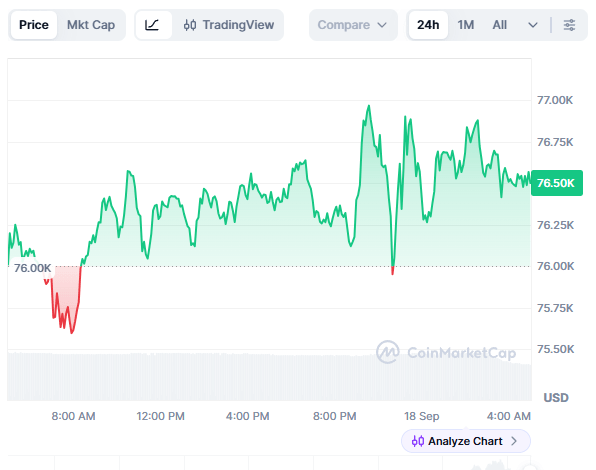
Bitcoin at $76,504, Ethereum at $2,448 as market shows mixed moves
Why it matters: Falling derivatives volume and capital rotation into altcoins point to a wait-and-see stance after the Fed's decision.
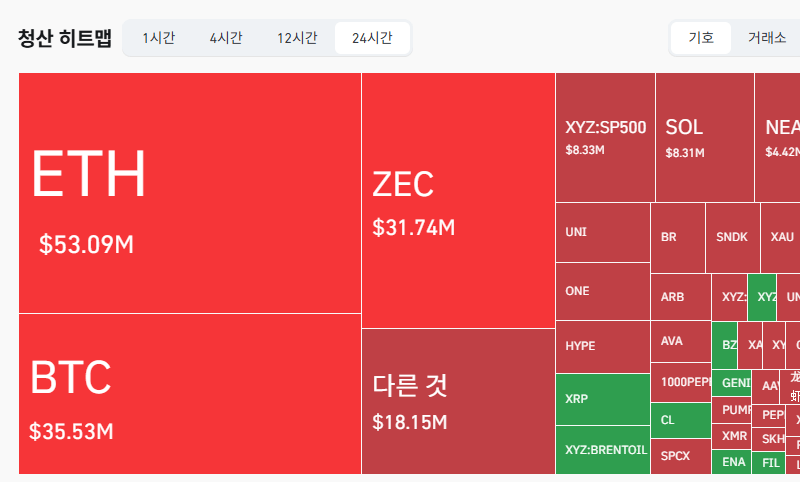
$154.5 million liquidated in 24 hours, 76.7% of it shorts
Why it matters: The dominance of short squeezes points to a market rebound after the hawkish FOMC, which could amplify volatility if key levels are broken.
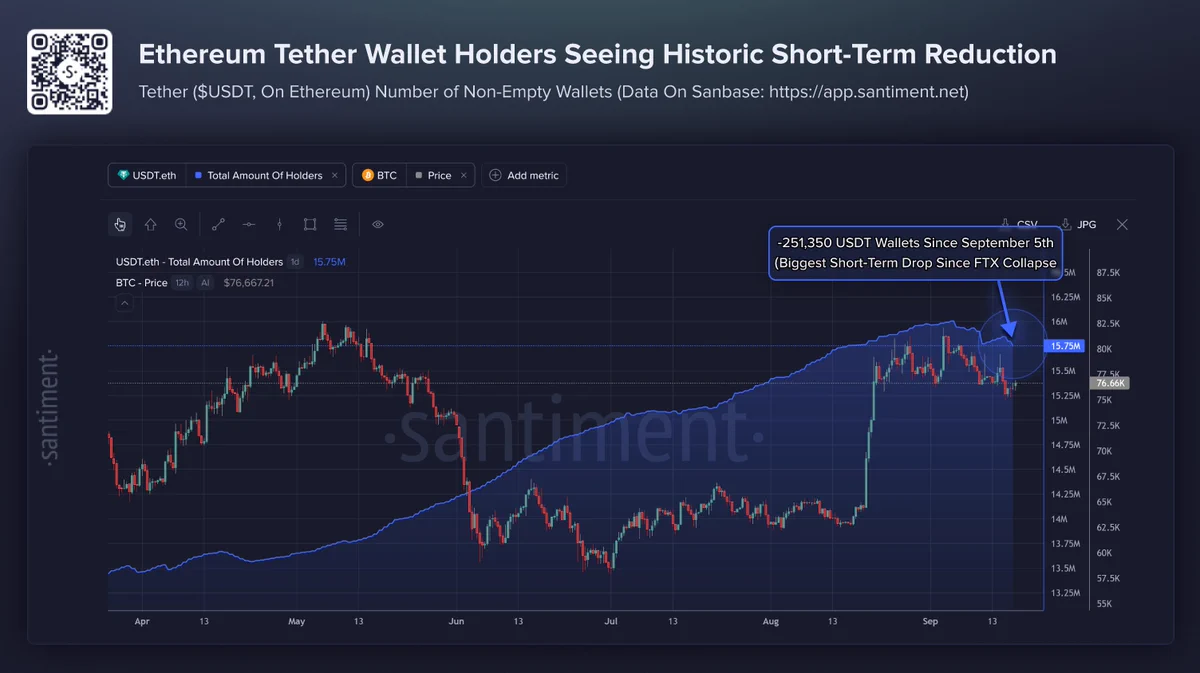
USDT wallets on Ethereum drop by 251K in 11 days
Why it matters: A sharp contraction in the wallet base could indicate a shift in USDT holders' behavior and a flow of activity to other networks.

Unknown wallet moves 34,331 ETH worth $84.8M to Revolut
Why it matters: Large transfers to exchanges and fintech platforms often precede sales or increased liquidity, affecting the price of ETH.

Securitize CEO: tokenization won't go mainstream without tradfi buyers
Why it matters: The thesis points to a key constraint on the RWA segment: without an inflow of tradfi capital, secondary-market liquidity will remain low.

Securitize manages $5 billion in tokenized assets, up from $4.2 billion
Why it matters: Securitize's asset growth confirms institutional demand for regulated tokenized products, supporting the RWA narrative and demand for networks like Ethereum and Avalanche.

BlackRock buys $1.08 billion in BTC over 20 days, IBIT holds 785,900 BTC
Why it matters: The concentration of BTC in IBIT strengthens BlackRock's influence on the market and pressures competitors like Grayscale to reconsider fees.

Staked ETH reaches 35% of total supply
Why it matters: Shrinking liquid supply makes ETH more sensitive to demand inflows, but without them a high staking share does not drive price growth.

RWA futures volume surges 142x after $19B liquidations
Why it matters: The growth of RWA derivatives shows demand shifting from crypto assets to contracts on commodities, equities and private companies after the largest futures crash.

Tom Lee expects bullish 12 months for crypto as Wall Street enters
Why it matters: The largest ETH treasury confirms its bet on tokenization and stablecoins, but the CLARITY Act failure leaves the forecast vulnerable.

Saylor: banks will start bitcoin-backed lending without Congress
Why it matters: The signal of banks entering bitcoin-backed lending expands institutional demand and reduces the market's reliance on legislative initiatives.

Optimism issues Fortune 500 guide to launching OP Stack chains
Why it matters: Optimism is betting on corporate private networks as a new source of demand for L2 infrastructure and operator fee revenue.

Ethereum rebounds 2.78% to $2,468 after CLARITY Act failure
Why it matters: The rebound looks technical: without ETF inflows and with a bearish MACD, a move above $2,500 is in doubt.

XRP falls nearly 8%, Bitcoin drops to $75,800 after CLARITY Act fails in Senate
Why it matters: The CLARITY Act's failure hits altcoins and exchanges harder than BTC; a return above $78,189 would signal the removal of the regulatory premium.

Bitcoin rebounds to $76,628 after CLARITY Act fails; ETF outflows hit $1.11B
Why it matters: The divergence between rising prices and ETF outflows points to weak institutional demand; key BTC resistance sits at $77,296.

Bitcoin ETFs see $328 million in daily outflows, $920 million for the week
Why it matters: Sustained ETF outflows signal weakening institutional demand and could amplify volatility in bitcoin and ether.

Zcash tops $1,400 for the first time, up 21.28% on the week
Why it matters: Zcash is setting a record high amid hype around privacy coins, but a large short funded through ETH creates a risk of sharp liquidations.

Avalanche Treasury CEO: AI agents will overload general blockchains, subnet model will win
Why it matters: The argument for isolating workloads could strengthen Avalanche's position in the race for institutional adoption against Ethereum and Solana.