Bitcoin (BTC) news

Henrik Zeberg: Bitcoin rally is a 'sucker's rally' within a bear trend
Why it matters: A warning of downside reversal risk: in a US recession Bitcoin could fall alongside risk assets.

MARA Holdings buys 1,292 BTC for $98.6 million
Why it matters: Large corporate purchases by miners support BTC demand and signal to institutions a belief in the asset's long-term value.
Kalshi: Fed rate hike odds rise to 87%, market prices a second hike in December
Why it matters: A more hawkish rate path increases pressure on Bitcoin and risk assets, shaping market dynamics for the coming weeks.

$592.7 million withdrawn from Bitcoin and Ethereum ETFs after CLARITY Act fails
Why it matters: A regulatory delay in the US intensifies outflows of institutional capital from crypto ETFs and weighs on BTC and ETH.

US, UK, Japanese and EU government bond yields hit multi-year highs
Why it matters: Rising government bond yields weigh on risk assets, including Bitcoin, and raise the odds of a hawkish Fed policy.
US Census Bureau: poverty fell to 10.2% in 2025
Why it matters: Strong income data could shift expectations for the Fed rate decision, affecting bitcoin and risk assets.
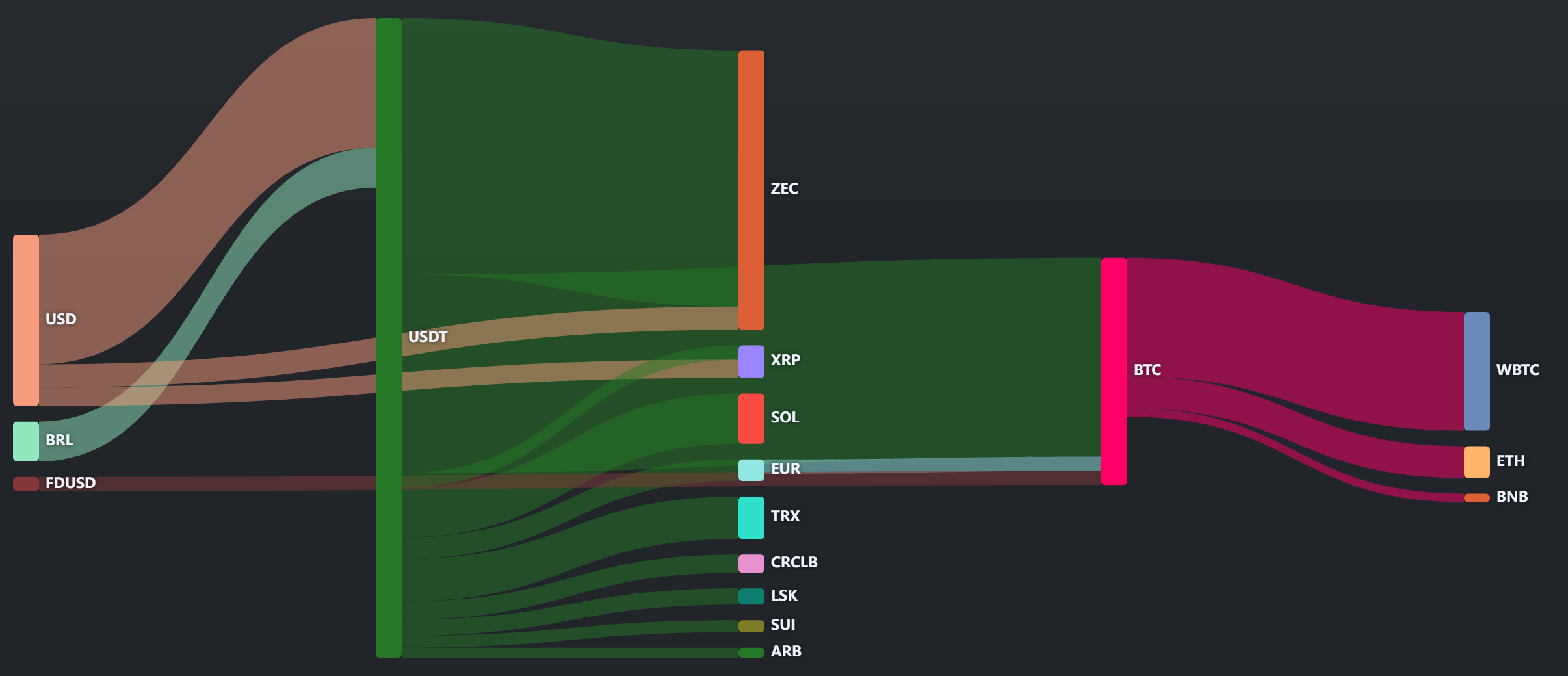
Ethereum sees $53.66M outflow in 5 hours, Zcash leads inflows with $21M
Why it matters: The large outflow from ETH alongside inflows into ZEC and BTC points to capital rotation in favor of privacy coins and bitcoin.

CoinMarketCap: bitcoin weakens but derivatives open interest rises 12%
Why it matters: Rising leverage amid falling prices increases the risk of sharp liquidations in both directions on the Fed decision and Senate vote.
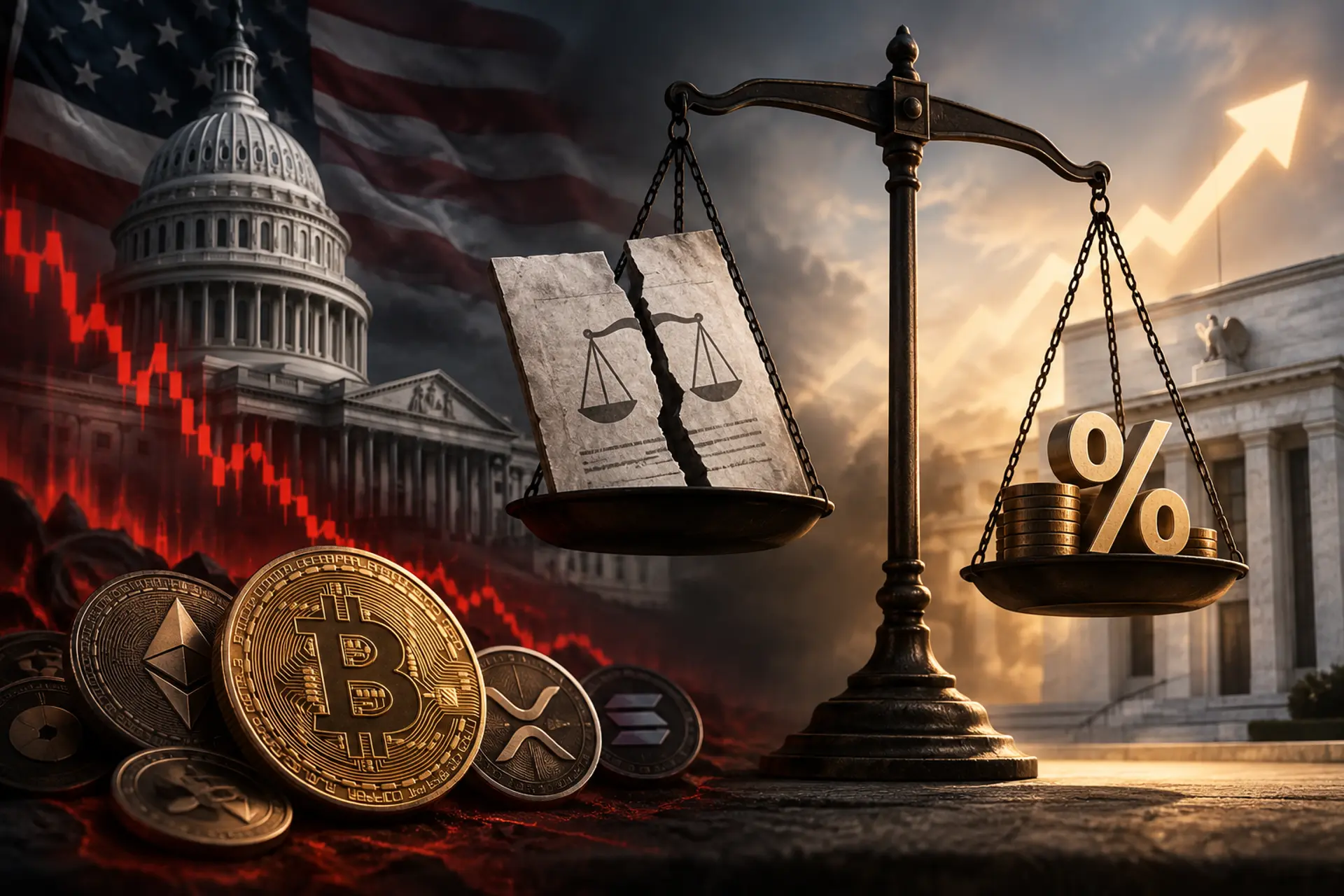
Analysts: Fed rate matters more to crypto than CLARITY Act failure
Why it matters: Investors are reassessing the weight of regulatory risks: without legislation, the market will focus on the Fed rate and ETF flows.

APT falls 8.48% to $0.546 amid risk-off and $680M liquidations
Why it matters: APT's decline reflects intensifying risk-off ahead of the Fed's rate decision; high-beta altcoins are falling harder than Bitcoin.

Raoul Pal: Bitcoin, not gold, best hedges against fiat debasement
Why it matters: The argument reinforces the 'debasement trade' narrative linking Bitcoin's performance to gold and could influence institutional capital inflows.

Monero falls 2.88% to $507.85 amid broad market correction
Why it matters: XMR's correction looks moderate against the market slump, confirming its relative strength among top-20 assets.

TRX holds near $0.333 amid staking ETF launch and market slump
Why it matters: TRX shows relative resilience to the selloff, but without real ETF inflows the price will stay in the $0.328–$0.340 range.

ViaBTC and Mempool widen access to Bitcoin transaction accelerator
Why it matters: Wider access to the accelerator reduces transaction confirmation delays for users and ViaBTC partners.
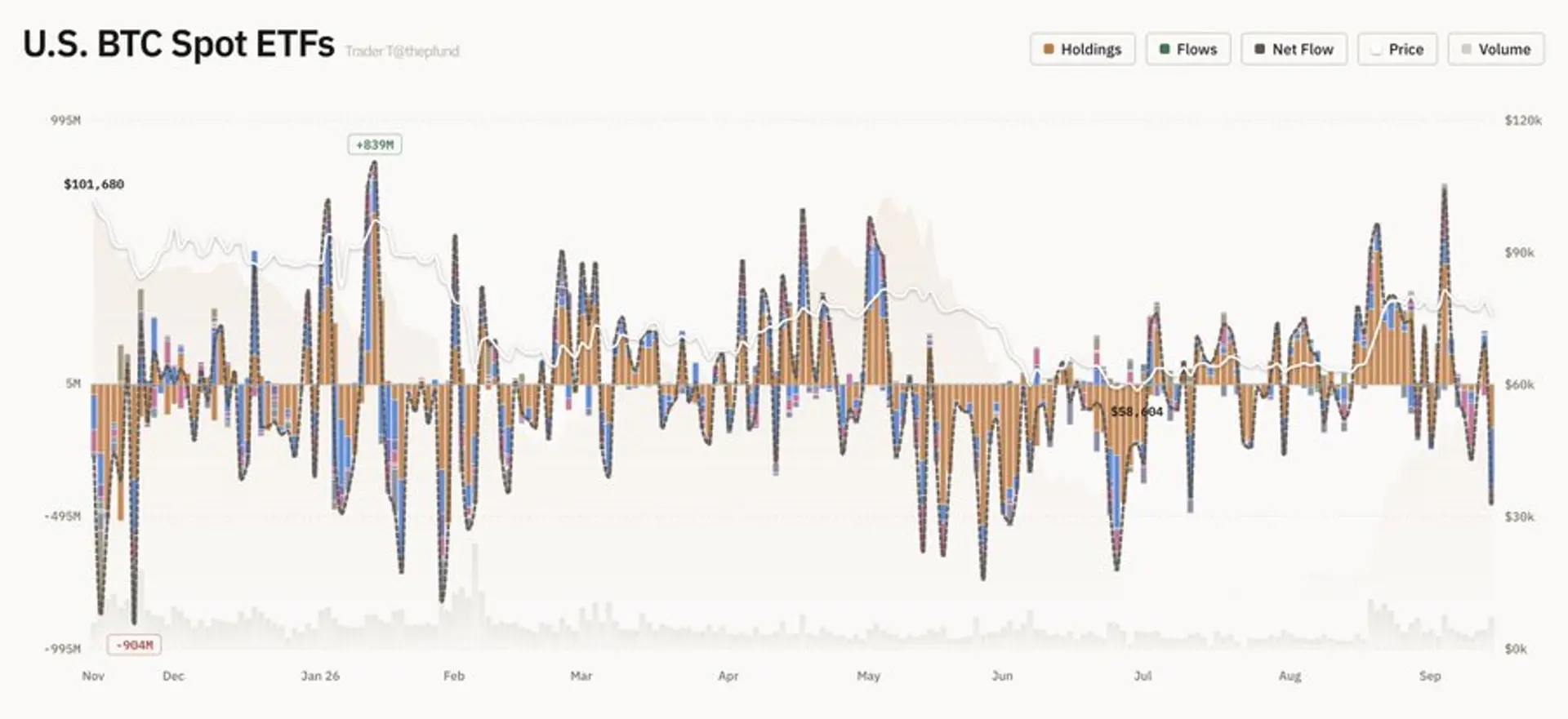
US spot bitcoin ETFs swing back to outflows with $450.4 million withdrawn in a day
Why it matters: The return to outflows signals weak institutional demand and weighs on bitcoin's price.

Bitcoin retreats to $75,700 as volume jumps 40%, sentiment turns neutral
Why it matters: Rising volume on a decline and coins moving back onto exchanges point to renewed seller pressure and the risk of a test of lower support levels.

JAN3 pauses Indra forward swaps after DDoS attack
Why it matters: The incident extends a string of outages among Lightning providers and adds to questions about the resilience of bitcoin's service layer.
Bitcoin braces for Fed decision as rate hike odds hit 92%
Why it matters: A Fed rate hike would increase pressure on bitcoin and risk assets, shaping market dynamics for the week.

Analysts: 1.9% BTC rise to $77,400 threatens $77M in short liquidations
Why it matters: The density of shorts near $77,400 could accelerate a rally on a breakout, while the cluster of longs below $72,800 would amplify a decline on a pullback.
HTX analyst: CLARITY Act failure is a one-off price hit and a year-long delay for institutions
Why it matters: Institutional products in the U.S. are delayed by at least a year, but the SEC and CFTC could partially close the gap with their own rules, giving crypto stocks recovery potential.