Bitcoin (BTC) news

Bitcoin back above $81,000 with key resistance at $85,000
Why it matters: A break above $85,000 would clear resistance from ETF investor positions and could trigger a short squeeze, accelerating gains toward new highs.

Bitcoin back above $81,000 as crypto stocks post best session in months
Why it matters: The rally is supported by expectations of gains from tokenized equities after the SEC exclusion, but pressure from 10-year Treasury yields near 5% and a forecast of another 75 bps of Fed tightening remain risks.
Bitcoin Hits Highest Price Since January as Strategy Keeps Buying
Why it matters: Continued Strategy purchases and rising crypto stocks signal returning institutional demand.

Elon Musk's X Sues Network of Bitcoin Accounts Over Payout Fraud
Why it matters: The case sets a precedent for platform crackdowns on fake activity in the crypto segment of X; it could tighten moderation and cut fraudsters' income.

Exchanges Receive 280 BTC in a Day as US Trading Volume Jumps 52%
Why it matters: Rising BTC inflows to exchanges and higher US trading volumes could signal mounting seller pressure in the short term.

Traders Question Kalshi Volume Data Over 14x Discrepancy
Why it matters: If confirmed, the gap would mean Kalshi's stated liquidity exceeds what is executable, distorting risk assessment and comparisons with other markets.

Cardano at $0.230: 11.4% weekly gain and test of $0.232 resistance
Why it matters: A breakout or rejection at $0.232 will determine whether ADA's correction has ended or this is just a bounce within a downtrend.

Jersey bets on tokenization and stablecoins in 'Time to Win' strategy
Why it matters: Jersey is testing a model for integrating crypto into existing oversight, which could serve as an example for other offshore jurisdictions.

Daily roundup: Bitcoin at $81,361, market cap $2.87 trillion
Why it matters: A weekly close above the 50-week moving average, according to Galaxy, confirms the formation of a bear market bottom.

Wall Street strategists: markets climbing a 'wall of worry' is a sign of strength, BTC holds $81,000
Why it matters: If the market rises despite negative news, it may indicate sustained demand and reduced risk of a sharp reversal downward.
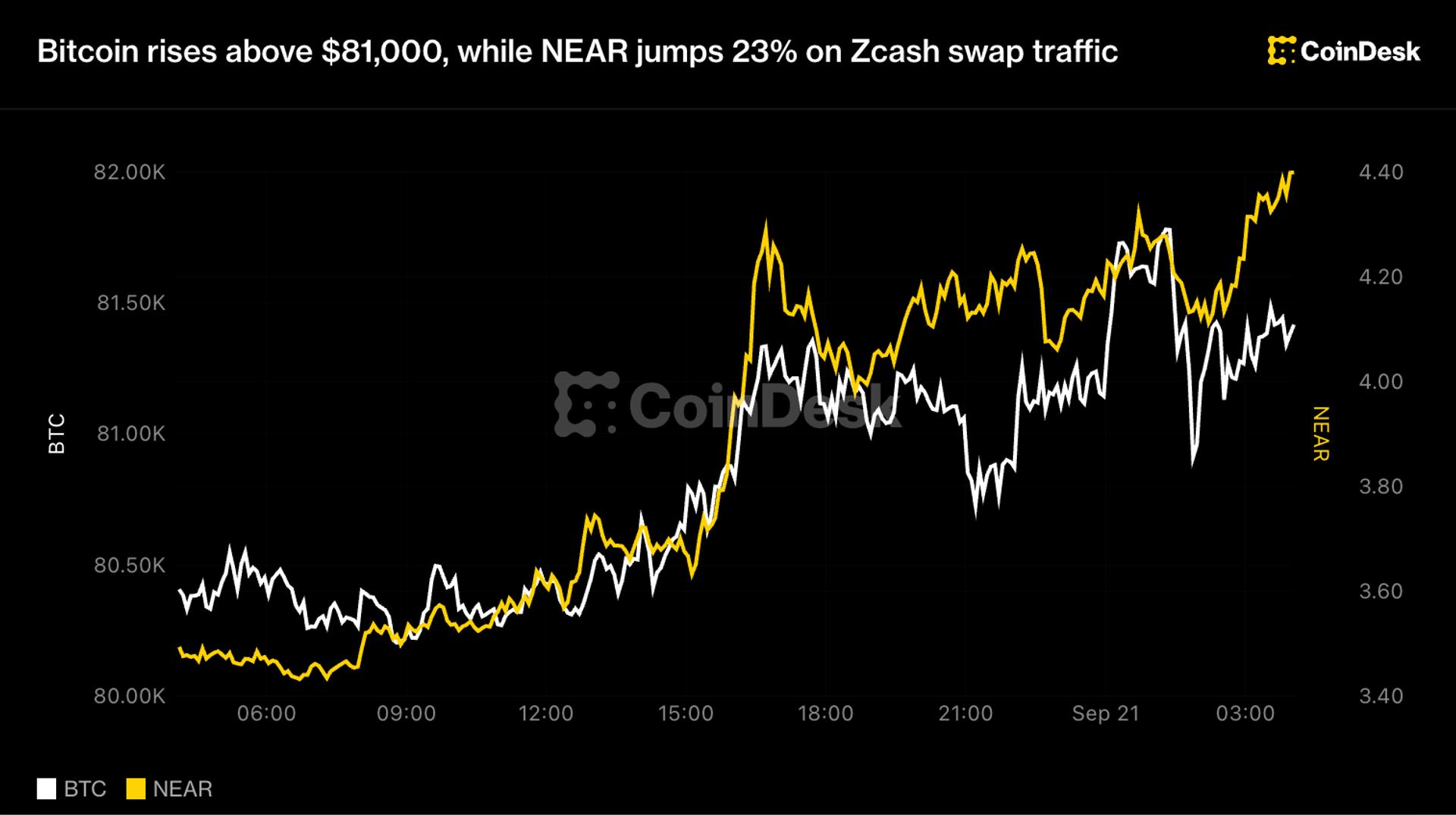
Bitcoin above $81,000 as NEAR jumps 23% on ZEC swap surge
Why it matters: NEAR's rally shows the token is benefiting from ZEC swap traffic, while the market awaits the Fed's late-October meetings.

Bitcoin holds $81,410 on weak volume, capped at $82,000
Why it matters: The rally on weak volume and a negative MACD point to a fragile bounce: a break of $82,000 or a return to $80,200 will set the direction.

Bitcoin back at $81,370 as volume and search interest rise
Why it matters: Rising volume and search interest confirm demand, but slowing momentum and BTC inflows to exchanges limit a decisive breakout.

Bitcoin at $80,400: 71% of supply in profit, Korea premium turns negative
Why it matters: A growing share of profitable positions raises the risk of profit-taking, while weak Korean demand could cap further BTC gains.
Bitcoin back above $81,000 as Venice Token and NEAR hit yearly highs
Why it matters: The regulatory shift by the SEC and CFTC supports risk appetite; a BTC close above $82,850 would open the way to $86,471.

Bitcoin clears key technical barrier that historically preceded bull rallies
Why it matters: A break of a historically significant level could reinforce bullish expectations among traders and draw capital into BTC.
Spot bitcoin ETFs drew $6.21 million for the week, led by IBIT with $121 million
Why it matters: Weak weekly inflows alongside IBIT's dominance show institutional demand shifting to the largest fund while smaller ETFs lose ground.

House committee approves U.S. bitcoin reserve bill with 20-year holding period
Why it matters: Enshrining the reserve in law would protect it from reversal by future presidents and reduce selling pressure on the market.
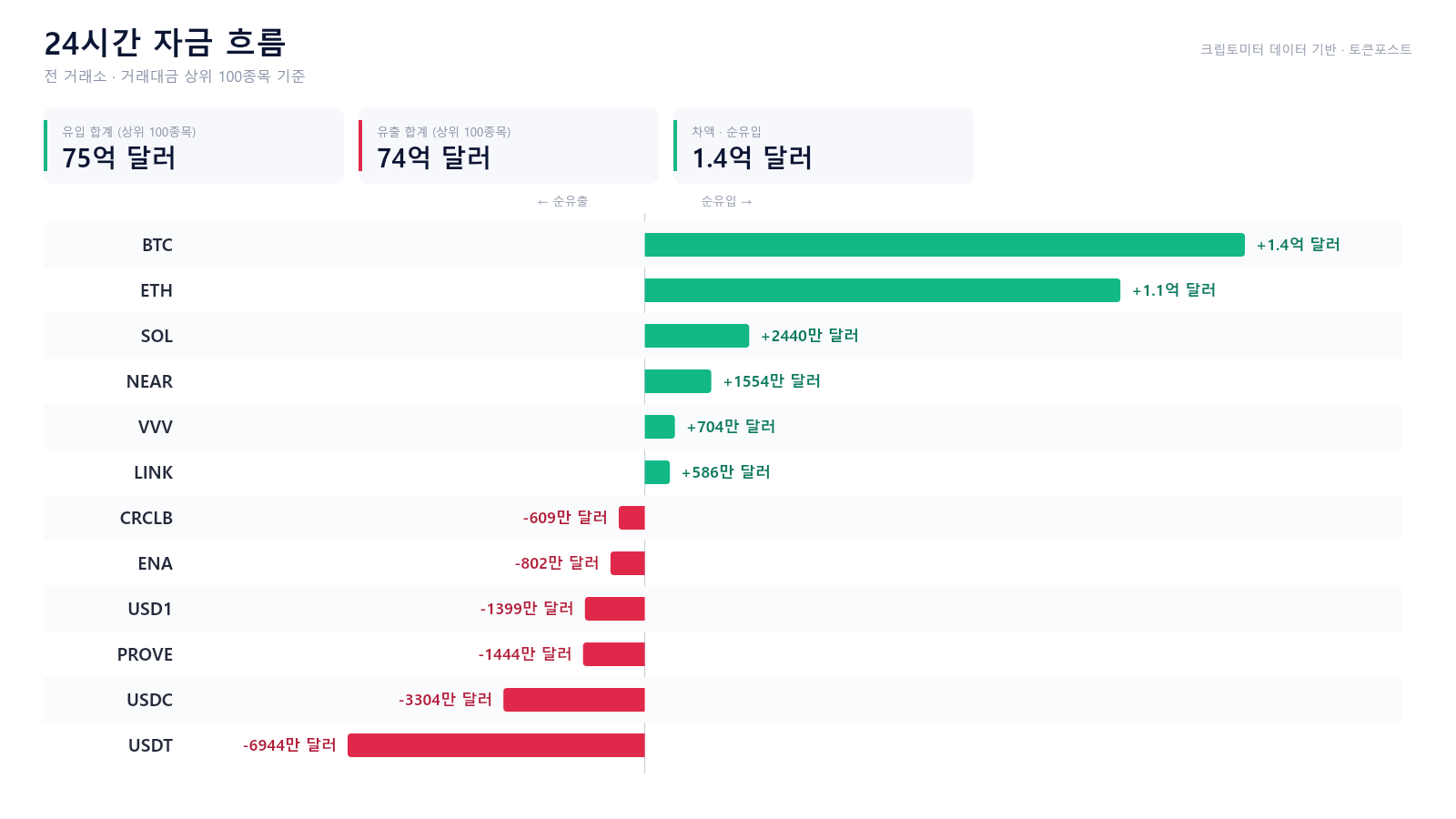
24-hour flows: $140M into BTC, $111M into ETH, outflows from USDT and USDC
Why it matters: Capital rotating out of stablecoins into BTC and ETH points to rising risk appetite and demand for major assets.
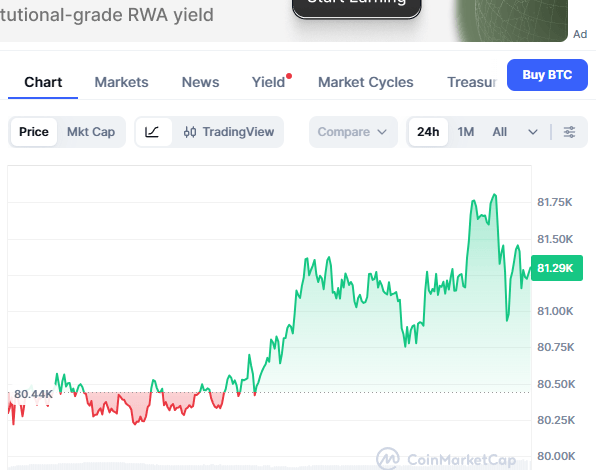
Crypto market rises: Bitcoin $81,298, Ethereum $2,660
Why it matters: Falling BTC dominance and rising derivatives volumes point to capital rotation into altcoins and growing speculative activity.