Avalanche (AVAX) news

IXS Finance launches tokenized high-yield bond vault on Avalanche based on BlackRock ETF
Why it matters: Tokenization is moving from government bonds to riskier credit, testing DeFi infrastructure's readiness for complex credit products.

WisdomTree connects tokenized Treasury fund to MoonPay
Why it matters: Tokenized funds are gaining a retail distribution channel reaching tens of millions of users, accelerating competition for the tokenization of traditional assets.

Avalanche activates Helicon on September 22: staking lock-up cut to 48 hours
Why it matters: Delegators risk losing rewards if their validator fails to maintain 90% uptime, making operator choice more critical.
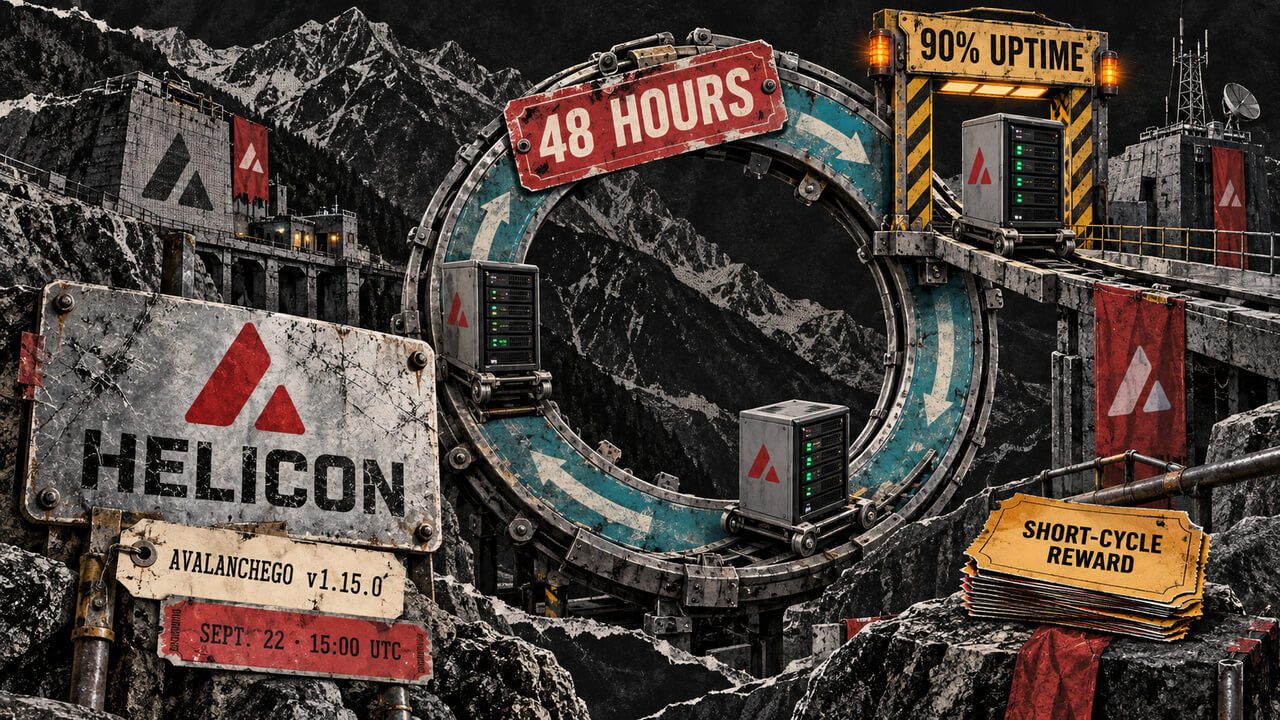
Avalanche to cut validator lockup from 14 days to 48 hours
Why it matters: Shorter cycles lower the entry barrier for validators but require more stable operation and offer lower short-term yields.

AVAX holds near $7.51 after 2.66% rebound amid regulatory pressure
Why it matters: AVAX is stuck between a recovery in medium-term averages and an unfinished long-term trend reversal; the U.S. regulatory backdrop remains a key risk.
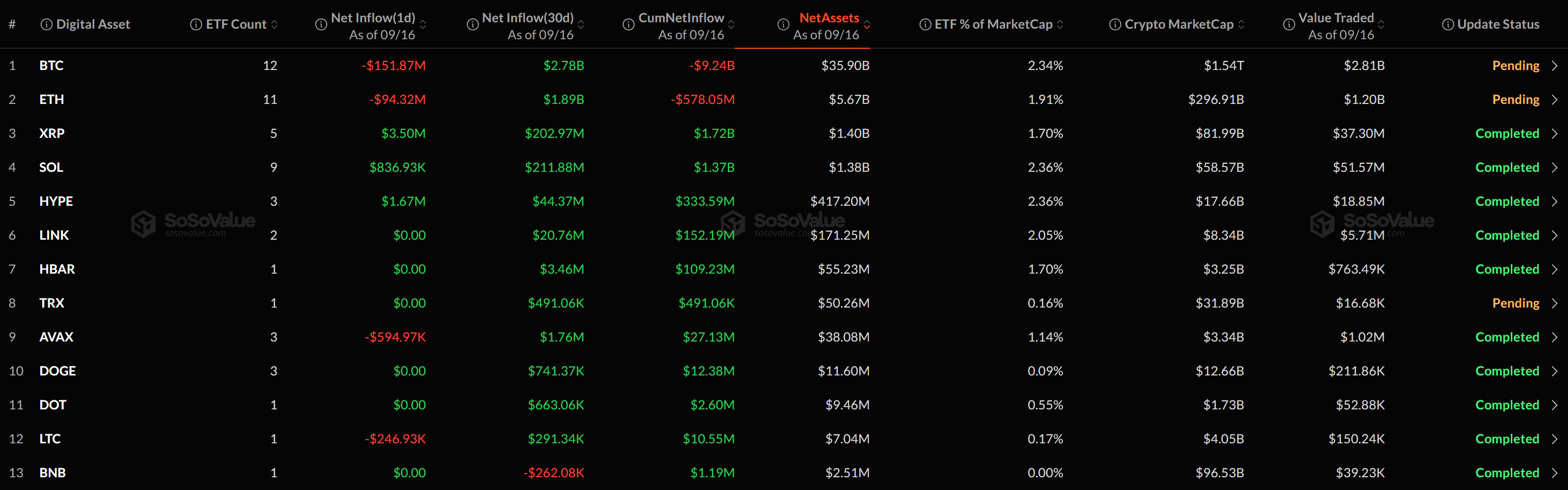
Spot ETFs for XRP, SOL and HYPE draw inflows; AVAX and LTC see outflows
Why it matters: Altcoin ETF inflows remain selective, with demand concentrated in XRP, SOL and HYPE, while AVAX and LTC lose ground.
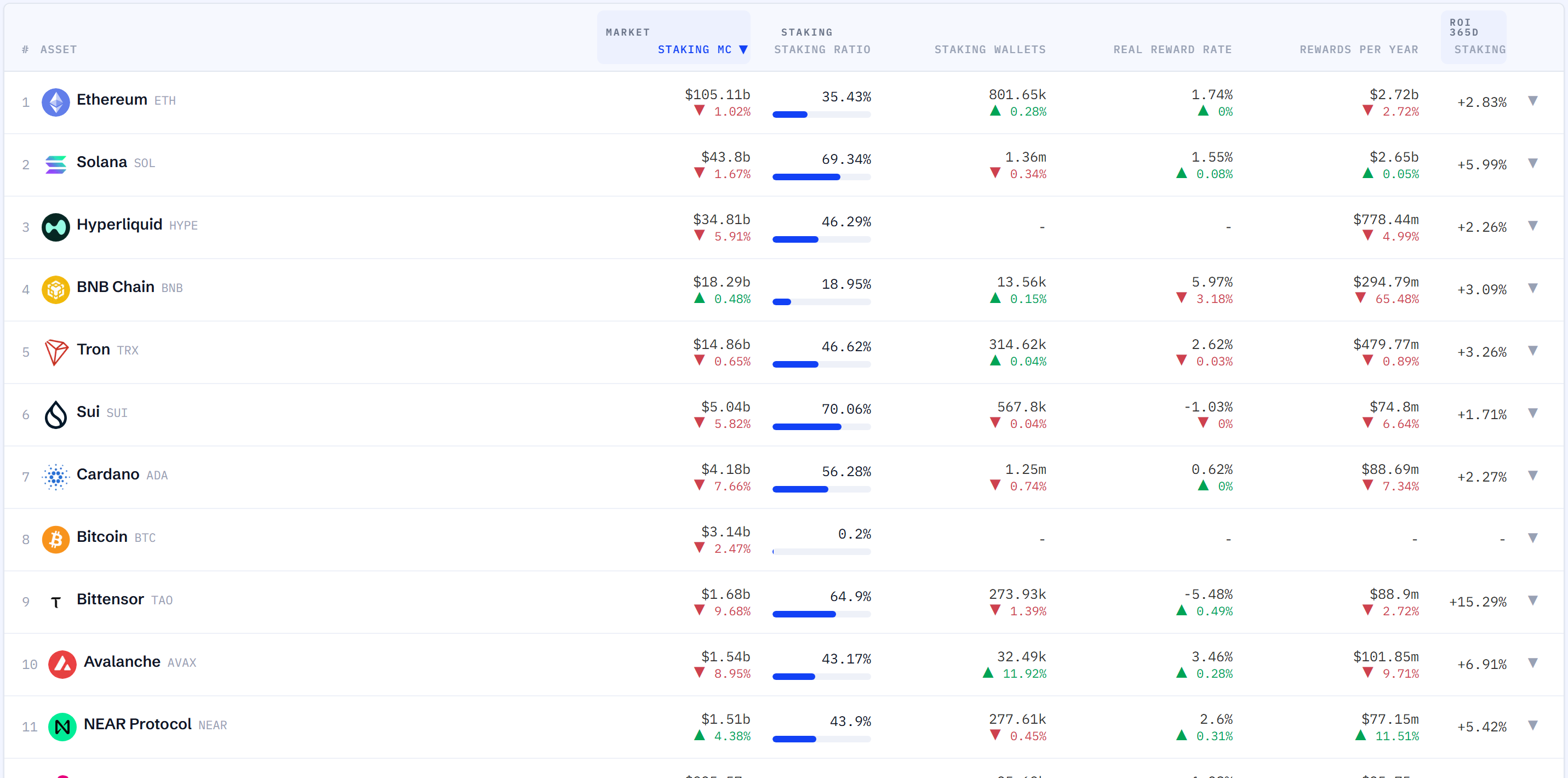
Staking market cap of top assets declines, BNB Chain the only gainer
Why it matters: The decline in staking market cap of the largest networks reflects broad risk-off sentiment and capital outflow from crypto.

Filecoin unveils testnet demo of tokenized RWA architecture at Avalanche Summit
Why it matters: Filecoin is entering the RWA tokenization market, which could increase demand for decentralized data storage.

Ethena founder launches Ethena Pay neobank on Avalanche with up to 6% yield
Why it matters: Ethena is betting on returning stablecoin yield to users, intensifying competition with USDC and USDT and creating demand for AVAX.

KRW1 supply data diverges: 100 million vs 142 million tokens
Why it matters: The discrepancy in supply data complicates assessing the real issuance volume of the won stablecoin, while the Visa integration boosts its payment potential.

COTI launches Privacy-on-Demand and Privacy Portal on Avalanche
Why it matters: Private transactions on a public blockchain open up use cases for payroll, DeFi and RWA, but could increase regulatory pressure on privacy solutions.
Avalanche Foundation presents AVAX tokenomics framework at Summit 2026
Why it matters: Declining staking rewards risk driving validators away, so the new model will determine how AVAX retains value.

Hyundai Card plans to scale Avalanche payments after pilot
Why it matters: A successful pilot by a major automaker could accelerate stablecoin adoption in corporate settlements and boost demand for the Avalanche network.

AVAX tests $7 after CLARITY Act fails in Senate
Why it matters: The $7 level determines whether AVAX's rally since June continues or a deeper correction begins.

Avalanche to support UAE digital wallet and South Korea market tokenization
Why it matters: Institutional adoption of Avalanche is growing, but the network's role in the Korean project has not yet been officially confirmed.

Securitize: tokenized securities don't depend on CLARITY Act
Why it matters: Asset tokenization can develop without new U.S. legislation, reducing the industry's dependence on the fate of the CLARITY Act.

Janus Henderson becomes Avalanche validator, expands tokenization push
Why it matters: A major institutional player combining the roles of issuer and infrastructure strengthens the tokenized RWA sector on Avalanche.
Tare raises $13.25 million for lending software on Avalanche
Why it matters: The large venture round supports the tokenization of lending processes on Avalanche, which could accelerate institutional capital inflows into DeFi lending.

Iris raises $43 million for blockchain infrastructure for telecom operators on Avalanche
Why it matters: The case shows dedicated L1s and stablecoins moving beyond crypto into telecom settlements, but it all rests on a single investor.

Bolivian operator VIVA moves part of its finances onto Avalanche
Why it matters: The case shows stablecoins and the Avalanche blockchain moving into the real corporate sector in Latin America.