Crypto regulation news

Bitcoin hits $79,000 on CLARITY Act expectations
Why it matters: Approval of the CLARITY Act could shape US spot crypto market regulation and boost institutional capital inflows.

White House adviser calls stablecoin deposit outflow a myth ahead of CLARITY Act vote
Why it matters: The outcome of the vote will determine U.S. rules on stablecoin rewards and the balance between banks and the crypto industry.
Connecticut attorney general urges Congress to preserve state crypto fraud powers
Why it matters: Federal initiatives could limit state oversight of crypto, weakening protection for retail investors against fraud.
White House crypto adviser confident on CLARITY Act vote
Why it matters: The outcome of the vote will determine the regulatory environment for the U.S. crypto market and could affect BTC and altcoin dynamics.

SEC approves extended trading hours for Nasdaq and NYSE Arca up to 22-23 hours
Why it matters: A legally sanctioned near-24-hour window for U.S. equities intensifies competition with crypto platforms and legitimizes tokenized stocks.
Bank associations and U.S. attorneys general oppose CLARITY Act
Why it matters: The outcome of the September 15 vote will determine the structure of U.S. market regulation and the rules for stablecoin yields.

New Colombian president vows to crack down on tax evasion and illegal crypto use
Why it matters: Tighter control over crypto assets in Colombia could lead to increased declarations and pressure on illegal schemes in the region.

White House: Republicans have accepted 95% of Democrats' demands on CLARITY Act
Why it matters: The signal that a compromise is near raises the chances of passing a law on the structure of the U.S. crypto market.

a16z urges Senate to advance CLARITY Act ahead of Sept. 15 vote
Why it matters: The outcome of the vote will determine whether the U.S. market gets a federal framework for spot regulation or remains under fragmented state oversight.
Connecticut attorney general warns of risks from unregulated DeFi exchanges
Why it matters: Growing U.S. regulatory scrutiny of DeFi platforms could lead to new restrictions for the sector.

White House adviser: Trump gave up 'historic' ethics powers for CLARITY Act
Why it matters: The compromise on ethics rules removes one of the key obstacles to passing the CLARITY Act, which would define U.S. crypto market regulation.
Eight U.S. banking associations oppose stablecoin rules in CLARITY Act
Why it matters: The dispute between banks and the crypto industry over stablecoin yield could delay passage of the CLARITY Act and affect the entire market.

Dutch association VBNL rebrands as NVC
Why it matters: The rebranding reflects the Dutch crypto sector's shift under the MiCAR regime and AFM supervision, setting standards for the industry across the EU.
AFSCME union and allies oppose crypto in pension funds
Why it matters: Union resistance complicates crypto's access to institutional capital from pension funds.
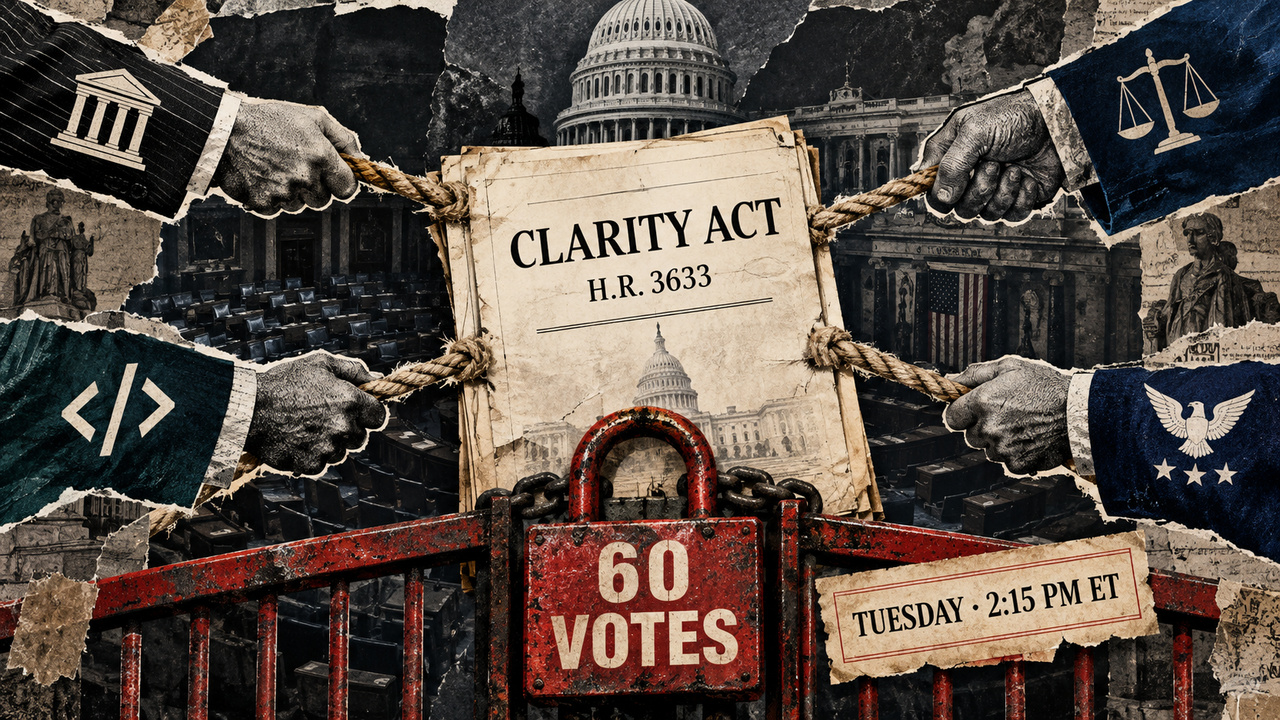
Final CLARITY Act version loses support ahead of Senate vote
Why it matters: The outcome of the Sept. 15 vote will determine whether the Senate begins considering a U.S. crypto market structure law.

U.S. strategic Bitcoin reserve bill to be heard in committee Sept. 16
Why it matters: The first advance of a BTC government reserve bill in Congress could legitimize state demand for Bitcoin and set a benchmark for other countries.

Hedera responds to FCA and Bank of England wholesale markets query
Why it matters: Dialogue between crypto companies and UK regulators could shape future standards for digital assets.

White House and banks clash over stablecoin yield in CLARITY Act
Why it matters: The final text of the section will determine whether issuers and exchanges can pay yield on stablecoins, affecting competition with bank deposits.

CryptoUK proposes HMRC tax breaks for stablecoins
Why it matters: Tax breaks for stablecoins could reduce compliance costs and accelerate their integration into the UK financial system.

White House crypto adviser accuses bank lobby of contradictions on stablecoins
Why it matters: The dispute over stablecoin yield determines the future of crypto regulation in the US and could affect capital flows into the banking system.