Crypto regulation news

India drops standalone crypto law in favor of e-Rupee
Why it matters: India is choosing caution over rules, leaving uncertainty for local exchanges and investors but reducing the risk of legitimizing crypto.
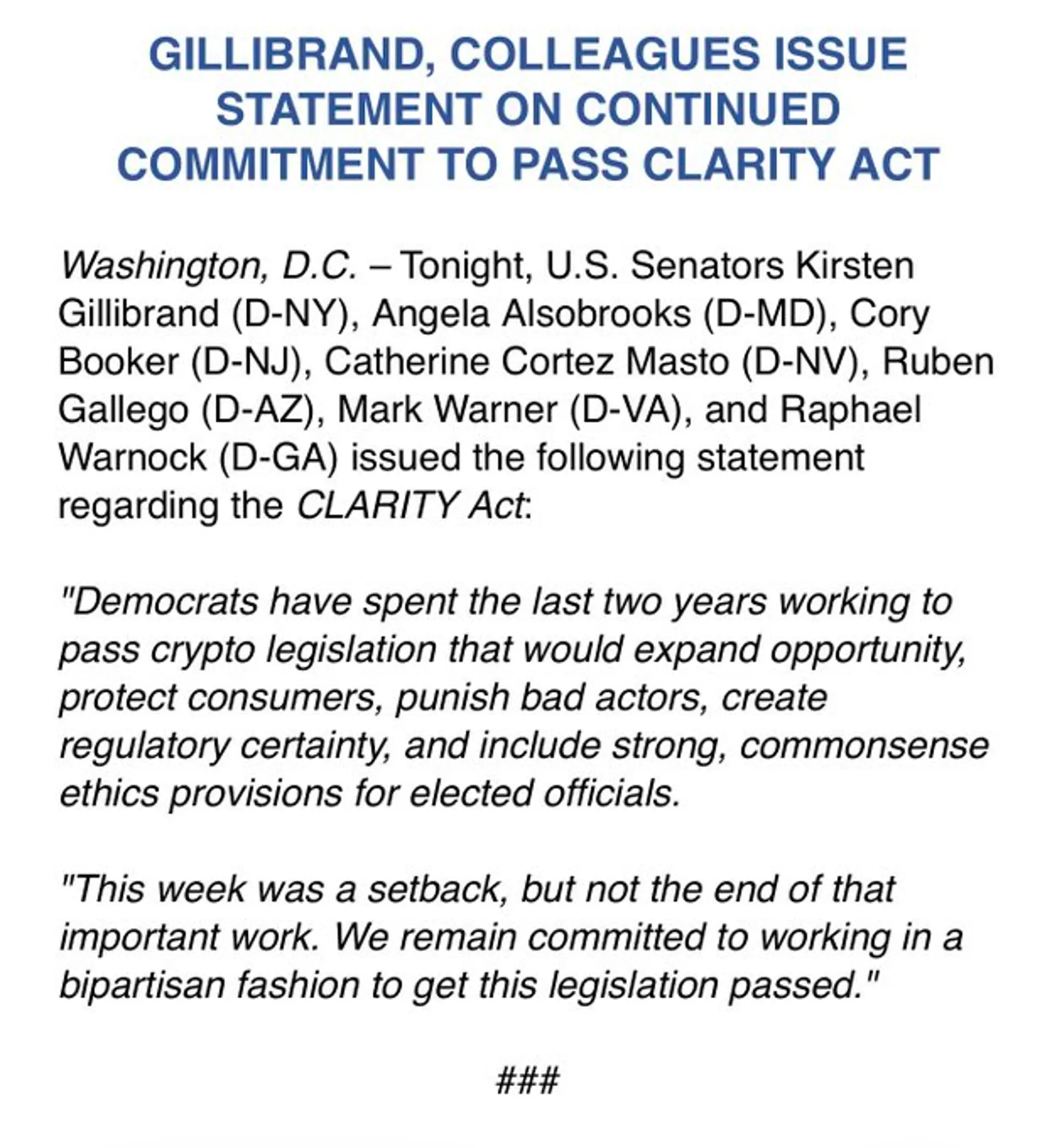
Seven US Democratic senators signal readiness for bipartisan CLARITY Act talks
Why it matters: Restarting negotiations could revive market hopes for US regulatory clarity, supporting crypto assets.

Revolut confirms KYC data leak; House committee approves bitcoin reserve bill
Why it matters: The leak hits trust in exchange KYC procedures, while approval of the reserve bill could cement government demand for bitcoin.
Korean police open cases against 26 Polymarket users, 18 referred to prosecutors
Why it matters: The case shows regulators can pursue prediction market users, weighing on the sector and tokens such as POLY.

Hong Kong to test tokenization of HK$1.3 trillion in government bonds
Why it matters: Hong Kong is accelerating institutional RWA tokenization and digital settlement, intensifying competition to be Asia's crypto hub.

Crypto market clarity bill introduced in the US
Why it matters: New rules could determine which tokens are considered securities and affect listings and exchange operations in the US.

Ethereum after CLARITY Act failure: ETF outflows and record staking
Why it matters: The bill's failure removed a short-term catalyst for ETH, but supply scarcity and record staking support the long-term picture.
Analysts: CLARITY Act failure weighs on ETH, but supply stays scarce
Why it matters: The bill's failure removed a short-term catalyst for ETH, but supply scarcity and record staking support the medium-term scenario.

NYDFS chief discusses stablecoin regulation at Stablecon
Why it matters: The NYDFS stablecoin framework is seen as a model for other jurisdictions and could shape their approach to regulation.
Bitwise CIO: CLARITY Act failure won't break the bull market
Why it matters: The stance of a major asset manager shows the market can grow without a new law — driven by regulators and institutional inflows.

U.S. House committee to consider strategic bitcoin reserve bill H.R. 8957
Why it matters: Enshrining the reserve for 20 years reduces the risk of government selling pressure and sets a separate track for U.S. crypto policy.
SEC Chair Atkins: regulator will act decisively regardless of whether the law passes
Why it matters: The SEC and CFTC are moving to rulemaking bypassing Congress, which will speed up the arrival of rules for the US crypto market.

US House committee approves strategic bitcoin reserve bill
Why it matters: Legislative enshrinement of the bitcoin reserve reduces the risk of Trump's policy being reversed and creates long-term demand from the state.
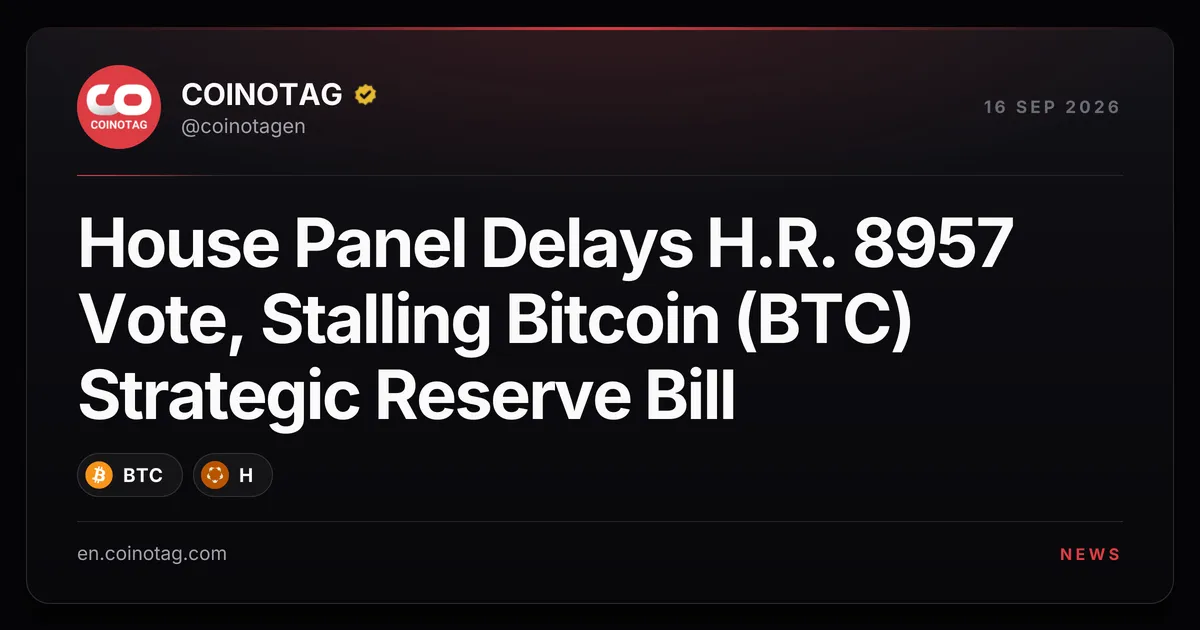
House committee postpones vote on bitcoin reserve bill H.R. 8957
Why it matters: The delay reduces the chances of swift legislative enshrinement of a US strategic bitcoin reserve.
Senator Moreno calls crypto bill failure 'a sad day for the Senate'
Why it matters: Without federal legislation, crypto regulation in the US will shift to the SEC and CFTC through individual rules.
Brian Steil comments on CLARITY Act failure
Why it matters: The bill's failure leaves crypto regulation to the discretion of the SEC and CFTC, keeping uncertainty for the market.
SEC and CFTC chiefs say they will push regulation after CLARITY Act failure
Why it matters: Crypto rules will be written not by Congress but by the SEC and CFTC — this will speed up regulation but increase the risk of legal disputes.
After CLARITY Act failure, banks and exchanges look to SEC for rules
Why it matters: The shift of regulation toward the SEC will determine the rules for listing, custody and token operations for the entire industry.

Garlinghouse: after CLARITY Act failure, optimism persists via SEC and CFTC
Why it matters: The shift of US crypto regulation toward agency rules from the SEC and CFTC will determine market conditions without new legislation.

Trump appointees tighten crypto oversight as bill stalls
Why it matters: Tighter oversight without a legislative framework weighs on bitcoin expectations and increases uncertainty for the market.