Crypto hacks and security
Hackers breached Italy's state mail to target Revolut crypto clients
Why it matters: The leak of crypto service clients' data raises the risk of targeted phishing and theft from large crypto holders.

Exchange developers opened positions before token listings
Why it matters: If confirmed, this would damage the platform's reputation and risk investigations into insider trading.

Kaiko: wallet 0xa1E traded on Hyperliquid before LIT listing and Robinhood report
Why it matters: The case intensifies the debate over insider trading on transparent on-chain venues and could draw regulatory attention to Hyperliquid.

US DOJ charges two Robinhood engineers with insider trading on Hyperliquid
Why it matters: It sets a precedent: insider trading on decentralized perpetuals falls under US commodities market laws.

ECDSA.Fail contest cuts theoretical resources for quantum attack on Bitcoin by 86%
Why it matters: Faster theoretical calculations bring closer the need for Bitcoin and Ethereum to move to post-quantum signatures, though there is no specific timeline for the threat.
Symbiosis bridge exploit: attacker mints 46.1 billion unbacked syBTC
Why it matters: It highlights cross-chain bridges' vulnerability to combined bugs and the risk of losing funds in syBTC liquidity pools.

Swiss court sentences Ukrainian ransomware developer to 12 years and 9 months
Why it matters: The case shows that malware developers face criminal liability on par with the organizers of attacks, increasing pressure on crypto ransomware operators.

Waltio confirms leak of client email addresses after Brevo breach
Why it matters: The leak of email addresses from crypto tax services creates a base for targeted phishing and physical attacks on crypto holders in France.
Man steals $245 million in crypto and spends $569,000 in one night
Why it matters: The large theft is a reminder of the risks of holding crypto and draws regulators' attention to asset security.

Taiwan marketing firm received USDT for advertising scam schemes
Why it matters: The scheme shows how USDT is used to launder proceeds from advertising fraud, increasing pressure on crypto payment regulation.

Liquid Network Exploit: 4,000 Unbacked L-BTC Issued, $320M in BTC Withdrawn
Why it matters: The incident exposed the vulnerability of Bitcoin sidechains and bridges: a bug in Elements allowed real BTC to be withdrawn, heightening risks for L2 solutions.

About $7.8 million in rsETH stolen from Gnosis Safe wallet
Why it matters: The incident exposes the risks of custodial wallets with Safe extensions and could increase pressure on restaking protocols.
ZachXBT accuses CoinEx of inaction after Lazarus Group attack
Why it matters: The case highlights the risks of weak cooperation between exchanges and investigators when stolen funds are laundered.
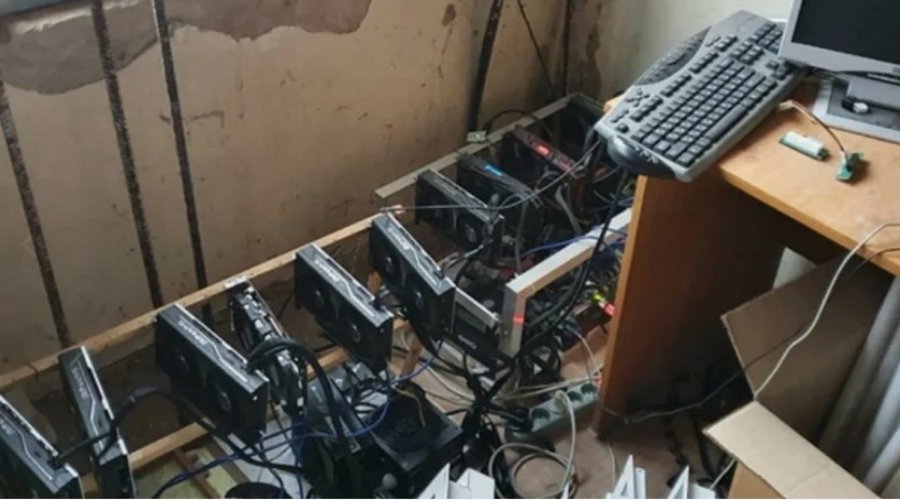
Fine imposed in Irkutsk region over secret crypto farm in former store
Why it matters: It shows a tougher crackdown on illegal mining in Russia's power-deficit regions and the risk of equipment confiscation.
Kelp suspends rsETH transfers for suspicious address for 24 hours
Why it matters: The episode is linked to the recent $7.73 million Safe multisig hack and heightens attention to restaking risks.
Ex-CCB Asia manager admits taking $470K USDT bribe
Why it matters: The case shows cryptocurrency is increasingly used for corrupt payments in Asia's traditional banking sector.

Ex-Los Angeles police officer gets 21 months in crypto entrepreneur case
Why it matters: The case shows how crypto assets feature in coercion and abuse-of-power schemes, heightening regulators' focus on criminal activity.
Ethereum Safe multisig exploited via Uniswap V4 hook, $7.73M lost
Why it matters: It highlights the vulnerability of Safe modules and Uniswap V4 hooks, as attackers use legitimate mechanisms to steal funds.
Lazarus Group sells 911 ETH at $2,499 for $2.28M
Why it matters: Lazarus's asset sell-off could add pressure on ETH's price and signals the group's activity after attacks.

Underground mining farm found in former store in Irkutsk region
Why it matters: In Russia, claims against miners relate primarily to unmetered electricity consumption rather than mining itself.