Crypto news today
Circle launches Arc mainnet with 11 validators from BlackRock, Visa and Mastercard
Why it matters: Arc's launch with TradFi validators intensifies competition among L1s for institutional settlement, though speculators may repeat the Robinhood Chain memecoin scenario.
Circle opens Arc mainnet as traders await memecoin wave
Why it matters: Arc's launch could shift some speculative activity to an institutional L1 and boost demand for USDC.
Three central banks tighten at once for first time since 2006 — bitcoin risk
Why it matters: Synchronized tightening by three central banks has historically hit risk assets first; ETF inflows may partially offset the pressure.

Four suspects charged in France over kidnapping of woman for crypto assets
Why it matters: A rise in physical attacks on crypto holders in France heightens risks for holders and could push toward tighter regulation and data protection.
Wallet moves 3,333 ETH worth $8.4M to OKX and withdraws $5.92M in USDT
Why it matters: Large ETH transfers to exchanges followed by stablecoin withdrawals often signal profit-taking and pressure on the price.
U.S. Congress returns to work and may take up crypto
Why it matters: Congress's return raises the chances of advancing crypto legislation, including the CLARITY Act.
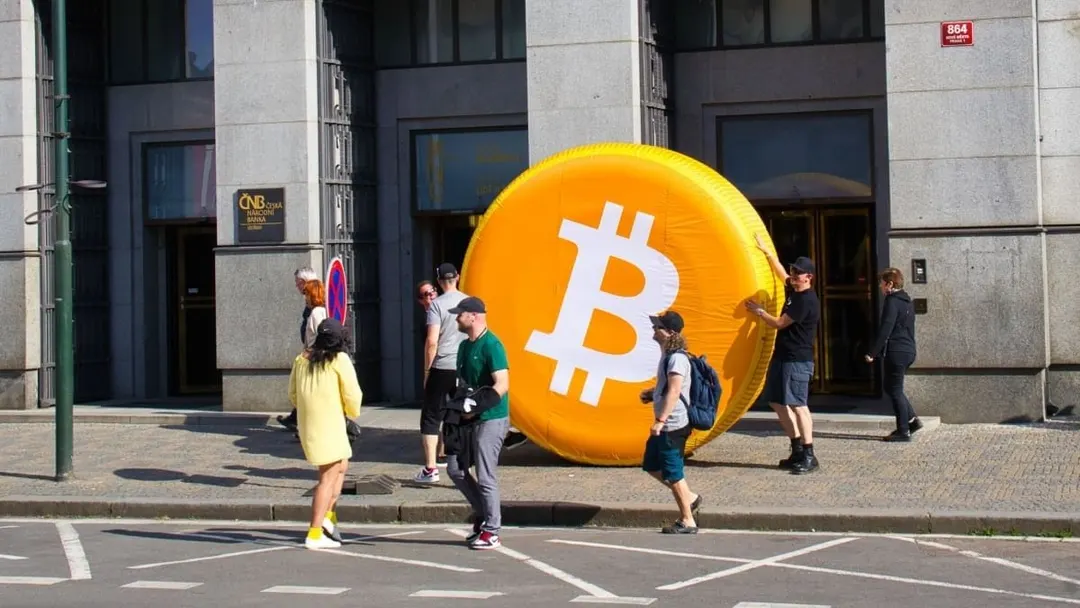
Strategy skips a week of BTC buys, Strive purchases $36M
Why it matters: Corporate demand for bitcoin is shifting from Strategy to smaller public companies, reducing the market's reliance on a single buyer.

Fortune: Robinhood-AMC clash over tokenized shares marks start of blockchain equity era
Why it matters: Tokenizing shares could give global investors cheap access to U.S. equities, but requires legal regulation to protect against fraud.
CoinShares reports $23.9M loss for first half of 2026
Why it matters: A loss at a major issuer of crypto products may signal weak demand for institutional crypto products in Europe.
Bitfinex: bitcoin stuck in 5.5% range for 24 days, seller risk ratio falls to 7 bps
Why it matters: The direction of the breakout from the range depends on Fed signals on September 15-16, real rates and energy prices.
Abraxas Capital holds $980M in shorts on Hyperliquid
Why it matters: The large short position in ETH and BTC signals the fund is betting against the market ahead of the Fed meeting.
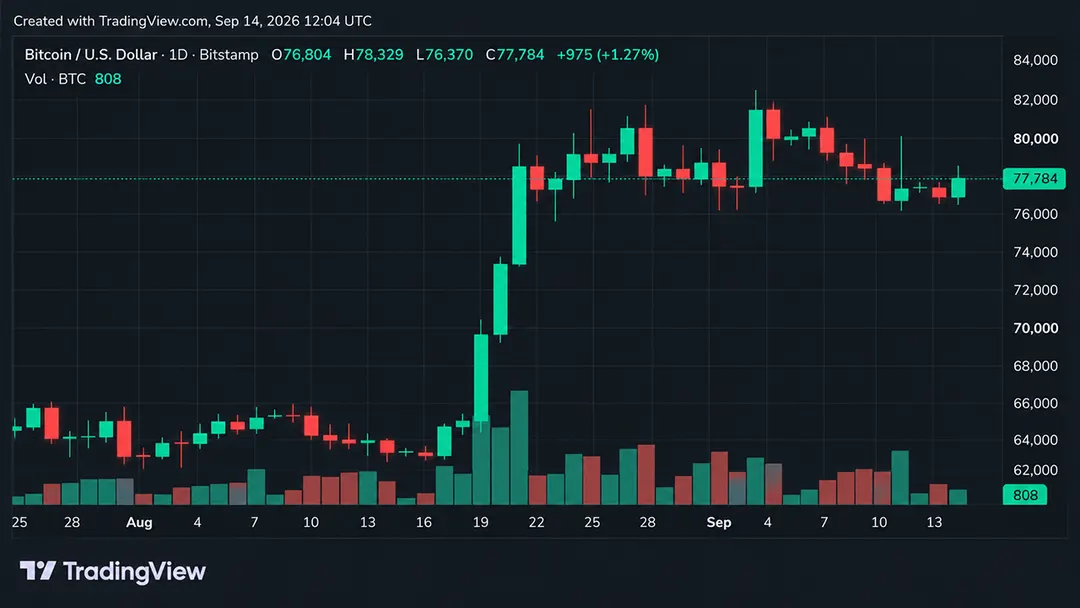
Bitcoin rebounds from $76,370 to $77,800, but $79,000 ceiling holds
Why it matters: Bitcoin is locked in a $76,000–82,000 range: a break above $79,000 or a loss of $76,000 will set the direction.
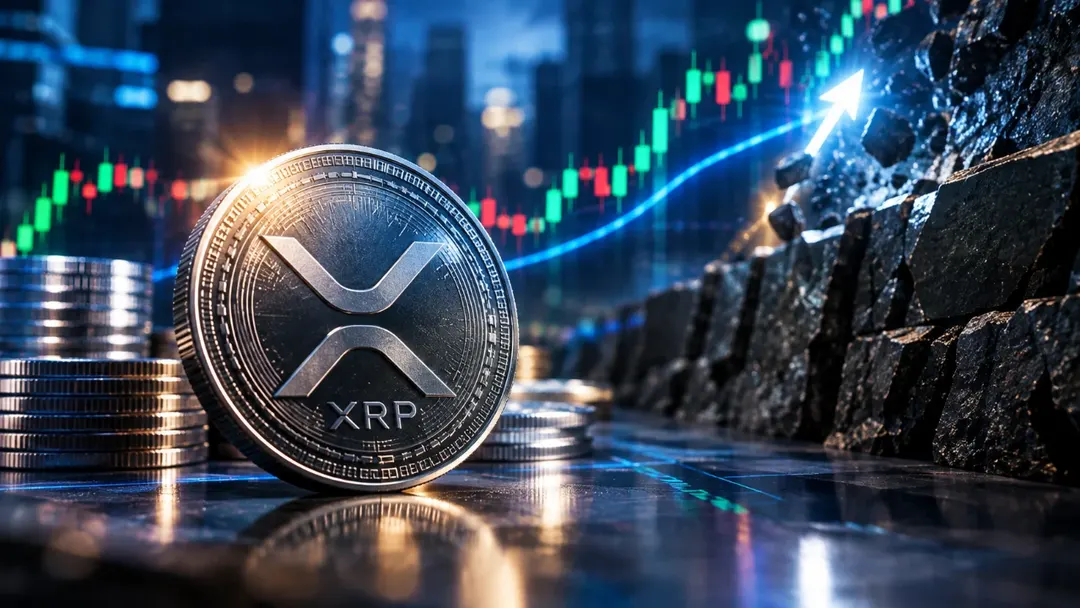
XRP holds above $1.30, awaits break of $1.40–1.45 resistance
Why it matters: Holding $1.30 preserves XRP's bullish structure, but without rising volumes a resistance break is unlikely.
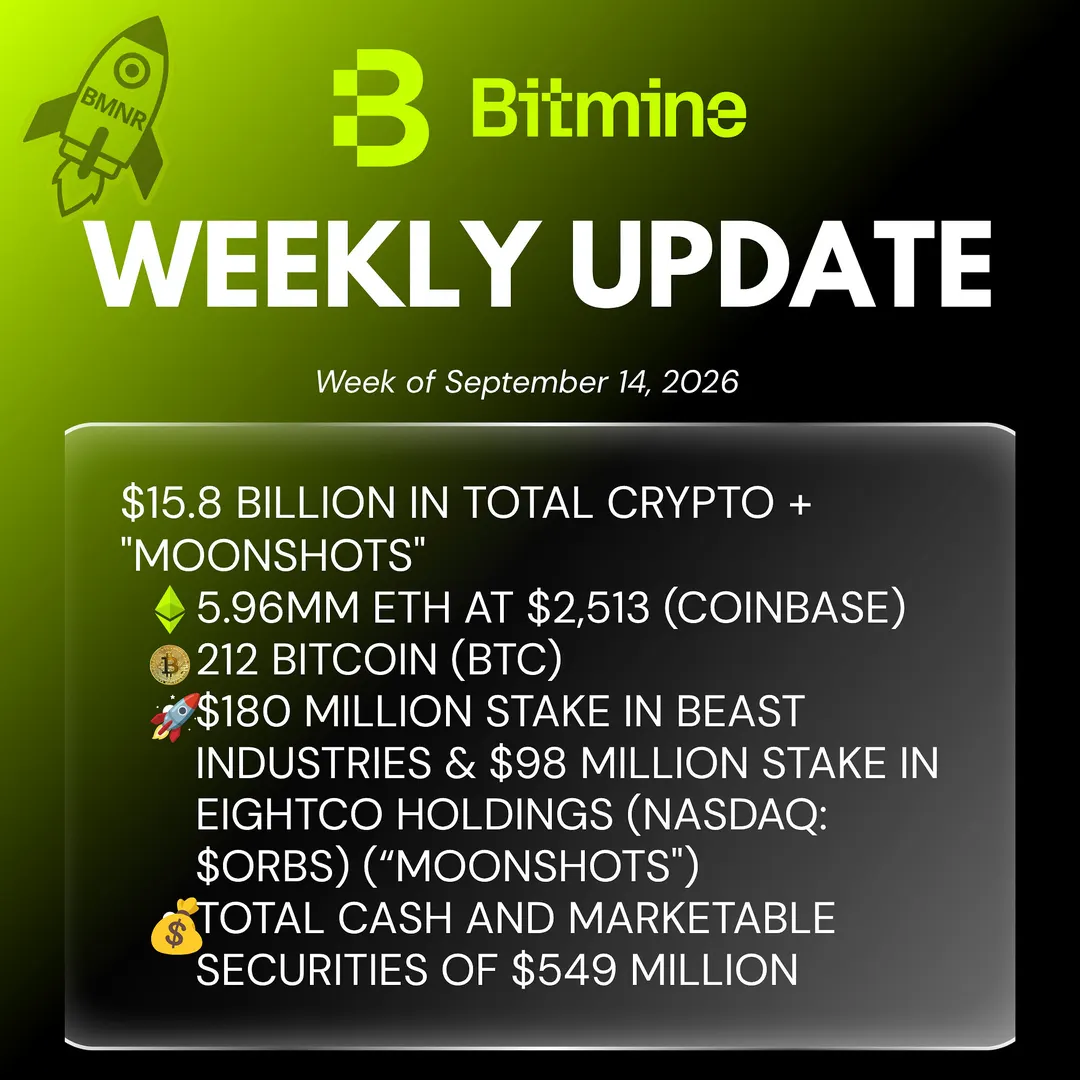
Bitmine raises ETH reserves to 5.96M tokens, assets at $15.8B
Why it matters: The largest corporate holder of ETH keeps increasing its share, reducing free supply and supporting the asset's price.

Linea joins restructured Consensys for institutional market
Why it matters: Institutional capital could flow into Ethereum through a regulated L2, boosting demand for ETH and Linea's deflationary model.
Trump backs CLARITY Act as banks lobby against stablecoin rules
Why it matters: The outcome of the vote will determine who regulates the spot crypto market — the SEC or the CFTC — and the fate of yield-bearing stablecoins.
BitGo and Crossover Markets top $2B in clearing volume
Why it matters: Rising clearing volumes point to a strengthening institutional infrastructure for the crypto market.

Tokenized equities market hits $3.19B, ONDO at $0.358
Why it matters: Tokenization growth is drawing in institutions, but weak on-chain activity and token unlocks weigh on ONDO; the key trigger is the vote on fee distribution.

EU Cyber Resilience Act reporting rules take effect
Why it matters: Manufacturers of crypto wallets and software in the EU may face new vulnerability notification duties, increasing the regulatory burden.
Bitdeer signs 10-year Malaysia AI cloud deal worth $1.1B a year
Why it matters: Miner BTDR is shifting into AI infrastructure, which could serve as a benchmark for other Bitcoin miners seeking new revenue sources.