Crypto news today
CSA warns of rising crypto fraud promising unrealistic returns
Why it matters: Tougher regulator warnings could lead to stricter rules for crypto platforms and higher disclosure requirements.

Ethereum staking hits record: 43 million ETH in deposit contract
Why it matters: Shrinking free ETH supply amplifies the impact of rising demand on price, especially if a staking ETF is approved.
Dollar rises to two-week high as market prices in 86% odds of Fed hike
Why it matters: Fed tightening and rising oil prices weigh on risk assets, including bitcoin, ahead of meetings of the Fed, Bank of England and Bank of Japan.

Kyrgyz central bank and CertiK sign digital asset security MOU
Why it matters: A signal of tighter oversight of digital assets in Central Asia, but without concrete timelines there is no market impact yet.

US Senate Republicans release final Clarity Act draft ahead of Sept 15 vote
Why it matters: The procedural vote needs 60 votes and Republicans hold 53, so the outcome hinges on Democratic support.
BIS warns on high leverage after near-collapse of Situational Awareness fund
Why it matters: The regulator's signal of market fragility from leverage raises the risk of sharp sell-offs, including in crypto assets.

Brazil central bank tightens capital rules; up to 90% of crypto firms may exit
Why it matters: Brazil's market is consolidating around a few licensed players, which lowers competition and client risk but limits choice.

Chainlink co-founder joins crypto regulation discussion at Philadelphia Fed
Why it matters: Dialogue between a major blockchain project and the Fed could speed up regulatory clarity and support institutional adoption.

Bitcoin rebounds above $70,000, but market sees 85% odds of a Fed rate hike
Why it matters: The outcome of the Fed meeting will determine whether BTC's rebound continues or rising yields cut it short.

CFTC approves rule setting 30% base payout for whistleblowers on awards up to $5M
Why it matters: The rule makes payouts more predictable and could increase the flow of crypto fraud tip-offs in the US.

US 10-year Treasury yield tops 5% for the first time since 2023
Why it matters: Rising yields tighten financial conditions and reduce the odds of a Fed pause, weighing on risk assets including bitcoin.
Soluna wins ERCOT base-load status for 100 MW AI data center
Why it matters: Base-load status simplifies grid connection and power supply for data centers, strengthening the link between mining and AI infrastructure.
Centrifuge to publish report on structural differences among tokenized money market funds
Why it matters: Differences in fees and liquidity among tokenized funds are becoming critical for investors as the segment grows to $14 billion.

XRP breaks out of triangle, targets $1.60
Why it matters: The triangle breakout and rising volumes could open the way for XRP to $1.60, but holding above the $1.40 resistance remains key.
Stablecoin market cap falls $414 million as DEX volumes rise 8%
Why it matters: The decline in stablecoins alongside rising DEX volumes and BTC purchases points to conversion rather than liquidity leaving the market.

Strategy buys no BTC, Strive adds 469 BTC, KULR sells all reserves
Why it matters: Diverging moves by treasury companies show that corporate demand for bitcoin is uneven ahead of expectations for the Fed's decision.
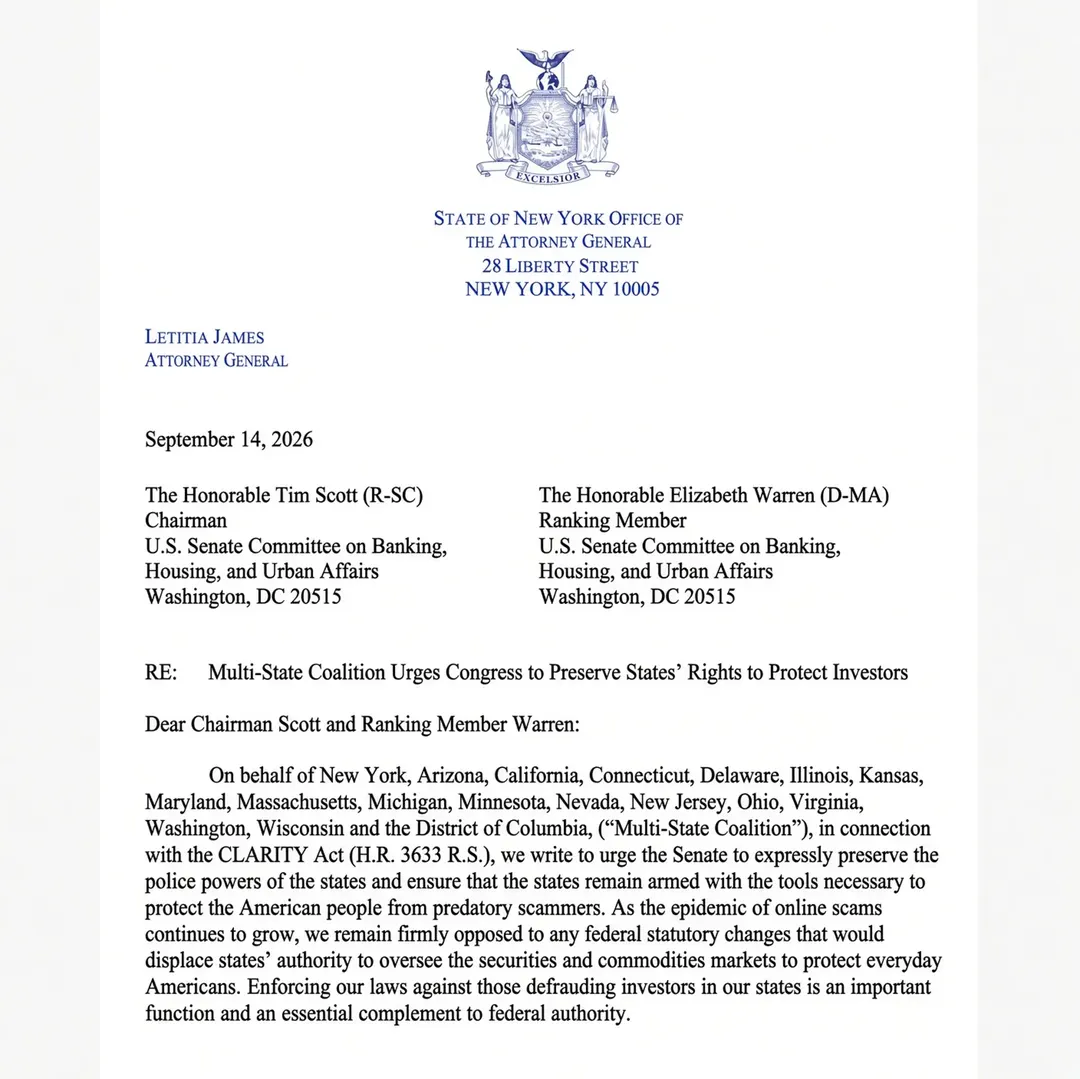
18 US state attorneys general oppose CLARITY Act
Why it matters: The states' stance strengthens resistance to the bill and increases uncertainty over US crypto market regulation.

Teravolt proposes repurposing bitcoin farms for AI power supply
Why it matters: AI growth could intensify competition for electricity and push bitcoin mining off cheap energy sites.

CFTC pays whistleblowers more than $150 million for fraud tips
Why it matters: The CFTC's expanding jurisdiction over crypto derivatives and the spot market raises risks for violators and encourages whistleblowing.
Sky completes first burn of 2.86 million SKY using 5% of monthly profit
Why it matters: The launch of the deflationary mechanism reduces SKY supply and ties the token's price to protocol revenue.