Crypto news today

Final CLARITY Act version loses support ahead of Senate vote
Why it matters: The outcome of the Sept. 15 vote will determine whether the Senate begins considering a U.S. crypto market structure law.

Ethereum ETFs top Bitcoin ETFs in September inflows: $324.4M vs $307.3M
Why it matters: Demand is shifting toward ETH products: ETF positions are used as collateral for CME futures, supporting basis yield and the ETH price.

U.S. strategic Bitcoin reserve bill to be heard in committee Sept. 16
Why it matters: The first advance of a BTC government reserve bill in Congress could legitimize state demand for Bitcoin and set a benchmark for other countries.

Bitcoin.org's Cobra calls for freezing Bitcoin protocol permanently
Why it matters: The debate over Bitcoin's "ossification" affects plans for scalability and smart contracts, and therefore the expectations of BTC holders.

Polygon brings 20 currencies on-chain for the forex market
Why it matters: If the initiative works, Polygon could attract institutional capital from the largest forex market.

Hedera responds to FCA and Bank of England wholesale markets query
Why it matters: Dialogue between crypto companies and UK regulators could shape future standards for digital assets.
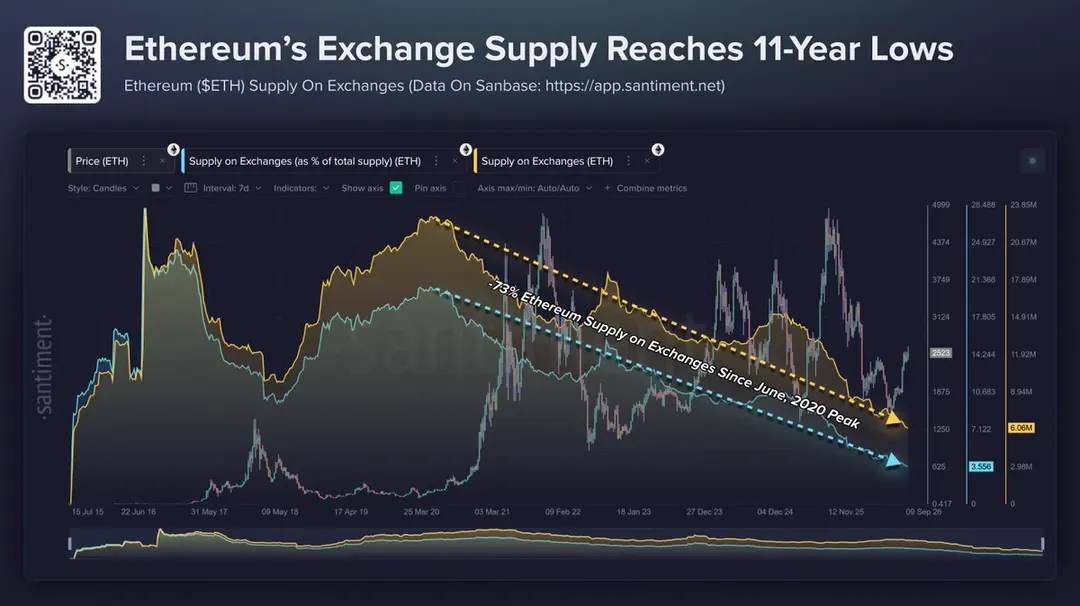
Ethereum exchange supply falls to 6.06 million ETH, an 11-year low
Why it matters: Shrinking exchange supply reduces seller pressure and makes ETH's price more sensitive to incoming demand.
Aerodrome tops 700 DEXs in spot FX volume in 2026
Why it matters: Aerodrome's growth shows that concentrated liquidity and the ve(3,3) model are taking share from Uniswap on Base, intensifying competition among DEXs.

Bitcoin mining rises at BitFuFu and CleanSpark in August, falls at Canaan
Why it matters: Canaan's sale of crypto reserves and rising output from competitors reflect pressure on miners and a redistribution of hashrate.

Zcash expands payments via NEAR Intents with Cash App and PayPal access
Why it matters: Expanding ZEC's payment accessibility could attract new users and strengthen demand for the asset.

Fireblocks: banking and payment volumes surpass crypto trading for first time
Why it matters: The rising share of banking and payment operations points to institutional demand shifting from speculative trading toward regulated infrastructure.

Trader loses $2.1M USDT after partner's Telegram account hacked
Why it matters: The case shows that social engineering via hacked accounts remains a primary vector for crypto theft, while Tether's freeze partially recovers funds.

Protos: 700M TRX worth $238M missing from HTX reserves
Why it matters: Concealment of reserves and withdrawal of funds to Justin Sun-linked structures undermine trust in HTX after EU and UK sanctions.

OKX launches 24/7 tokenized stock trading in Europe
Why it matters: Expanding tokenized stocks on a major exchange intensifies competition with Robinhood and Base for the blockchain-based stock market.
White House and banks clash over stablecoin yield in CLARITY Act
Why it matters: The final text of the section will determine whether issuers and exchanges can pay yield on stablecoins, affecting competition with bank deposits.

2026 patch for 2018 bug opened path to 4,000 BTC theft from Liquid
Why it matters: The incident shows that security updates can themselves create critical holes, raising risks for custodial services.

CryptoUK proposes HMRC tax breaks for stablecoins
Why it matters: Tax breaks for stablecoins could reduce compliance costs and accelerate their integration into the UK financial system.
Bitcoin breaks $79,000, daily gain 0.55%
Why it matters: Breaking $79,000 brings Bitcoin closer to the key resistance zone of $80,000–82,300 ahead of the Fed meeting.

White House crypto adviser accuses bank lobby of contradictions on stablecoins
Why it matters: The dispute over stablecoin yield determines the future of crypto regulation in the US and could affect capital flows into the banking system.

Aave USDT0 pool on Monad: only $4.4M of $55.9M available
Why it matters: The high rate may reflect shrinking free liquidity rather than rising demand, increasing the risk of withdrawal delays for large depositors.