XRP (XRP) news

Franklin XRPZ draws $3.5M in a day as XRP slumps
Why it matters: Inflows into the ETF during a market decline show that institutional demand for XRP persists despite regulatory uncertainty.

XRP at $1.29: key levels are $1.10 support and $1.63–1.65 resistance
Why it matters: Holding $1.10 would preserve the higher-low structure, while a break would open the path to $0.94 and below.
CryptoQuant: whales moved 1.6B XRP to Binance
Why it matters: Rising exchange inflows could increase seller pressure on XRP, but without growth in net deposits and volumes it is more likely trading and redistribution.
Bitcoin at $78,000, Ethereum and XRP prepare to break out as bulls return
Why it matters: Until the Coinbase Premium turns positive, a sustained recovery is unlikely — BTC is likely to trade sideways in the $76,000–82,000 range.
Ripple's David Schwartz personally exposes fake XRP airdrop
Why it matters: Schemes targeting XRP holders remain systemic, and protection still depends on manual team response and user vigilance.

Binance lists quarterly futures on BTC, ETH, BNB, XRP and SOL with March 2026 delivery
Why it matters: Binance's expanded derivatives lineup gives traders more tools to hedge and bet on quarterly moves in top assets.

500M XRP moved from Uphold wallet to five new addresses
Why it matters: Large movements from exchange wallets are often seen as preparation for a sale, but without confirmation from Uphold and follow-up transfers, this is only an on-chain signal.

XRP Ledger releases software update to boost network performance
Why it matters: Technical reliability supports XRP's core use case of fast settlements, but it does not affect the token's price in the moment.
Evernorth discloses $30M convertible notes tied to Armada merger
Why it matters: The deal shows crypto treasury companies raising capital to buy XRP even amid SPAC merger risks and token volatility.
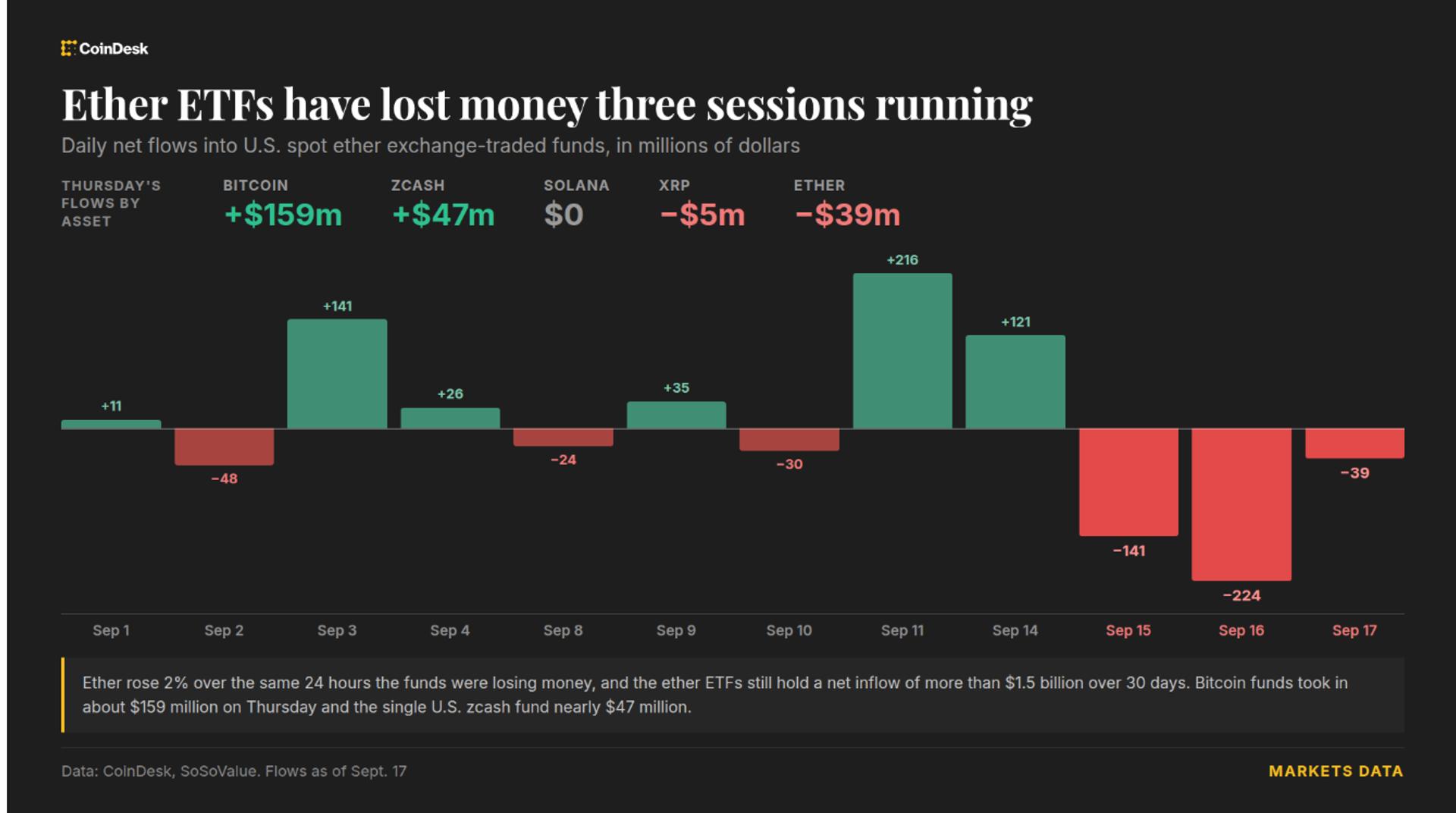
Ethereum ETFs see third straight day of outflows; bitcoin above $77,000
Why it matters: Outflows from ETH funds even as the token's price rises show institutions are cutting exposure, while demand shifts toward BTC and ZEC.

Moscow Exchange to launch 5 crypto perpetuals for qualified investors on September 22
Why it matters: Expanding regulated crypto access in Russia could boost derivatives liquidity, but only among professional investors.

XRPL 3.4.0 adds private vaults with XRP lockups from one minute to 30 years
Why it matters: Activation depends on validator voting; demand for XRP will only emerge if applications choose it as the asset for lending pools.
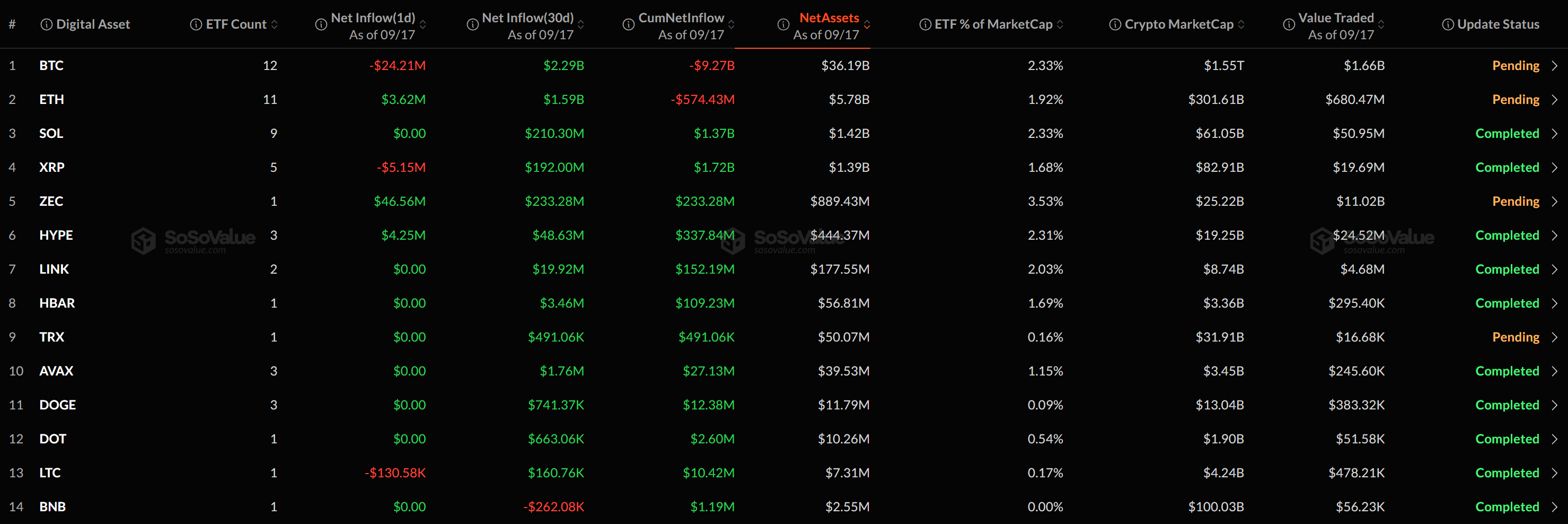
Altcoin ETFs: inflows into HYPE and ZEC, outflows from XRP and Litecoin
Why it matters: Inflows into ZEC and HYPE confirm demand for altcoin ETFs, while outflows from XRP signal weakening interest in the asset.
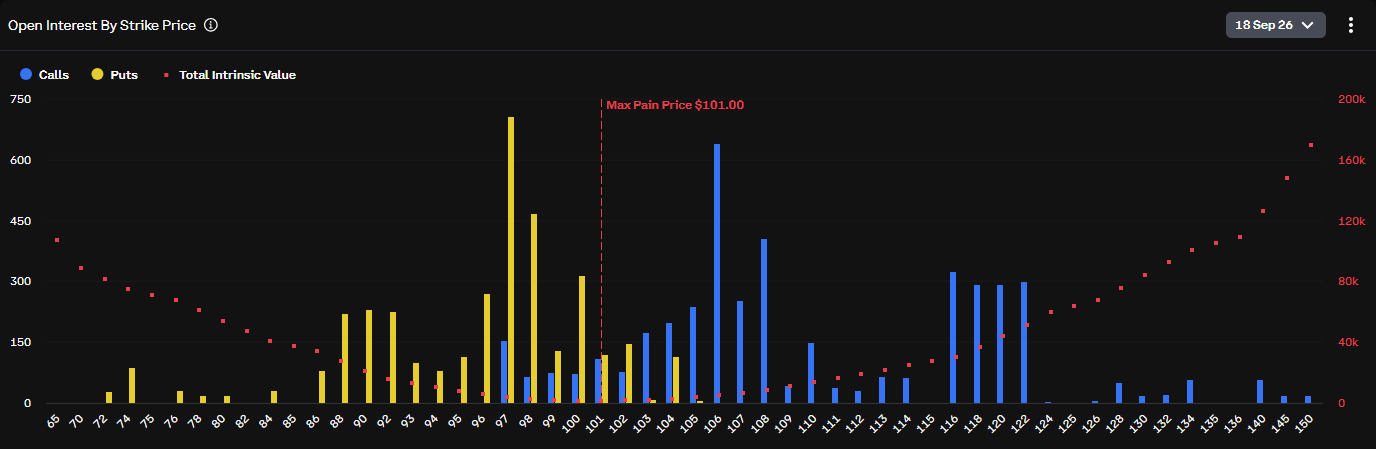
Options: calls dominate ETH and XRP, Solana more cautious
Why it matters: The call skew points to expectations of a rebound in ETH and XRP, while Solana remains the most hedged against a decline.

Bitcoin at $76,000, Ethereum at $2,450 as market rebounds after Fed rate hike
Why it matters: The market quickly digested the Fed's hawkish move, but capital is still flowing into U.S. tech stocks rather than crypto, with further moves depending on the rate path.
Spot XRP ETFs see $5.15M net outflow in a day
Why it matters: Continued outflows from XRP ETFs signal weak institutional demand for the asset as XRP falls below $1.30.
XRP Ledger releases version 3.4.0 with Lending Protocol v1.1
Why it matters: Expanding XRPL's lending functionality could attract institutional borrowing to the network, but only after validator voting.

XRP holds near $1.29 amid seller pressure and CLARITY Act failure
Why it matters: The failure of the CLARITY Act deprived XRP of regulatory clarity, while the drop in open interest points to long unwinding rather than capitulation.

API3 launches cbXRP/WETH market on Morpho Kabu Vault
Why it matters: The new collateral market could boost liquidity and demand for cbXRP in the XRP DeFi ecosystem.
XRP falls below $1.30 as investor balks at $81B valuation
Why it matters: Pressure on XRP is being reinforced by a hawkish Fed and the failure of the CLARITY Act, limiting the altcoin's recovery.