Solana (SOL) news

Zcash jumps 23% to $1,369 on Paradigm backing and network upgrade vote
Why it matters: Institutional backing and the network upgrade strengthen Zcash's position as the largest privacy coin amid a broader market recovery.
Trader closes ETH and SOL longs with $1.89M profit in 30 days
Why it matters: Large traders are again building BTC, ETH and SOL longs, which may signal a bet on continued upside.

$519M pulled from crypto ETFs in a day: BTC and ETH fall, SOL gains
Why it matters: A second wave of outflows from BTC and ETH ETFs signals weak institutional demand after the failure of the CLARITY Act and a hawkish FOMC.

JUP falls 10% after losing $0.24 support, capital flows turn negative
Why it matters: Jupiter is a key trading router in Solana, and its weakness signals declining activity in the ecosystem.

Solana falls 1.48% to $99.78, defends $96 support
Why it matters: Holding the $96 support preserves the medium-term trend, but a break would open the way lower; the September 18 upgrade could act as a driver.
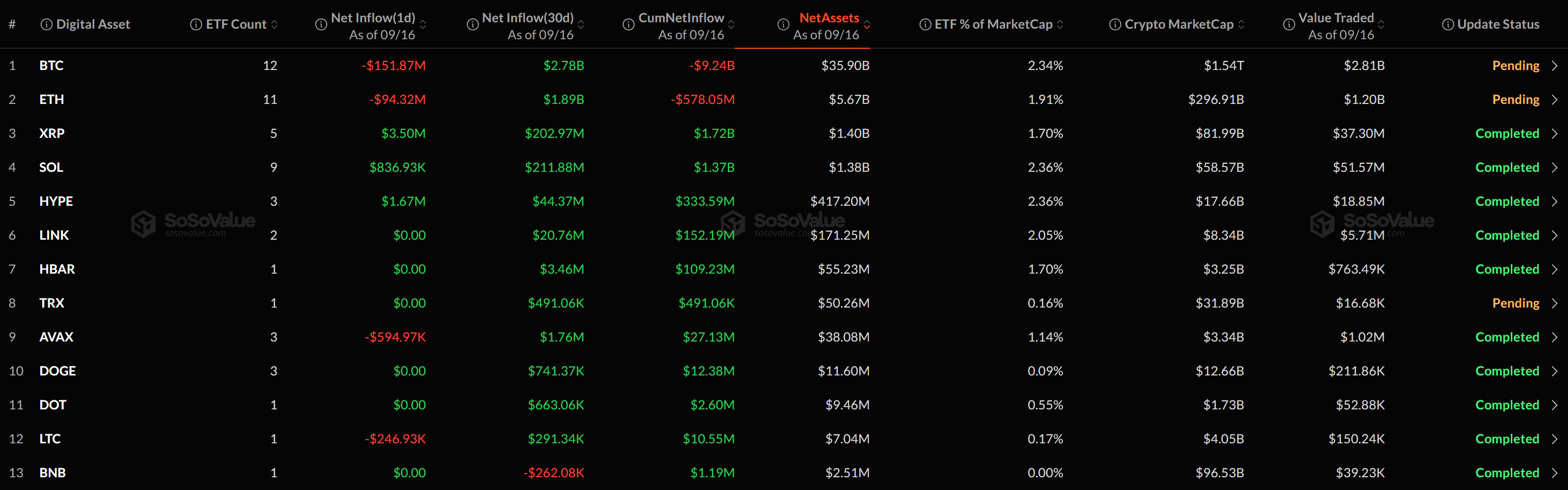
Spot ETFs for XRP, SOL and HYPE draw inflows; AVAX and LTC see outflows
Why it matters: Altcoin ETF inflows remain selective, with demand concentrated in XRP, SOL and HYPE, while AVAX and LTC lose ground.

PAID token on Solana jumps 90%, market cap reaches $27.5 million
Why it matters: The discrepancy between market data and official documentation creates risk, as the token's link to the UsePaid project is unconfirmed.
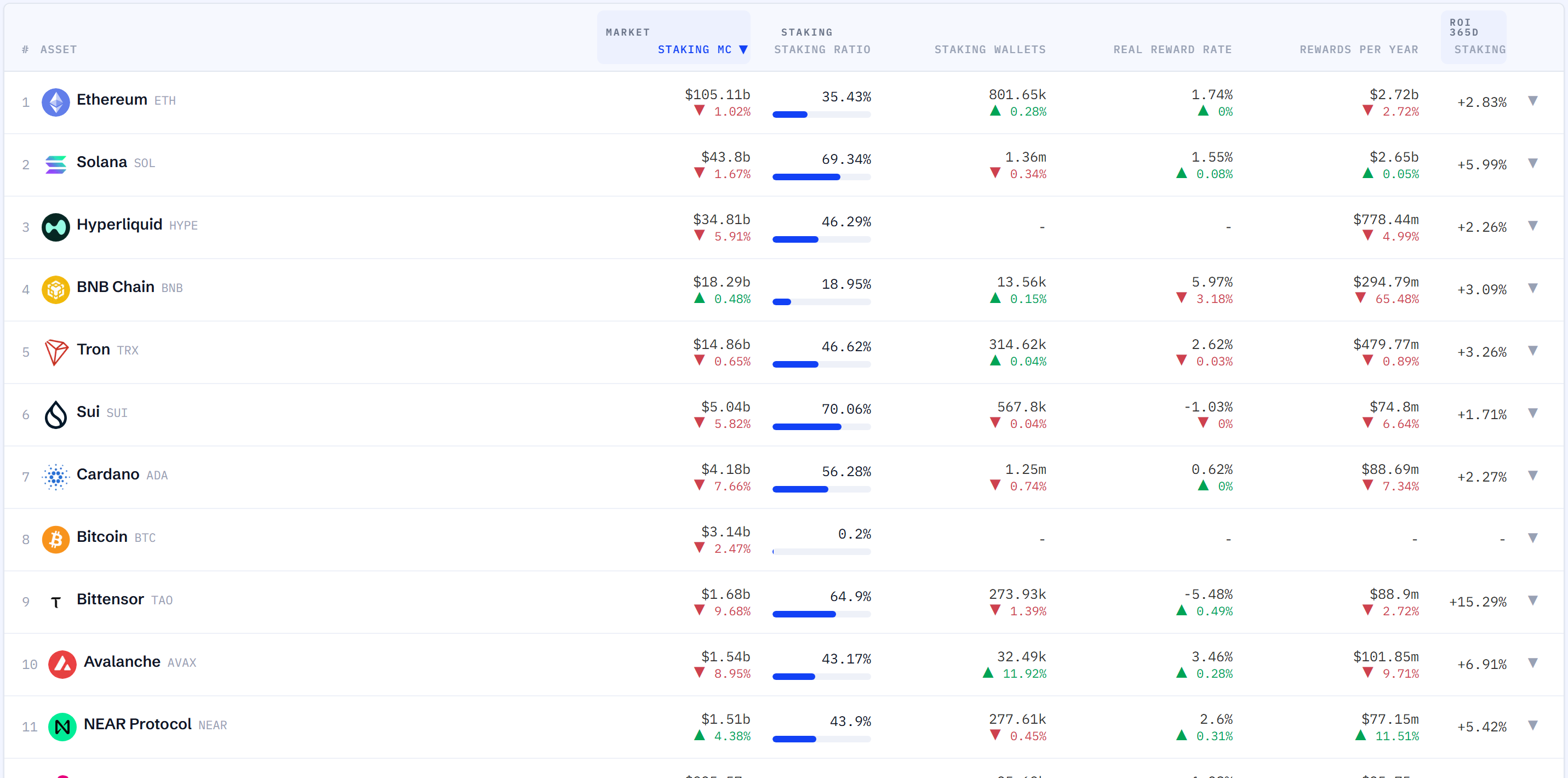
Staking market cap of top assets declines, BNB Chain the only gainer
Why it matters: The decline in staking market cap of the largest networks reflects broad risk-off sentiment and capital outflow from crypto.

Bitcoin holds $76,000 after hawkish FOMC, $186M in shorts liquidated
Why it matters: BTC's resilience above $76,000 amid a hawkish FOMC points to buyer strength; a break above $76,800 could trigger a short squeeze toward $77,000+.

XRP included in SEC and CFTC digital commodity category, but sale-method assessment remains
Why it matters: Uncertainty over the method of sale persists, leaving regulatory risk for XRP and other assets until new rules emerge.
Spot SOL ETFs draw $836,900 in a day
Why it matters: Inflows into SOL ETFs remain weak amid broad outflows from crypto funds, limiting institutional demand for Solana.

BTC long account share in dollar margin falls 5.06 pp, Solana 3.95 pp
Why it matters: The sharp drop in the long account share in dollar margin indicates institutional traders are moving out of risk ahead of the Fed decision.

Tokenized stocks TVL on Solana rises to $87.4 million
Why it matters: The growth of tokenized stocks intensifies competition among networks for institutional capital and expands Solana's DeFi ecosystem.
Bitwise CIO: CLARITY Act failure won't break the bull market
Why it matters: The stance of a major asset manager shows the market can grow without a new law — driven by regulators and institutional inflows.

Bitwise sells $46.5M in BTC and ETH, buys SOL
Why it matters: A major asset manager is rotating out of BTC and ETH into SOL, which could support demand for Solana products.

ERA releases software wallet for its hardware device
Why it matters: The product lowers the barrier to self-custody of crypto, which could intensify competition among hardware wallet makers.

Paid launchpad goes live on Solana with payouts via X Money
Why it matters: Tying fees to X accounts could accelerate the growth of memecoin launchpads on Solana, but questions about licensing and payout scalability remain open.

Solana memecoin ZCAT distributes $8 million in ZEC to holders
Why it matters: The scheme shows how memecoins can become a channel for token distribution, but its sustainability depends on ZCAT's trading volume.

Solana triples transaction size, prepares 250 ms slots
Why it matters: Growing throughput and activity strengthen Solana's position in the competition for DeFi and tokenized assets, but increase the load on validators.

US bank Column launches stablecoin rails with Solana as default
Why it matters: A federally licensed bank embedding stablecoins into its core accelerates their adoption in payments and competition with BVNK and Marqeta.