Ethereum (ETH) news

ERA releases software wallet for its hardware device
Why it matters: The product lowers the barrier to self-custody of crypto, which could intensify competition among hardware wallet makers.
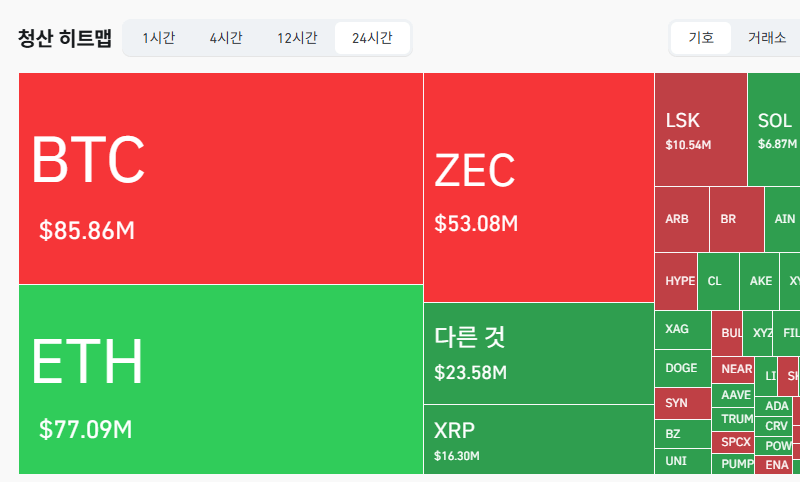
$261.73 million liquidated in 24 hours, 54.46% shorts
Why it matters: The predominance of short liquidations amid a falling BTC price points to a rebound and pressure on sellers.

US bank Column launches stablecoin rails with Solana as default
Why it matters: A federally licensed bank embedding stablecoins into its core accelerates their adoption in payments and competition with BVNK and Marqeta.
ETH tops $2,400, up 0.36% on the day
Why it matters: The return above $2,400 is an attempt to hold short-term support after a market sell-off.

NFT gacha Fake World Assets launches purchases in V2
Why it matters: The update reduces V1 risks and adds new mechanics, but mainly affects a niche NFT gacha rather than the broader market.

Bitget discloses reserves for 45th straight month with 122% ratio
Why it matters: The report confirms Bitget's regular disclosures, but PoR still does not provide a full picture of the exchange's financial condition.

BTC dominance rises to 59.46% as altcoins weaken
Why it matters: BTC's rising share points to capital rotating into Bitcoin as a safe-haven asset, but without confirmed inflows of new money.

XRP falls 10% to $1.27, tests $1.20 support ahead of Fed decision
Why it matters: The Fed decision and holding the $1.20 support will determine whether XRP continues falling to $1.10 or begins a recovery.

NEAR Protocol launches direct deposit from Tron with withdrawal to Ethereum
Why it matters: Simpler transfers between Tron and Ethereum could increase cross-chain volumes and intensify competition among interoperability solutions.

Ethereum and Base split on account abstraction standards
Why it matters: Fragmentation of standards will force wallets to support two transaction formats, slowing the adoption of native account abstraction.

Investors flee to stablecoins ahead of Fed decision: net buying rises to 28%
Why it matters: The shift of capital into stablecoins ahead of FOMC signals caution: the rate decision and Warsh's tone will set the direction for BTC and altcoins.
$477M liquidated in 24 hours: 76% were longs
Why it matters: The dominance of long liquidations points to pressure on buyers and the risk of further declines if the rebound is weak.

Robinhood Chain overtakes Hyperliquid in daily app revenue
Why it matters: It shows that the Robinhood L2 network is already competing with the largest DeFi protocols on fees, but the figures are highly volatile.

36,573 ETH worth $87.5 million moved from Coinbase Institutional to unknown wallet
Why it matters: A large withdrawal from an institutional venue could indicate a change in the holder's strategy and increase ETH volatility.
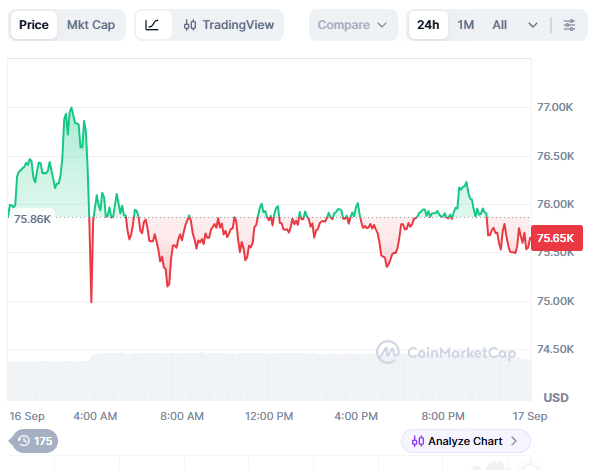
Bitcoin at $75,665, Ethereum at $2,393 as market weakens; XRP drops 8.4%
Why it matters: Falling derivatives volumes and rising BTC dominance point to trader caution and capital flowing into bitcoin.

Whale Alert: 32,190 ETH worth $77 million moved to Coinbase Institutional
Why it matters: Large ETH transfers to institutional platforms may signal preparations for deals or capital inflows into ETH products.

Ethereum trapped in liquidity snare after CLARITY Act fails
Why it matters: A return above $2,600 would revive the bullish scenario, while losing $2,350 would open the path to $2,000.

$632 million in liquidations: longs under pressure ahead of FOMC decision
Why it matters: The Fed decision and further ETF flows will determine whether the sell-off marks the start of a decline or merely a flush of excess leverage.
Crypto market cap falls to $2.59T ahead of Fed decision, after CLARITY Act fails
Why it matters: A rate hike with a hawkish signal could deepen the selloff, while a pause would give BTC, ETH and XRP room to rebound.

SparkLend TVL jumps 55% to $7.4B as protocol shuts Gnosis Chain deployment
Why it matters: SparkLend is cementing its place among the three largest DeFi lending protocols, concentrating liquidity on Ethereum and within the Sky ecosystem.