Bitcoin (BTC) news

Crypto market rises 1.2% despite Fed rate hike, bitcoin holds near $77,000
Why it matters: The market showed resilience to Fed tightening, but the large ETF outflow signals weak institutional demand.
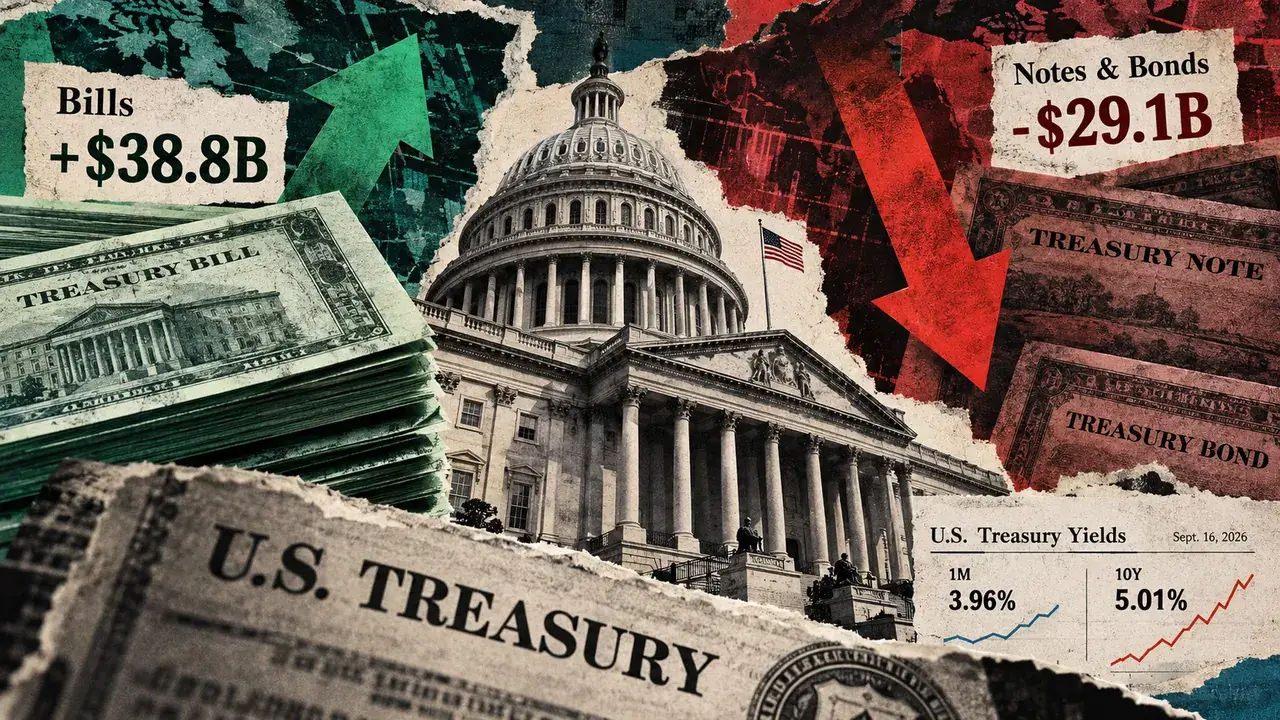
Foreigners sell $29 billion in U.S. Treasuries, pressuring bitcoin
Why it matters: High long-term yields raise the opportunity cost of holding bitcoin and limit capital inflows into risk assets.

Bitcoin rises to $76,621 after Fed hikes rates by 0.25 percentage points
Why it matters: The market read the Fed's path as less hawkish than feared, but sustained gains depend on whether demand can offset continued ETF outflows.

Analysts split on bitcoin forecasts after Fed meeting
Why it matters: Conflicting metric signals mean high uncertainty: holding BTC above the True Market Mean will determine whether the rally continues or a pullback to $70,000 begins.
BTC breaks through $77,000, up 1.61% on the day
Why it matters: Breaking $77,000 brings bitcoin closer to key resistance at $80,000, which will determine whether the market structure shifts.

Shareholders revolt against crypto treasuries after $50B rout
Why it matters: Mass selling of treasury BTC and a pivot to buybacks could add pressure on the bitcoin price and undermine the model of Strategy-like companies.

BlackRock boosts Strive SATA preferred stake by 133%
Why it matters: The world's largest asset manager is increasing its position in an instrument that directly funds bitcoin purchases, strengthening institutional demand for BTC.

Fed hikes rate to 3.75-4%, but bill purchases are not QE
Why it matters: Fed balance sheet growth does not equal easing: as long as purchases are only in bills, bitcoin should not expect a liquidity inflow.

Canaan posts $97.6 million loss for Q2 2026
Why it matters: Falling demand for ASIC miners and Canaan's weak guidance signal pressure across the mining sector amid low bitcoin prices.
BlackRock moves $285.5 million in BTC and ETH to Coinbase Prime
Why it matters: Large BlackRock transfers to Coinbase Prime are typically tied to spot ETF flows and can signal seller pressure.

Chainalysis: Chinese AI models drove 440% surge in malicious blockchain records
Why it matters: Blockchains are increasingly used as a censorship-resistant malware delivery channel, raising reputational and regulatory risks for public networks.

Bitwise softens outlook after CLARITY Act fails in Senate
Why it matters: The market showed growth is possible without the law passing, but regulatory uncertainty and risks remain.

Sparrow Wallet 2.5.5 tightens PSBT signature and Silent Payments checks
Why it matters: The update reduces the risk of signature substitution and data leaks when using hardware wallets and multisig setups.

Bitcoin realized cap falls for first time in a month, next support at $71,300
Why it matters: Two demand indicators weakened at once: a return to growth requires two daily closes above $76,700 and a rising realized cap, otherwise the market will test $71,300.

Fortitude names ex-Hut 8 chief Jamie Leverton CEO ahead of Nasdaq listing
Why it matters: A public listing for the miner via a SPAC-like deal could draw fresh capital into the bitcoin mining sector.

Crypto market breadth flips: 89 of 100 assets gained for the week, bitcoin lags
Why it matters: Broadening participation with bitcoin lagging signals capital rotation into altcoins; confirmation would require several sessions of rising volume.

Chainalysis: onchain malware up 420%, with North Korea and Iran involved
Why it matters: The growth of onchain malware increases risks for users and exchanges, as blockchains become part of cybercriminals' infrastructure.

BlackRock bought $843.78 million of BTC and ETH in 20 days via spot ETFs
Why it matters: Continued buying by the largest ETF issuer will support the current uptrend in BTC and ETH.

Bitcoin consolidates, gold tests $4,200 as market awaits two more Fed hikes
Why it matters: Further Fed tightening strengthens the dollar and pressures BTC and gold, while ETF outflows raise the risk of a return to $74,900.
US 10-year Treasury yield falls to 4.98% after Fed rate hike
Why it matters: Falling US Treasury yields ease pressure on risk assets including Bitcoin, but persistently high inflation keeps the risk of further tightening alive.