Bitcoin (BTC) news
Arthur Hayes Says Crypto Regulation Was Never the Catalyst as Bitcoin Blasts Past $84,000
Why it matters: Bitcoin's rally despite the bill's failure and a rate hike reinforces the narrative that the bottom is in and a bull market is coming in Q4 2026.

Bitcoin Holds Above $81,000 Despite CLARITY Act Failure and Fed Rate Hike
Why it matters: Markets showed agency rulemaking matters more than the stalled bill; $82,500 is the key resistance for further upside.

Bitcoin Hits 8-Month High
Why it matters: A break above the multi-month high could draw in fresh buyers and confirm a trend reversal.

Meltem Demirors: Bitcoin was 'the wrong token' as AI now prices intelligence
Why it matters: The migration of mining hashrate into AI compute is a potential long-term risk to Bitcoin's network security and economics.

SPX6900 Jumps 7.83% to $0.50 as Bitcoin Rally Above $85K Lifts Memecoins
Why it matters: The bounce is a byproduct of Bitcoin's rally rather than project-specific news; without a break above $0.5135 the rebound lacks technical confirmation.

Bitcoin's $85K Rally Fueled by Falling Oil Prices
Why it matters: Cheaper oil eases inflation fears and helps markets absorb the Fed's rate hike, supporting demand for Bitcoin.

XRP Breaks Downtrend With 5.62% Gain to $1.49
Why it matters: The trendline break opens the door to $1.50 and $1.80, but Ripple's monthly escrow unlocks of up to 400 million XRP remain structural selling pressure.

Bitcoin, Ethereum, XRP Extend Rally as Trump Cancels Strikes on Houthis
Why it matters: Easing Middle East tensions restored risk appetite, though the Bab el-Mandeb standoff remains a lingering risk for markets.

Altcoin market cap tops $800B again, but Altseason Index sits at just 41
Why it matters: Market structure is improving, but without sustained outperformance versus Bitcoin an altseason is not confirmed and the trend could reverse quickly.

Circle Launches cirBTC Page to Track Metrics on Ethereum
Why it matters: Greater data transparency around Circle's assets could boost user and institutional confidence in the Ethereum ecosystem.

Bitcoin bounces 9% off $74,967 low as Fed rate hike fails to deter bulls
Why it matters: Reclaiming the 52-week average has historically marked bull-cycle starts; a cascade of short liquidations above $83K could accelerate the move.
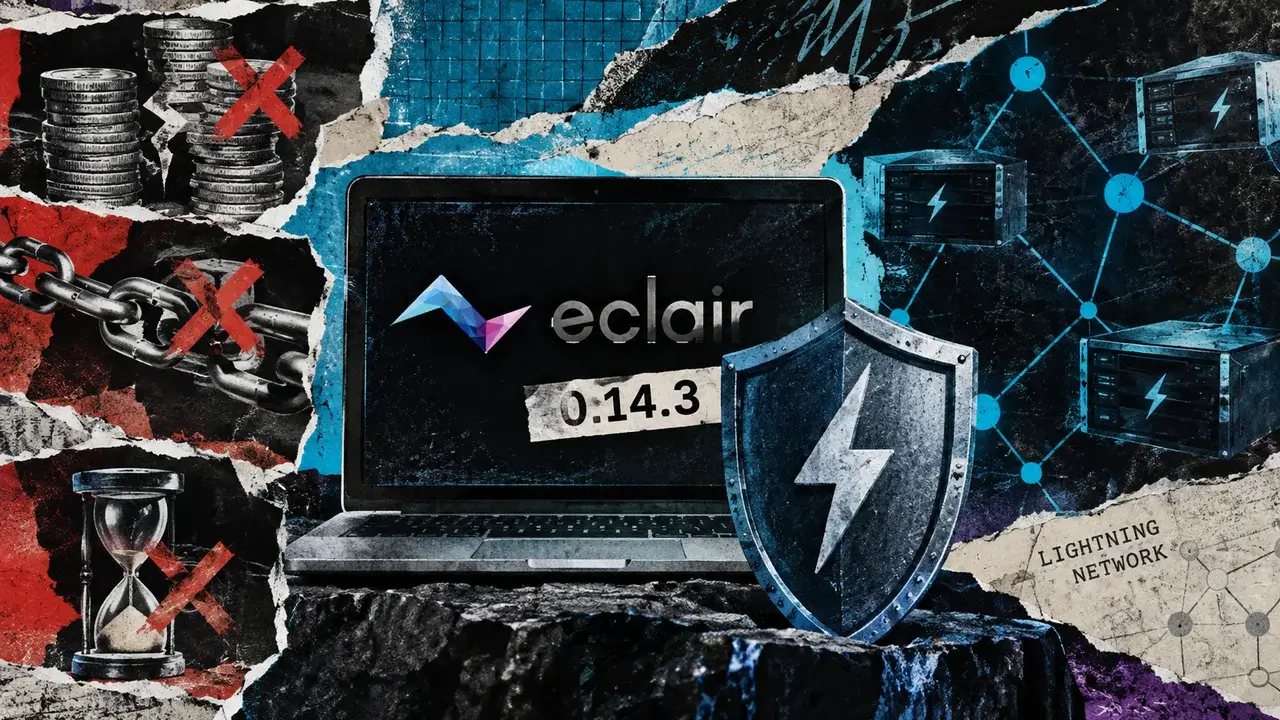
Bitcoin Lightning flaw in Eclair could send a node's entire balance to miners
Why it matters: Lightning node operators should upgrade immediately: the flaw allowed fund loss without key compromise.
QCP: Bitcoin up 29% in 35 days as 43% of options expire Sept 25
Why it matters: The Sept 25 expiry of 43% of open interest could drive volatility around $85K–$100K, while ETF inflows will show whether the rally continues.

Monero Jumps 8.33% to $569.94, Touching Intraday High of $631
Why it matters: XMR's rally signals demand for privacy assets as a relative haven amid US regulatory uncertainty.

Russia's Central Bank Says First Licensed Crypto Firms May Appear by Year-End
Why it matters: A legal crypto market in Russia would open regulated access to BTC, ETH and USDT and set the framework for the industry.

BlackRock says Bitcoin volatility has fallen to 35–40
Why it matters: Lower volatility and expanding ETF-based tools make Bitcoin more usable for institutions, though they may weaken its diversification appeal.

Bitcoin Jumps 5.31% to $84,666, Breaking 90-Day Ceiling
Why it matters: The break above the 50-week moving average has historically preceded bull cycles, though overbought readings raise the risk of a near-term pullback.
Bitcoin Briefly Tops $85K on Unverified Clarity Act Vote Rumor
Why it matters: The move shows how quickly crypto markets react to unverified legislative headlines, raising the risk of sharp reversals without official confirmation.

BTC at $85,000: RSI overbought on every timeframe
Why it matters: The trend remains bullish, but short-timeframe overbought conditions raise the risk of consolidation or a pullback toward $82,000.
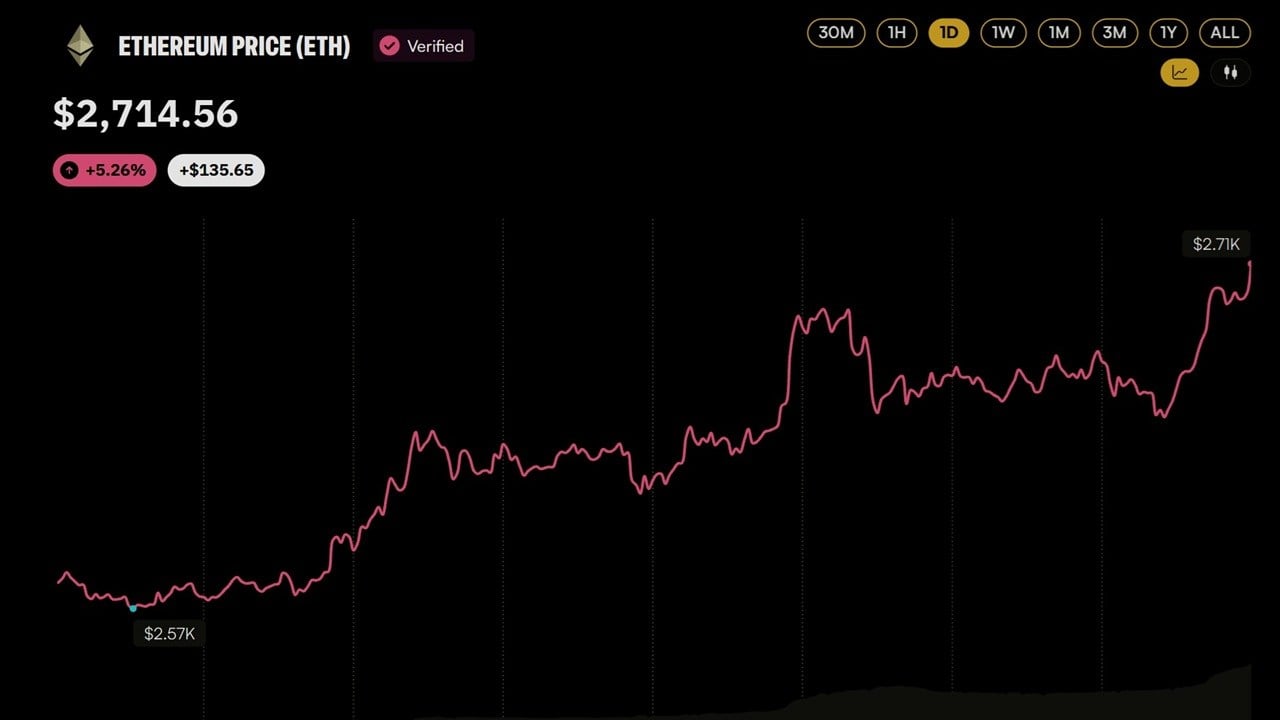
Ethereum Clears $2,700 as Two Whales Pour $106M Into ETH
Why it matters: Whale-led buying with staking, rather than ETF inflows, is powering ETH's move, reducing the risk of coins being quickly dumped on exchanges.