Bitcoin price and crypto market news

Whales cluster BTC longs and shorts in $78,000–79,000 range
Why it matters: The clustering of positions in a narrow range ahead of the CLARITY Act vote raises the risk of a sharp BTC price move whichever way the outcome goes.

XRP at $1.42 ahead of CLARITY Act vote; analysts eye $1.60–2.02
Why it matters: The CLARITY Act vote could be a catalyst for a breakout, but the $1.74–1.78 zone remains strong resistance.
CryptoQuant: Altcoin inflows to Binance nearly quadruple ahead of CLARITY Act vote and FOMC
Why it matters: The rise in altcoin inflows to exchanges may signal seller pressure ahead of the CLARITY Act vote and the Fed decision.
Trader earns $1.26M on CL long on Hyperliquid
Why it matters: Rising oil prices heighten inflation risks ahead of the Fed meeting, while commodity contracts are becoming a notable segment of crypto derivatives.
BlackRock's IBIT bought $1.08B in BTC over 20 days, GBTC sold $254.7M
Why it matters: IBIT remains the main channel for institutional bitcoin demand, while GBTC continues to lose ground.

Crypto.com: Bitcoin SOPR above 1.0 for three weeks, but ETF outflows weigh on market
Why it matters: Improving on-chain profitability for BTC has yet to be confirmed by capital inflows: macro pressure and ETF outflows could delay a market reversal.

Bitcoin and Ethereum ETFs return to inflows as BlackRock pulls in $214.8M
Why it matters: The inflows ended the outflow streak, but capital is concentrating among the largest providers, weakening demand for smaller funds.
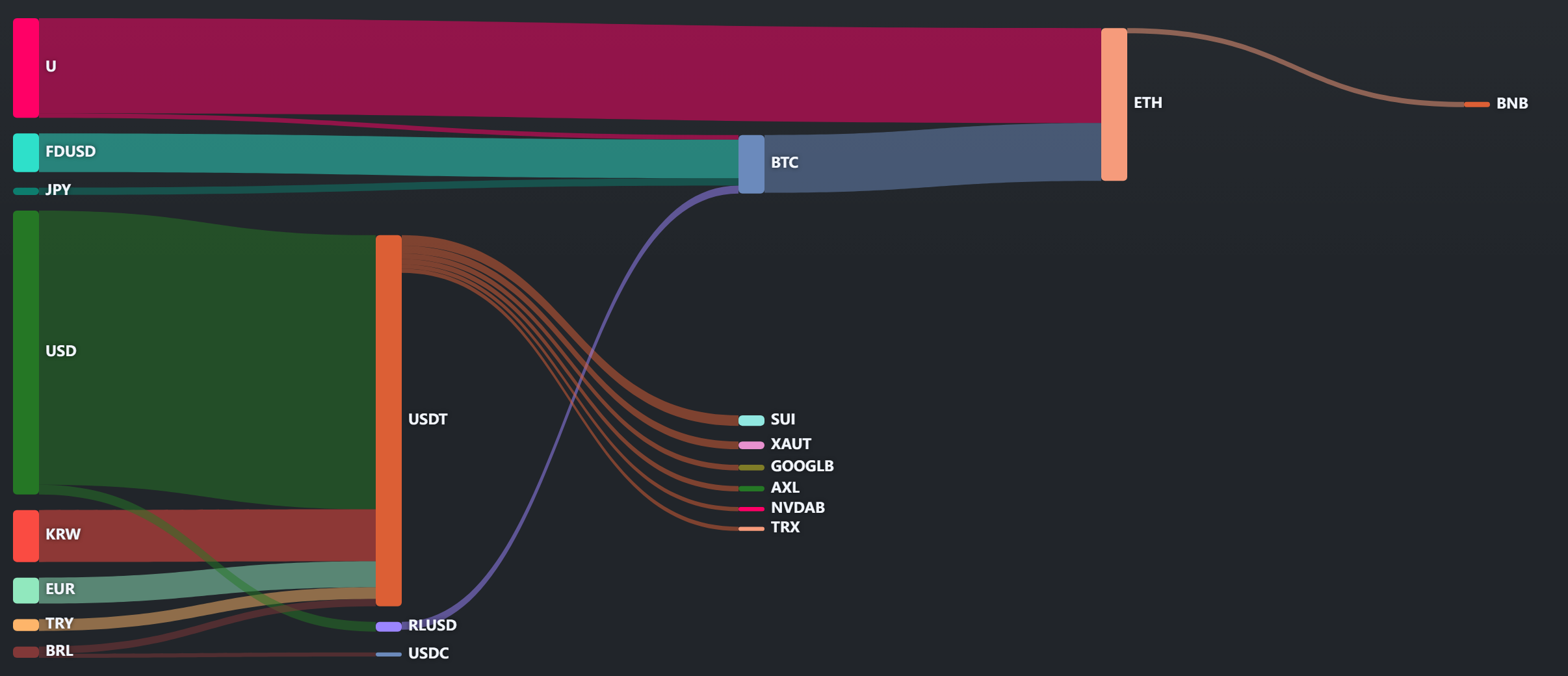
Ethereum sees $42.74M outflow in 5 hours, $10.83M inflow
Why it matters: The large net outflow from ETH and BTC points to profit-taking and caution ahead of the Federal Reserve meeting.

DOT falls below $1 ahead of CLARITY Act vote
Why it matters: DOT is losing the $1 level due to capital rotation into assets that benefit from the CLARITY Act; the vote's outcome will determine further altcoin movement.

Ethereum Classic falls 1.88% to $7.46, tests support
Why it matters: ETC's decline without coin-specific news reflects broader market caution ahead of the CLARITY Act vote and the Fed decision.

ICP drops 6.10% in 24 hours to $2.6, giving back part of monthly gain
Why it matters: The low-volume correction points to profit-taking rather than capitulation; holding $2.55 would preserve the medium-term uptrend structure.

ARB falls 5.76% to $0.133, tests $0.131 support
Why it matters: Key support is the SMA-20 at $0.1309; losing it would increase pressure, while holding it would preserve the medium-term uptrend.

ETHFI falls 9.28% to $0.62 after 2.8 million token unlock
Why it matters: Token unlocks and a high leverage ratio make ETHFI vulnerable to sharp drawdowns even as the uptrend remains intact.

FET falls to $0.162 amid market rally
Why it matters: FET's weakness in a rising market signals capital outflow from mid-cap altcoins into large-cap assets ahead of the CLARITY Act vote.
Trader turns $8.3K ANSEM bet into $199.9K profit
Why it matters: Another example of outsized returns on early memecoins, sustaining speculative interest in low-cap tokens.

ZRO falls 5.15% to $0.967 after Wyoming stablecoin moves to Chainlink CCIP
Why it matters: Losing a government client hits LayerZero's public-sector adoption narrative; holding $0.943 will determine the next trend.

Falcon Finance (FF) rises 8.45%, extending rally to a seventh session
Why it matters: Momentum in RWA tokens is being supported by U.S. regulatory expectations, but overbought conditions and the unlock create correction risk.

Bitcoin climbs to $77,821 as crypto market cap adds 1.3%
Why it matters: The market is rising ahead of the procedural vote on the CLARITY Act, whose outcome will shape U.S. crypto regulation.

NECTAR surges 367x in an hour after Changpeng Zhao's 'immortal fruit fly' post
Why it matters: Small market caps and low liquidity make such tokens extremely volatile: multi-fold gains do not reflect real capital inflows, and early holders can create selling pressure.
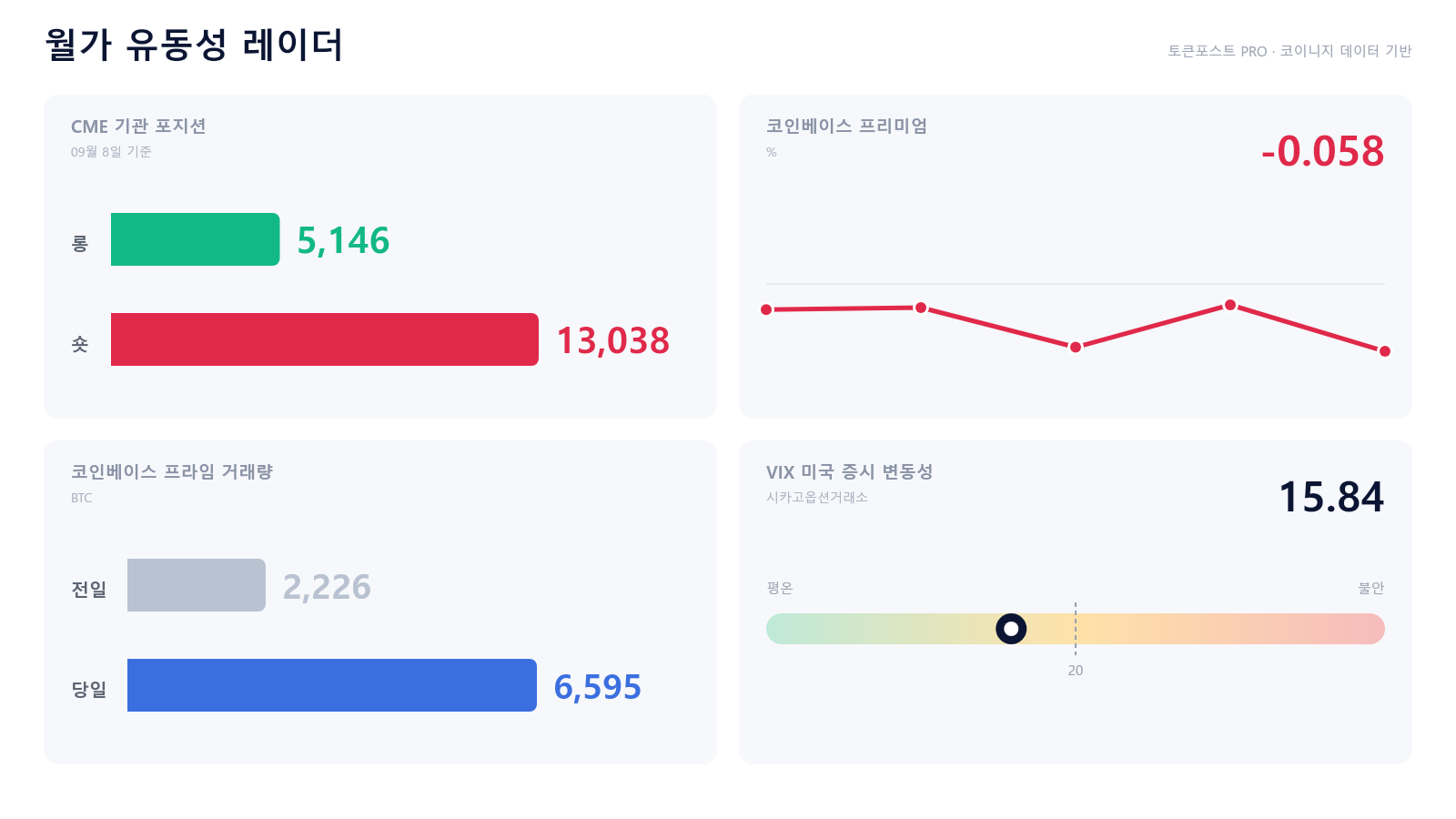
Coinbase Prime institutional trades jump 196%, but Bitcoin is cheaper in the U.S. than abroad
Why it matters: Rising institutional trades alongside a negative Coinbase premium show large players are active but cautious, with no signal yet of a sustained upward reversal.