Bitcoin price and crypto market news

BNB rises 2.63% to $733.4, nearing $740 resistance
Why it matters: The rally lacks volume confirmation, and the CLARITY Act's failure in the US Senate keeps regulatory risk for the market.

Crypto market cap rises to $2.62 trillion as bitcoin rebounds to $76,580 after Fed and CLARITY Act failure
Why it matters: The rebound rests on short liquidations rather than spot demand: the key level is $77,000, and a failure there could mean a return to $74,900.

Cboe: FLEX options volume hits 1.9 million contracts per day in Q1 2026
Why it matters: The growth of FLEX options and the launch of IBIT expirations give institutions a regulated tool to hedge bitcoin positions through Cboe and OCC.

Robinhood Chain tokenized stocks generate $9.7 billion in spot volume over 30 days
Why it matters: The growth confirms demand for round-the-clock on-chain stock trading and intensifies competition with traditional venues.

PUMP rises 9.6% to $0.0038 after buyback of 240 million tokens
Why it matters: The token buyback reduces supply, but the rally rests on speculation: sustained demand is needed to consolidate above $0.0036.

Meme coin WALLET on Robinhood Chain crashes 90% after Robinhood warning
Why it matters: It shows the risks of meme coins on new networks: infrastructure branding does not mean token endorsement, and holders bear the losses.

Sui co-founder buys 1% of ONE meme coin and hints at it in a tweet
Why it matters: It highlights conflict-of-interest risks when founders promote tokens in which they hold a stake.
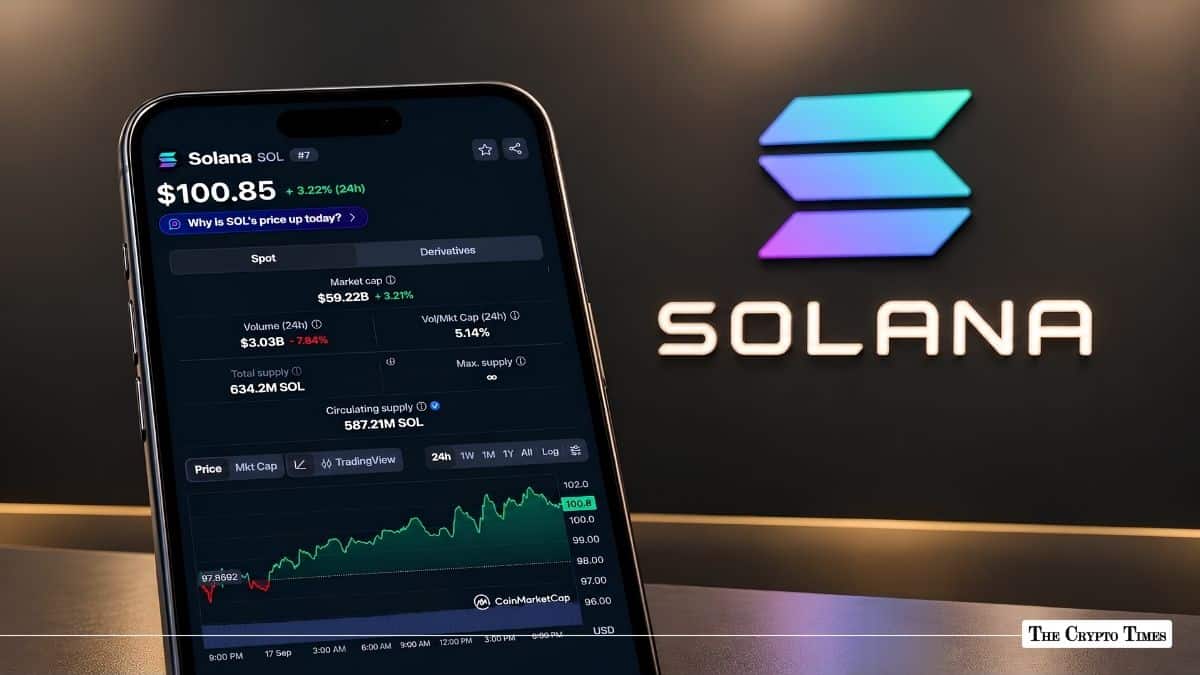
Solana above $100: traders watch for a breakout at $105
Why it matters: A breakout above $105 would confirm the bullish scenario and could accelerate gains toward $130, while a failure would return SOL to its range.
The DeFi Report: bitcoin is in an early bull-cycle phase
Why it matters: If the scenario holds, the current consolidation is accumulation ahead of a rally rather than a continuation of the bear market.
XRP falls below $1.30 as investor balks at $81B valuation
Why it matters: Pressure on XRP is being reinforced by a hawkish Fed and the failure of the CLARITY Act, limiting the altcoin's recovery.

Paradigm discloses ZEC investment; Fortitude mines 28% of network ahead of Nasdaq listing
Why it matters: Venture capital, a public miner and speculative demand are converging around Zcash at once, increasing the network's dependence on a single player and the risk of a sharp reversal.
ZEC at $1,480: 10.7% gain amid NU7 vote and derivatives surge
Why it matters: A break above $1,300 would confirm the rally's continuation, while a pullback could trigger leveraged position closures and a drop to $800.
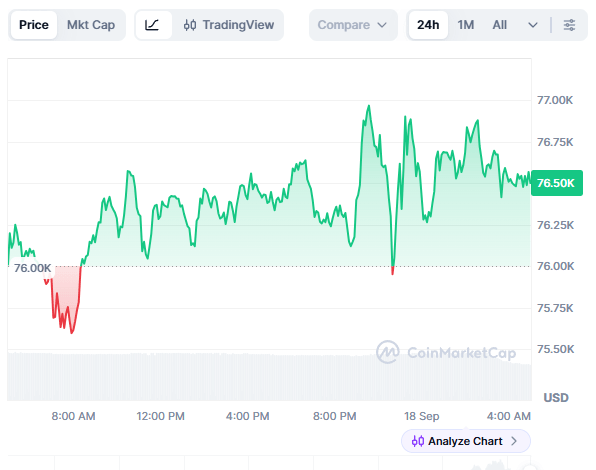
Bitcoin at $76,504, Ethereum at $2,448 as market shows mixed moves
Why it matters: Falling derivatives volume and capital rotation into altcoins point to a wait-and-see stance after the Fed's decision.
Canton (CC) rises 8.8% to $0.09, testing top of range
Why it matters: Holding the bottom of the range and rising volumes could provide momentum toward $0.125, but the higher-timeframe structure remains bearish.

Dogecoin stuck at $0.08 as whales buy 240 million DOGE on the dip
Why it matters: Compression across all timeframes and whale accumulation point to an imminent range breakout: a break above $0.09 would confirm a rally, while a drop below $0.079 signals a decline.
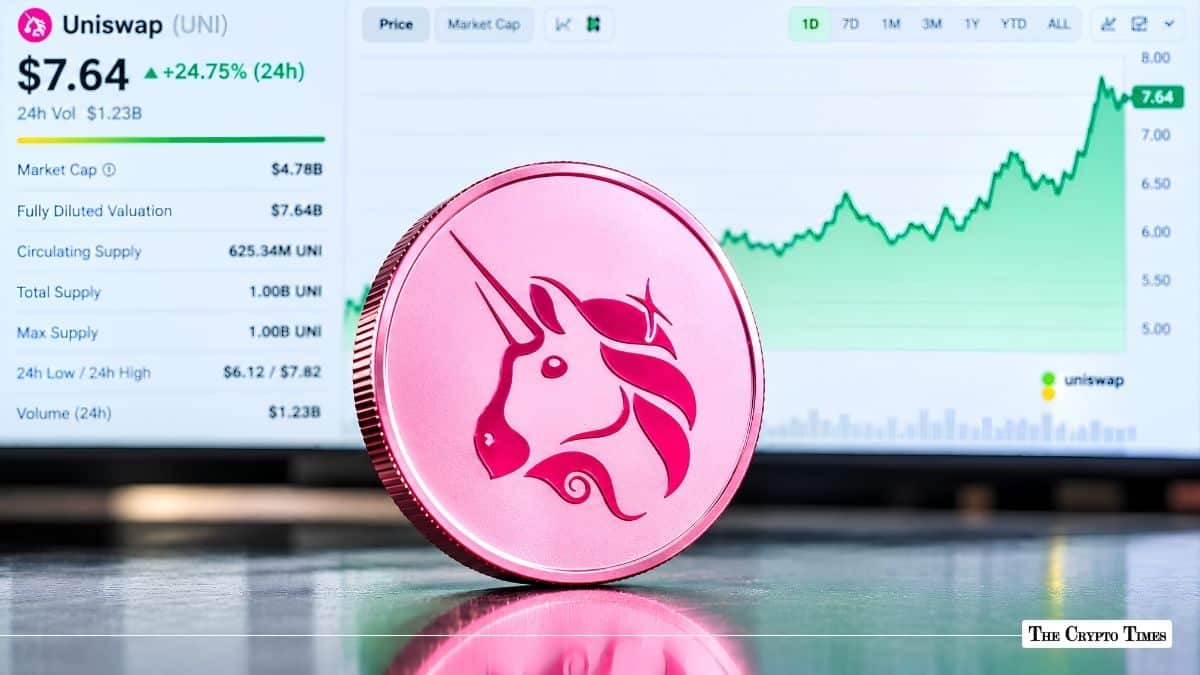
UNI jumps 23.5% to $7.65 on $1.27 billion in volume
Why it matters: The falling-wedge breakout and rising open interest point to a trend change; a weekly close above $7.78 opens the way to a $12.70 target.
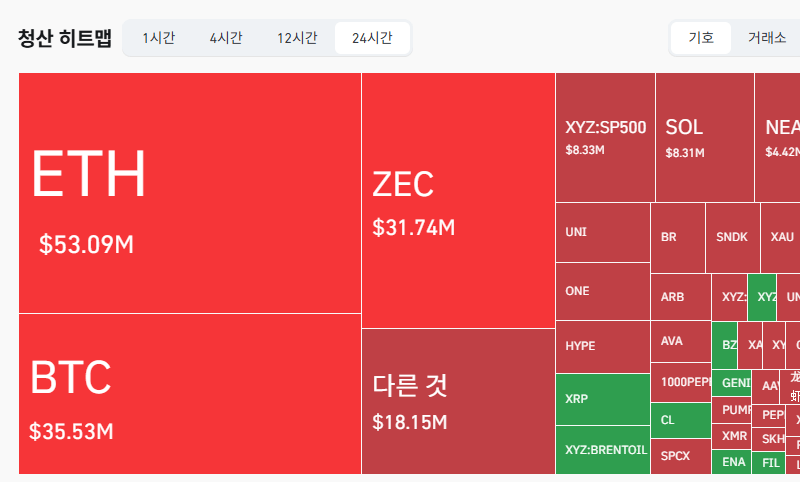
$154.5 million liquidated in 24 hours, 76.7% of it shorts
Why it matters: The dominance of short squeezes points to a market rebound after the hawkish FOMC, which could amplify volatility if key levels are broken.

Whales Accumulated 115K BTC from January to September 16, Started Selling in September
Why it matters: The shift by large holders toward selling could add pressure on the BTC price near $76,000.
Chinese Miner Jiang Zhuoer Buys Back All Sold Bitcoin, Sees $84,000
Why it matters: A major miner reversing from selling to buying is a signal of returning demand, but it is only a personal view, not a market fact.

OKX and TokenTerminal: RWA Futures Overtook Crypto Futures by Volume in July
Why it matters: A shift in demand toward RWA derivatives could change the structure of futures markets and reallocate trader capital.