Bitcoin price and crypto market news
Bitwise CIO: Bitcoin is not a gold replacement, price holds near $77,000
Why it matters: The Bitwise executive's statement influences the digital gold narrative, but without new catalysts the price remains range-bound.

Whale moves 1,260 BTC dormant for 10 years with 12,122% profit
Why it matters: Activation of old wallets could signal that holders are preparing to take profits, which weighs on the BTC price.

Bitcoin holds near $77,000 ahead of FOMC decision
Why it matters: A break above $80,000 or a loss of $76,000 will determine the market's short-term direction after the FOMC.
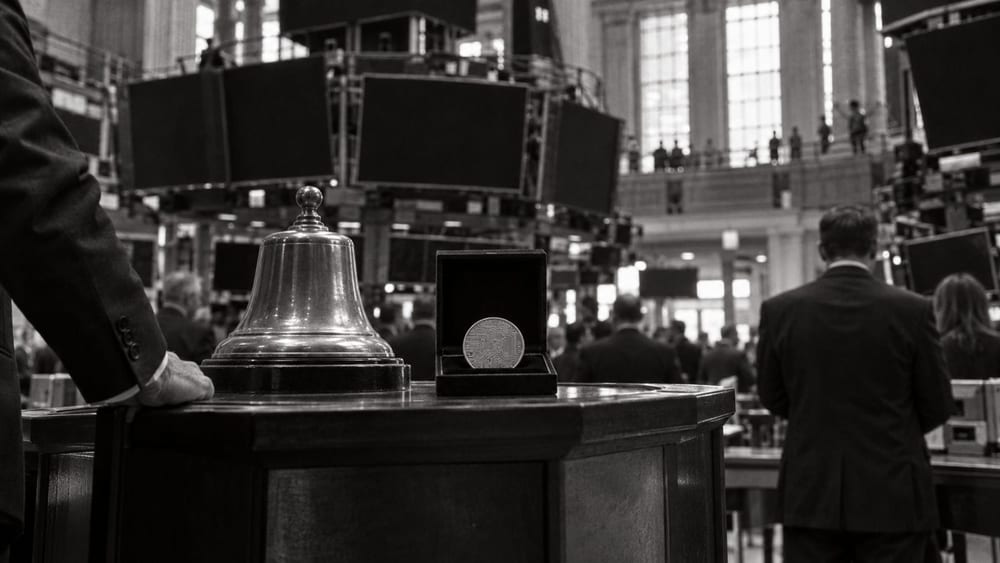
67% of managers allocate no crypto, 60% plan to within a year
Why it matters: The growing share of client accounts with crypto and managers' plans point to a gradual expansion of institutional access, though the samples are not representative.

Bitwise: 67% of asset managers hold no crypto in portfolios
Why it matters: It points to potential institutional capital inflows into crypto if managers' stated plans materialize.

Pump.fun rallies as open interest rises by $40.8 million
Why it matters: Rising open interest and whale buying may support short-term PUMP gains but increase the risk of a sharp correction if sentiment reverses.
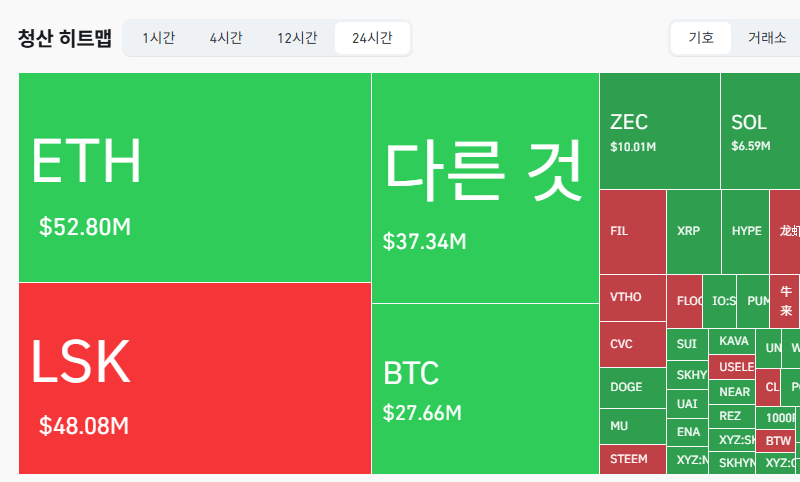
$118.59M in leveraged positions liquidated in 24 hours, 79% longs
Why it matters: The dominance of long liquidations points to pressure on buyers amid sideways BTC movement and declining altcoins.

Circle shares under pressure: $90 support versus Fed rate hike risk
Why it matters: The Fed's decision and the CLARITY Act vote will shape CRCL and the broader crypto sector next week.

MSTR, COIN and CRCL shares fell over the week, miners CLSK, HUT and MARA rose
Why it matters: The divergence between miners and crypto platforms shows a shift in investor demand toward direct BTC mining amid stagnant prices.
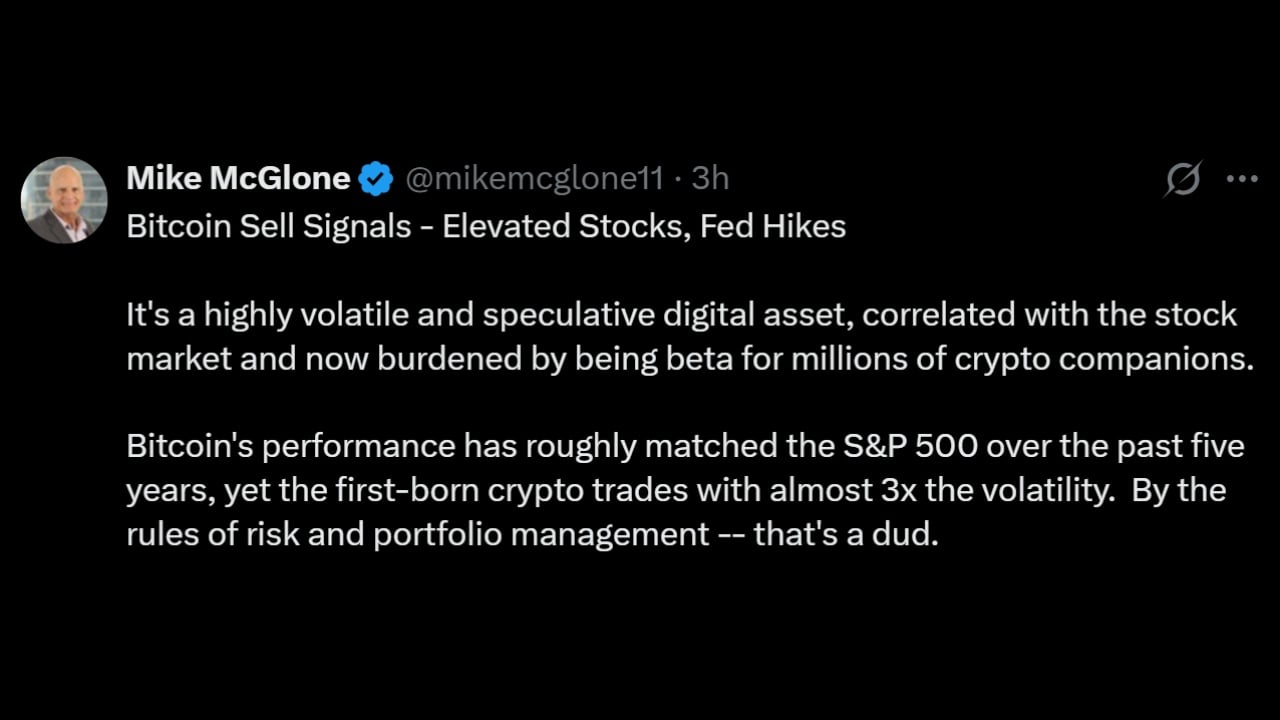
McGlone: a 20% S&P 500 drop could send bitcoin to $10,000
Why it matters: A warning of correction risk for holders of BTC and high-beta assets if the macro backdrop deteriorates.

Analysts: Bitcoin less than $5,000 away from bull market level
Why it matters: Both groups of large holders are selling while US funds aren't buying, raising the risk of a long squeeze and a drop to $70,000 support.
Analysts: Bitcoin needs $4,900 to confirm bull market
Why it matters: Whale selling and lack of US demand increase the risk of a long squeeze and a correction to $70,000.
Analysts: Bitcoin near bull market, but whales are selling
Why it matters: The simultaneous selling by whales and long-term holders in the $77,100–80,200 zone creates resistance for an upward breakout.
Analysts: Bitcoin $4,900 short of bull market signal
Why it matters: If Bitcoin fails to hold above $81,700, seller pressure and long squeezes could push the price to $70,000 support.
Analyst: Bitcoin less than $5,000 from bull market signal
Why it matters: If BTC fails to hold above $81,700, a long squeeze and a drop to $70,000 support are likely.
Mexico dismantles illegal crypto farm with 300 GPUs
Mexican authorities are investigating an illegal mining farm with about 300 GPUs in the state of Puebla, discovered due to abnormal energy consumption. Electricity theft from the state energy company is being probed; this is the fourth such operation in the region since the start of last year.
VVV falls 9.52% after 81% monthly gain
Venice Token (VVV) dropped 9.52% to $21.46, correcting 26.2% from its all-time high of $29.08 reached on September 9. Trading volume fell 18% below the 30-day average, indicating profit-taking rather than panic.
Bitcoin's 200-week moving average tops $65,000 for first time
Bitcoin's long-term support level — the 200-week moving average — has risen above $65,000 for the first time, according to Blockstream CEO Adam Back. The indicator climbed from $64,000 in August; BTC is trading in the $76,000–$77,000 range, providing a cushion above the historical 'bottom'.
Strategy issues bitcoin guide warning of 93% drawdown
Strategy, formerly MicroStrategy, published a bitcoin guide reminding investors of the asset's 93.1% crash in 2011 and its worst annual return of -83.6%. The company warns about leverage, options and counterparty risks while holding 845,050 BTC at an average price of $75,412.
Canary's spot TRX ETF debuts on Cboe with zero inflows
The Canary Staked TRX ETF (ticker TRXS) began trading on Cboe BZX: first-day volume was $16,700 with zero net inflows. The fund's roughly $50.38 million in assets came from seed capital rather than investor demand.