DeFi, stablecoins and network upgrades

Shibarium reorganization resolved as Shiba Inu team updates infrastructure
Why it matters: Restoring stability to the L2 network matters for SHIB holders and projects on Shibarium, but the impact on the token's price is limited.
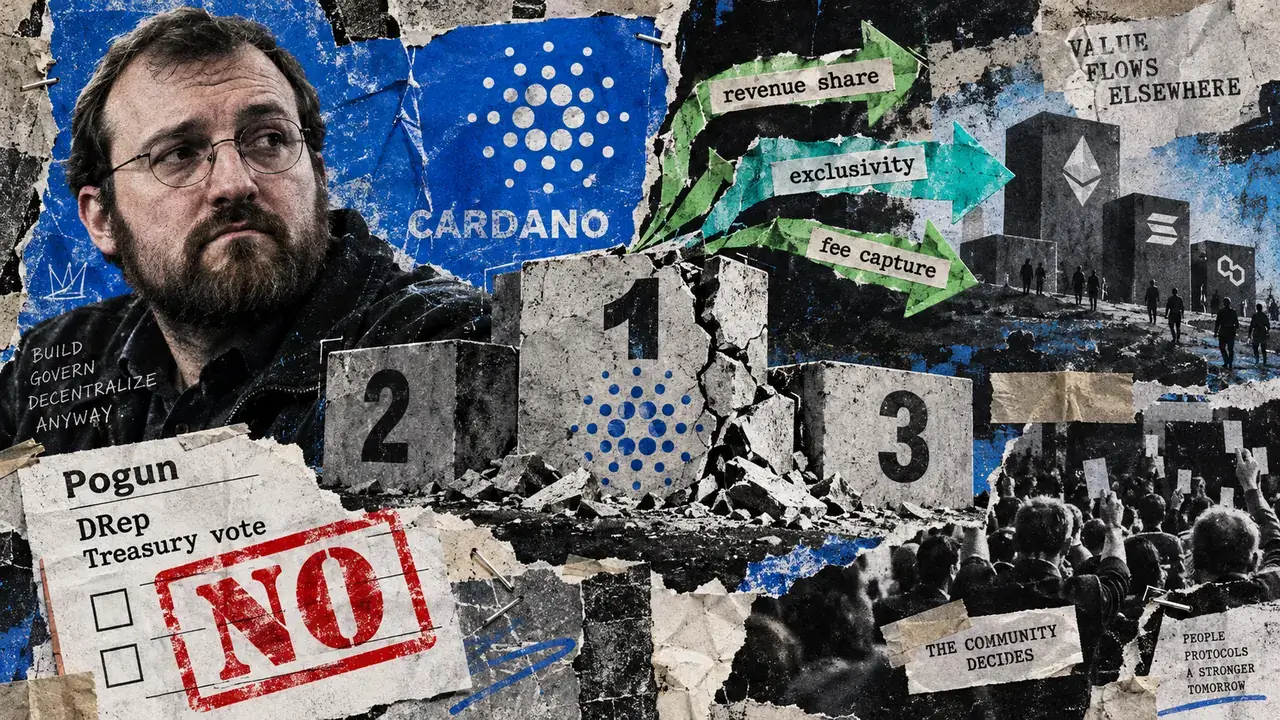
Cardano rejects Input Output's 12.29M ADA request as Hoskinson drops 'Cardano first' policy
Why it matters: Cardano showed its treasury is not controlled by the founding company, but the network will now have to compete for Input Output's future products.

Paxos's USDG logs $21.8 billion in Uniswap volume in September
Why it matters: The growth shows that integration with new Uniswap v4 infrastructure can give a stablecoin volumes comparable to major assets even with modest issuance.
Ripple connects XRP Ledger to Stripe's machine payments protocol
Why it matters: The integration expands XRP's use in payments for AI agents and machine-to-machine settlements, intensifying competition with other payment blockchains.

Solana moves to 250 ms slots: early data and instability risks
Why it matters: Faster slots speed up transaction inclusion but shrink the window for leadership transfer and repairs, raising the risk of correlated failures.

Paradex executes $15.76 million ETH options trade
Why it matters: The growth of RFQ venues like Paradex intensifies competition with Deribit, which holds about 85% of the BTC and ETH options market.

Hyperliquid open interest tops $8.1 billion, a record high
Why it matters: The on-chain exchange's growing share of the global derivatives market intensifies competition with CEXs and supports HYPE demand through burns.
Stellar activates Protocol 28 "Adapter" on mainnet
Why it matters: Growth in RWA and stablecoins on Stellar intensifies competition for institutional tokenization, but the effect depends on real Soroban adoption.

Zcash sets NU7 upgrade activation for November 5
Why it matters: Tripling block speed makes private payments more practical and could strengthen ZEC's position amid growing interest in privacy tokens.
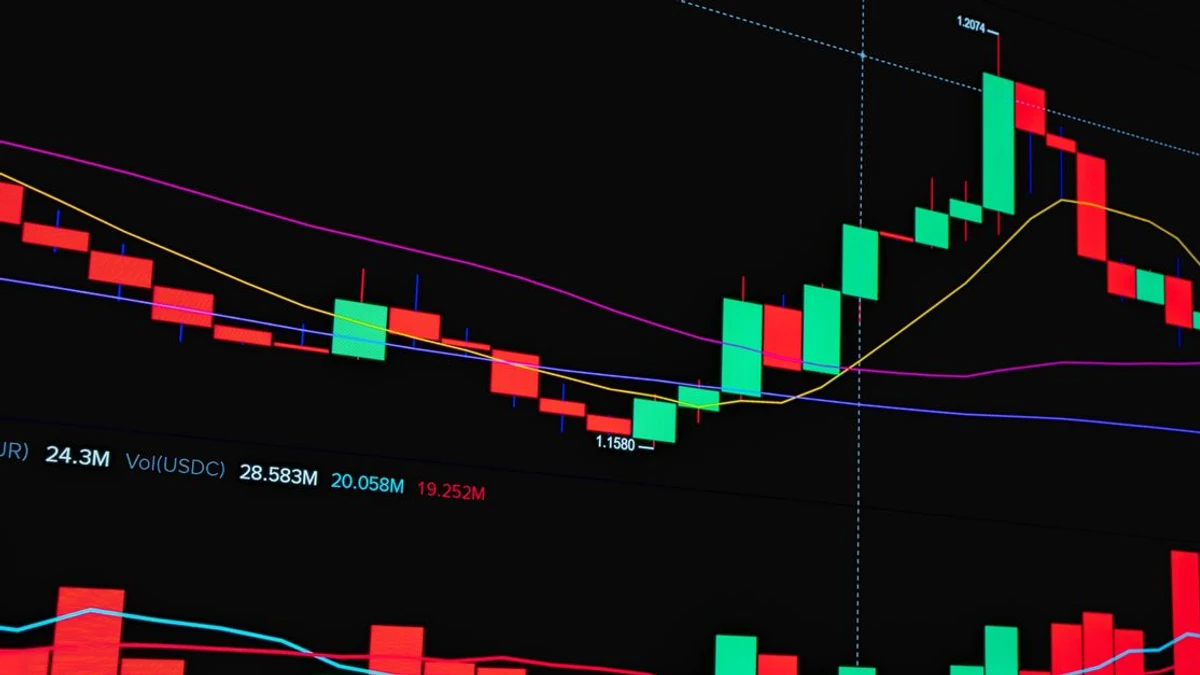
Tokenized ETF market cap hits all-time high of $680 million
Why it matters: The growth of tokenized ETFs signals rising institutional interest in blockchain-based instruments for traditional assets.

RWA market cap in DeFi reaches $46.2 billion, deposits at $3.6 billion
Why it matters: Growing RWA integration boosts liquidity and utility of DeFi protocols, attracting institutional capital.

Hyperliquid tops crypto protocol revenue ranking with $429M in 2026
Why it matters: Hyperliquid burns almost all revenue, reducing HYPE supply, but creates no reserves — leaving a limited buffer if volumes decline.

Injective completes first on-chain trade finance pilot with POSCO International and LG CNS
Why it matters: Tokenizing trade finance, a $5 trillion annual market, opens a major RWA market and attracts institutional players.

BNB back above $100B market cap as RWA growth on BNB Chain accelerates
Why it matters: RWA growth on BNB Chain strengthens the network's position, but its impact on BNB's price depends on whether those assets translate into real trading and fees.

Injective approves Meridian upgrade with 99% support
Why it matters: Injective is making compliance part of the protocol, which could attract institutional RWA issuance and boost demand for INJ for fees and governance.

Ripple burns 15M RLUSD worth $15M, stablecoin market cap rises to $2.42B
Why it matters: RLUSD's growth strengthens liquidity and institutional activity on the XRP Ledger, which could support XRP.

Hyperliquid launches manual lending backed by HYPE and Bitcoin
Why it matters: The service creates direct demand for HYPE and BTC as collateral and expands Hyperliquid's lending infrastructure beyond portfolio margin.

Aptos builds GPU rental infrastructure for AI agents settling in USDC
Why it matters: Aptos is positioning itself as the base settlement layer for AI-agent payments, which could broaden demand for USDC and network usage.

Token Terminal plans data platform for stablecoins and tokenized assets
Why it matters: Greater data transparency around stablecoins could draw new issuers and speed up institutional adoption.
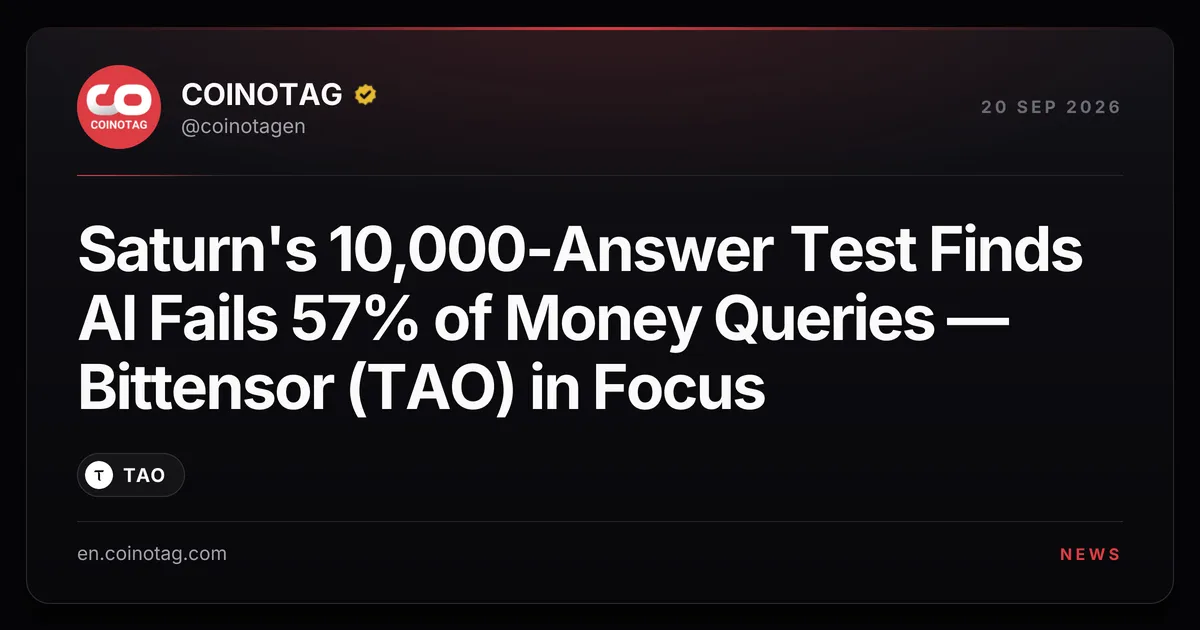
Saturn test: AI wrong on 57% of financial questions, Bittensor in focus
Why it matters: Weak AI performance on financial questions strengthens the decentralized AI narrative and could support demand for tokens like TAO.