Crypto news today

Coinbase to suspend trading in eight crypto pairs on September 15
Why it matters: The reduction in pairs lowers liquidity for the affected assets on Coinbase but does not mean the tokens themselves are being delisted.
Kelp suspends rsETH transfers for suspicious address for 24 hours
Why it matters: The episode is linked to the recent $7.73 million Safe multisig hack and heightens attention to restaking risks.
Ethereum at $2,540: $197M inflow into ETH ETFs and anticipation of CLARITY Act vote
Why it matters: The CLARITY Act vote and the Fed meeting will determine ETH's direction: a break above $2,550 opens the path to $3,000.
Ex-CCB Asia manager admits taking $470K USDT bribe
Why it matters: The case shows cryptocurrency is increasingly used for corrupt payments in Asia's traditional banking sector.

XRP and XLM jump 8% ahead of procedural vote on CLARITY Act
Why it matters: The law would classify XRP and XLM as digital commodities, reducing regulatory uncertainty for payment networks, but low odds of passage limit the rally's durability.
Jiangsu regulator warns against illegal financial schemes disguised as RWA
Why it matters: China is tightening its stance on real-world asset tokenization, which restricts RWA projects in Asia's largest market.

Ex-Los Angeles police officer gets 21 months in crypto entrepreneur case
Why it matters: The case shows how crypto assets feature in coercion and abuse-of-power schemes, heightening regulators' focus on criminal activity.

Canton Network unlocks $2.09M in CC tokens
Why it matters: The new issuance could increase selling pressure, but holding trend support would keep CC's recovery toward $0.125 intact.

WTO: stablecoin transfers up 35-fold, but regulators lag behind
Why it matters: Institutional stablecoin adoption is constrained by fragmented regulation rather than technology — a key risk for market growth.
XRP Ledger one vote short of launching Batch V1.1 upgrade
Why it matters: The Batch launch will simplify atomic payments and swaps on XRPL, potentially accelerating adoption of commercial projects built on Ripple.
Trader earns $1.26M on CL long on Hyperliquid
Why it matters: Rising oil prices heighten inflation risks ahead of the Fed meeting, while commodity contracts are becoming a notable segment of crypto derivatives.
BlackRock's IBIT bought $1.08B in BTC over 20 days, GBTC sold $254.7M
Why it matters: IBIT remains the main channel for institutional bitcoin demand, while GBTC continues to lose ground.
USDC.e and WETH go live on Neo X via Chainlink CCIP
Why it matters: It expands cross-chain liquidity for USDC and ETH, but the market impact is limited by the scale of the Neo X network.
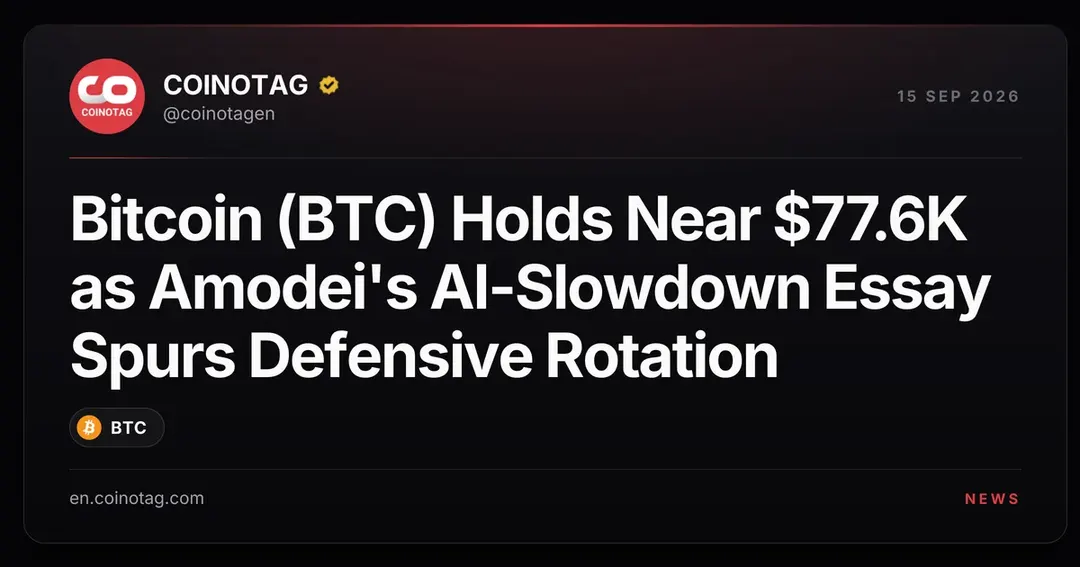
Bitcoin holds near $77.6K as Wall Street rotates into defensive assets
Why it matters: The market is awaiting the Fed meeting, and a flight to safety could add pressure on risk assets, including crypto.
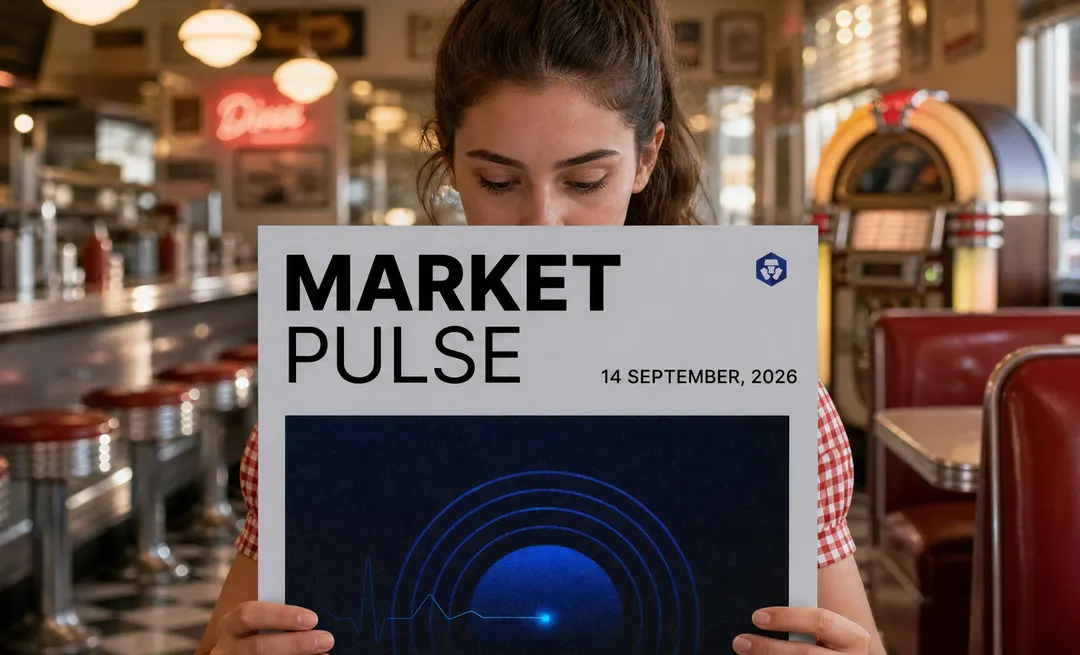
Crypto.com: Bitcoin SOPR above 1.0 for three weeks, but ETF outflows weigh on market
Why it matters: Improving on-chain profitability for BTC has yet to be confirmed by capital inflows: macro pressure and ETF outflows could delay a market reversal.
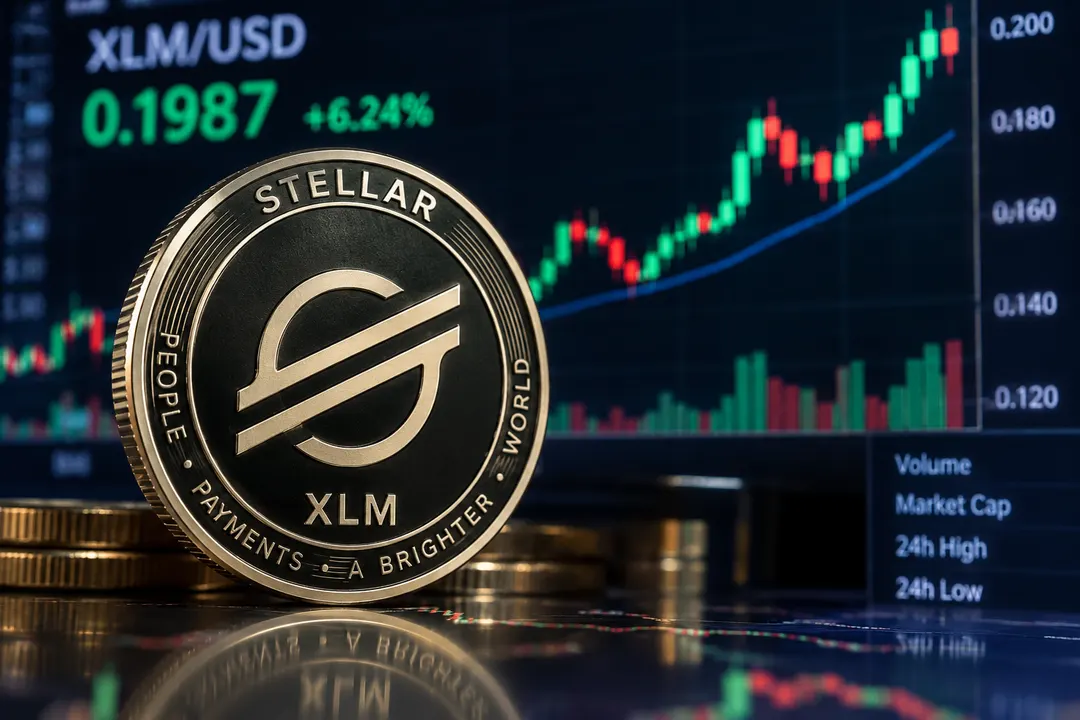
XLM rises 6% to $0.193 ahead of Protocol 28 vote
Why it matters: A successful upgrade and growing institutional use of Stellar could support a break above the $0.20 resistance.
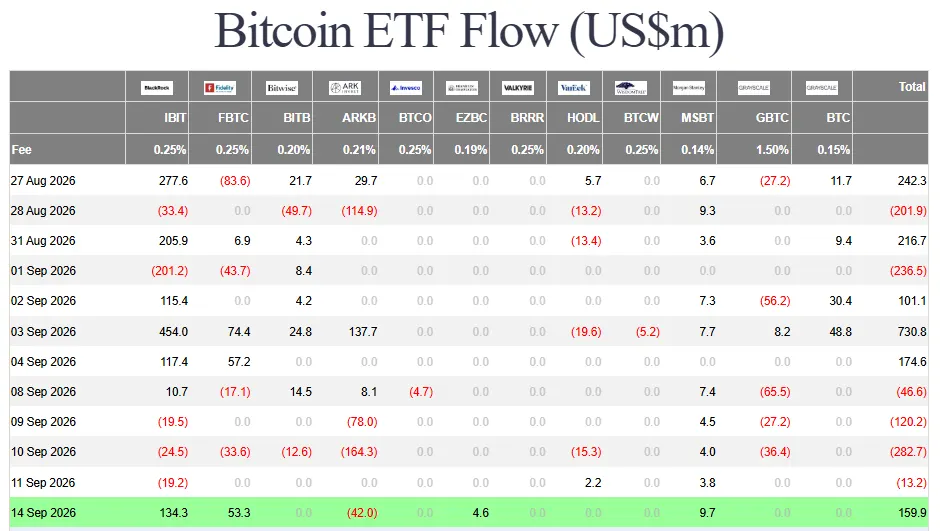
Bitcoin and Ethereum ETFs return to inflows as BlackRock pulls in $214.8M
Why it matters: The inflows ended the outflow streak, but capital is concentrating among the largest providers, weakening demand for smaller funds.
Ethereum Safe multisig exploited via Uniswap V4 hook, $7.73M lost
Why it matters: It highlights the vulnerability of Safe modules and Uniswap V4 hooks, as attackers use legitimate mechanisms to steal funds.

Uniswap launches API to optimize liquidity and guard against malicious hooks
Why it matters: Improved routing could boost trading volumes on Uniswap and intensify competition among DEXs.
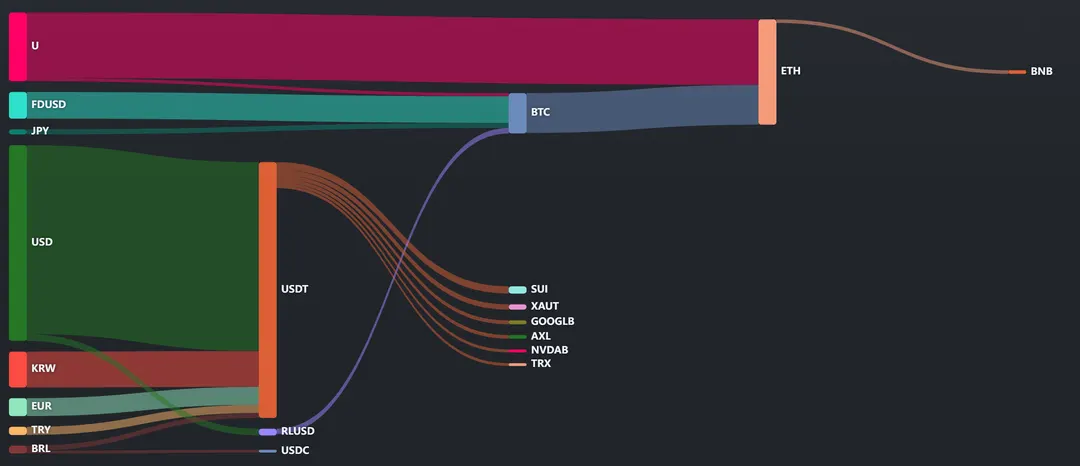
Ethereum sees $42.74M outflow in 5 hours, $10.83M inflow
Why it matters: The large net outflow from ETH and BTC points to profit-taking and caution ahead of the Federal Reserve meeting.