Crypto news today

U.S. DOJ: Hamas military wing told donors to avoid Binance
Why it matters: New confirmation of crypto exchanges being used to circumvent sanctions increases regulatory pressure on the industry.

Strategy's STRC fails to return to $100 par for fourth month
Why it matters: Problems with STRC undermine confidence in Strategy's model and its ability to support the dividend instrument amid market weakness.

Bitcoin options show put skew ahead of Fed meeting
Why it matters: The market remains positioned for gains but is paying for protection against a sharp drop, raising the risk of accelerated sell-offs around the Fed decision.

Pyth Network launches Pyth Pro and indices on Circle's Arc
Why it matters: Expanding oracle services on Arc could accelerate institutional adoption of DeFi infrastructure.

StarkWare launches quantum-safe bitcoin transaction contest with $20K prize
Why it matters: The work lowers the cost of protecting bitcoin from quantum threats without a hard fork, which is important for the network's long-term security.

U.S. overheating debate takes center stage before FOMC as market expects 0.25 pp hike
Why it matters: The Fed's decision will determine the trajectory of risk assets: a hawkish signal will increase pressure on bitcoin and the crypto market, while a pause could trigger a rebound.

Arc integrates with Polygon's Open Money Stack for cross-chain USDC payments
Why it matters: Simplifying cross-chain USDC transfers could accelerate stablecoin adoption and boost activity on the Polygon and Arc networks.

Lummis: crypto tax bill and bitcoin reserve advance in Congress
Why it matters: Clarifying tax rules and creating a BTC reserve could accelerate institutional inflows into the US crypto market.

Robinhood Chain overtakes Hyperliquid in daily app revenue
Why it matters: It shows that the Robinhood L2 network is already competing with the largest DeFi protocols on fees, but the figures are highly volatile.

Dunamu signs MOU with Kazakhstan on RWA tokenization and stablecoins
Why it matters: Korea's largest exchange is expanding into foreign markets through tokenization, which could accelerate institutional adoption of RWAs in Central Asia.

Morgan Stanley: some of bitcoin's 6 reversal signals are already present
Why it matters: The analyst stresses that the signals are not a forecast but an object of observation: several metrics aligning could point to a shift in the cycle phase.
New Fed forecast: rate near 4.1% by end-2026 hints at another hike
Why it matters: The signal of an additional hike and the fate of rate cuts in 2027 will set the tone for risk assets, including bitcoin.
36,573 ETH worth $87.5 million moved from Coinbase Institutional to unknown wallet
Why it matters: A large withdrawal from an institutional venue could indicate a change in the holder's strategy and increase ETH volatility.
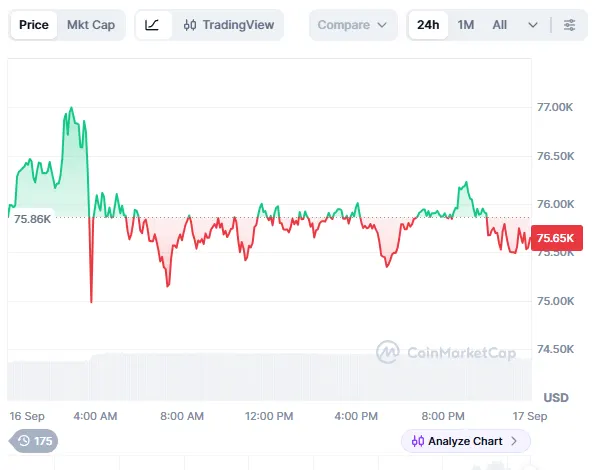
Bitcoin at $75,665, Ethereum at $2,393 as market weakens; XRP drops 8.4%
Why it matters: Falling derivatives volumes and rising BTC dominance point to trader caution and capital flowing into bitcoin.

Janus Henderson becomes Avalanche validator, expands tokenization push
Why it matters: A major institutional player combining the roles of issuer and infrastructure strengthens the tokenized RWA sector on Avalanche.

US Senate Republicans introduce new 635-page version of CLARITY Act
Why it matters: The new version could bring the bill back to a vote and shape US crypto market regulation for years to come.
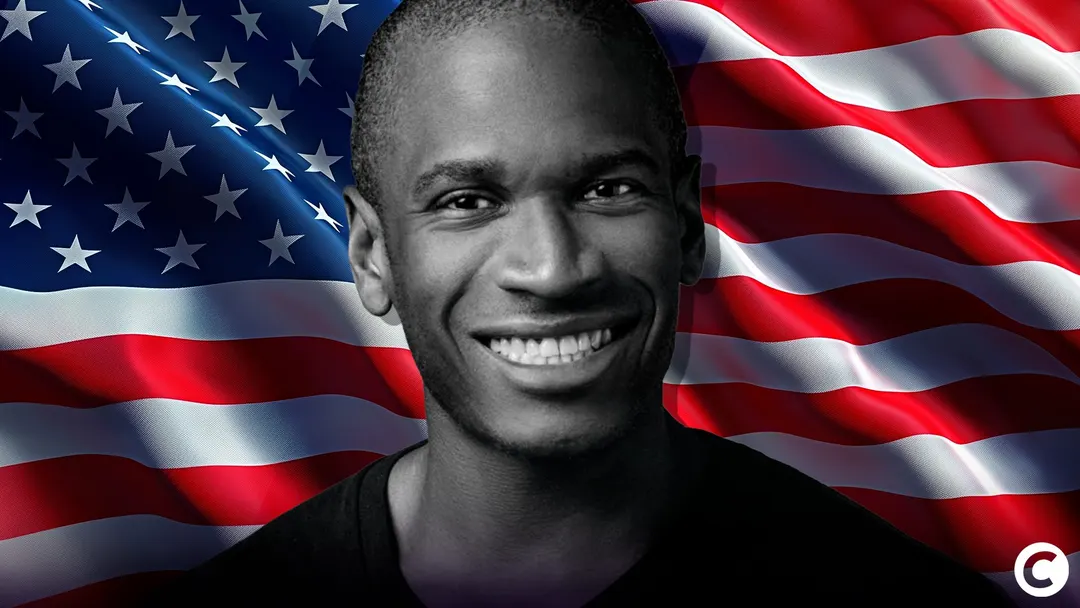
Arthur Hayes: Bitcoin will hit a new all-time high before year-end
Why it matters: The forecast sets a bullish narrative ahead of the Fed's rate decision, but Hayes's forecasts have historically had low accuracy.

BoE FPC member: mass stablecoin redemptions could hit the US Treasury market
Why it matters: Stablecoins have become a major holder of US government debt, and a wave of redemptions could amplify volatility in the Treasuries market.

Coinbase cuts trading fees for active Advanced users
Why it matters: The fee cut intensifies exchange competition for active traders and could boost trading volumes on Coinbase.
Cardano joins x402 codebase: native AI-agent payments on the network
Why it matters: The native integration lowers tooling support costs and opens the AI-agent payments market to Cardano.