Crypto news today

PUMP retreats 29.5% from August peak and tests $0.00317 support
Why it matters: Holding $0.00317 will determine whether the August momentum persists; a break below $0.00265 would open the way for further declines.

US House committee approves bill to buy bitcoin with budget funds
Why it matters: Legislating a US bitcoin reserve could create permanent state demand for BTC.

ETH falls 4% after CLARITY Act failure as whales accumulate 200K ETH
Why it matters: Shrinking exchange supply and whale buying support ETH, but the key level is $2,270 at the intersection of the 50- and 200-day EMAs.
Ondo Finance connects tokenized funds to US fund distribution networks
Why it matters: It expands distribution channels for tokenized assets beyond crypto and could accelerate institutional capital inflows into RWA.

Bank of England holds rate at 3.75% as US releases three macro indicators
Why it matters: Hawkish BoE signals and strong US data will tighten financial conditions and could add pressure on bitcoin and risk assets.

Blockstream refuses to pay bug bounty, vows to recover 598.5 BTC via court
Why it matters: The case shows that even a federated bitcoin sidechain must rely on the law, not code, to recover stolen funds.

Crypto market cap rises to $2.58 trillion after Fed rate hike
Why it matters: The market had already priced in Fed tightening, so no sell-off followed; further gains require holding above $2.66 trillion.
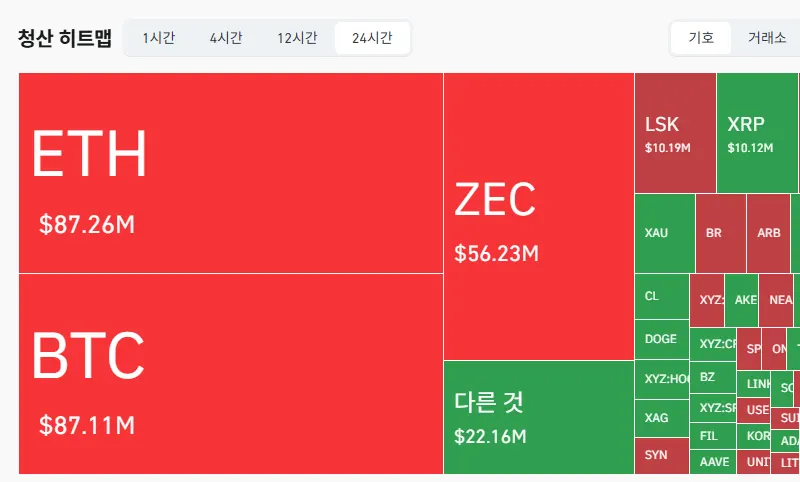
$271.76 million liquidated in 24 hours, 62.45% in shorts
Why it matters: The dominance of short liquidations points to a market rebound after the hawkish FOMC and growing pressure on sellers.

Korean brokers sought digital ETFs, but the government approved leveraged ETFs
Why it matters: Pressure from Korea's financial lobby could speed up approval of crypto ETFs and RWA tokenization in the country.

Hong Kong's first five-year plan bets on tokenization, not cryptocurrencies
Why it matters: Hong Kong is cementing digital assets as part of financial infrastructure rather than a separate crypto industry: growth in tokenization and licensing without leniency for token issuance.

BTCPay Server: default passwords, not code, caused the fund theft
Why it matters: It shows that weak passwords and shared credentials are more dangerous to Lightning node operators than code bugs.

PONS rises 10% in 24 hours, market cap tops $650 million
Why it matters: The memecoin's rising market cap points to continued speculative demand in the small-token segment.

Hong Kong to allow stablecoin and tokenized asset trading
Why it matters: Hong Kong is expanding regulated infrastructure for stablecoins and RWAs, intensifying competition for institutional crypto capital in Asia.

Block Scholes: Bitcoin and Ethereum IV around 38-39% and 52-54% ahead of FOMC
Why it matters: Low and flat IV ahead of the FOMC points to a lack of explicit hedging, raising the risk of a sharp move on a rate surprise.

UK to split payments and lending in stablecoin rules from 2027
Why it matters: The UK is setting a model of split stablecoin regulation that will determine issuers' and exchanges' access to the UK market.
Evernorth: Wall Street isn't waiting, it's already deploying XRP infrastructure
Why it matters: RLUSD's growing share and Evernorth's Nasdaq plans show that XRP's institutional infrastructure is developing independently of the CLARITY Act's fate.

India's government comes out against crypto regulation
Why it matters: India is one of the largest crypto markets; the absence of regulation keeps pressure on local exchanges and investors.

Trader buys 3.25 million SYN on Aster DEX with 4x leverage, earns $304K
Why it matters: SYN's more than doubling drew in leveraged speculative capital, raising the risk of a sharp correction if the trend reverses.
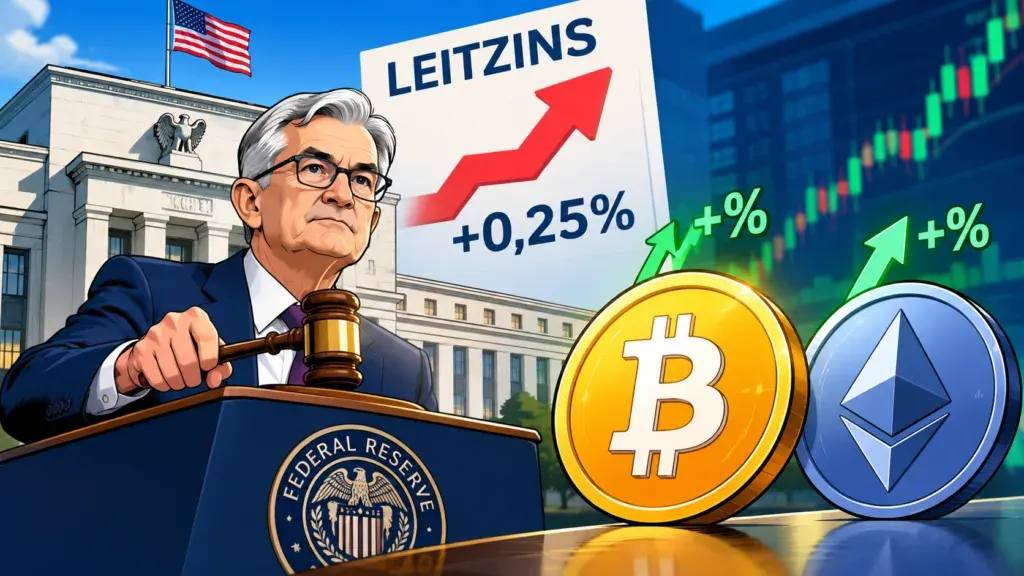
Bitcoin and Ethereum rise after Fed rate hike, Deutsche Bank to enter crypto custody
Why it matters: Deutsche Bank's entry into crypto custody strengthens institutional infrastructure, while BTC and ETH holding up after Fed tightening reduces the risk of further selling.

Binance AI tool tops 280,000 queries per day
Why it matters: Growing user engagement could affect trading volumes and set a standard for other exchanges.