Crypto news today

Robinhood: crypto is just the first step into the Canadian market
Why it matters: A signal of Robinhood's expansion beyond the U.S. intensifies competition in the Canadian crypto market.

RWA holders jump 86% in a month amid regulatory easing
Why it matters: RWA infrastructure is shifting from asset issuance to trading and settlement, expanding the investor base even as capitalization stagnates.

BlackRock's IBIT draws $183.7 million in a day
Why it matters: Inflows into the largest bitcoin ETF serve as an indicator of institutional demand for regulated BTC exposure.
Common Prefix formally verifies XRP Ledger lending protocol
Why it matters: A formal proof of the lending protocol's security reduces exploit risk and boosts confidence in lending on the XRP Ledger.
Grayscale to split Zcash ETF ZCSH shares 3-for-1
Why it matters: The split lowers the per-share price and improves accessibility of the instrument for retail investors, which could support inflows into the Zcash ETF.
Canaan shares rise amid bitcoin and crypto stock rally
Why it matters: The rise in mining stocks alongside bitcoin reflects a return of risk appetite in the crypto sector.
Bitcoin reclaims $77,000 after 4-hour chart structure shift
Why it matters: Holding the FVG would confirm a bullish reversal and open the path to $80,000, while a breakdown would cancel the upside scenario.

Bitcoin at $78,100 after Bank of Japan hikes rate to 31-year high
Why it matters: BTC rising despite hawkish policy from the Bank of Japan and the Fed shows resilient demand; a break above $80,000 would open the path to $82,000.
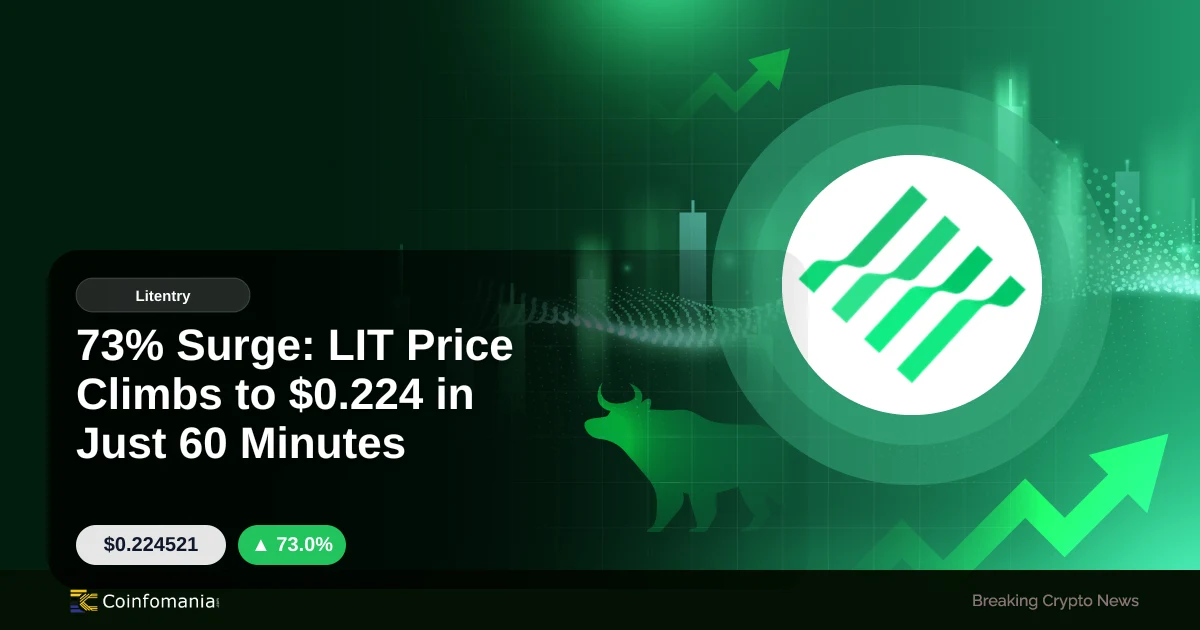
LIT jumps 73% to $0.224 in an hour
Why it matters: A rally on thin volume with no clear catalyst is a speculative spike, carrying the risk of a sharp pullback to the $0.13 support.

Nimiq loses $50,463 in smart contract exploit
Why it matters: The incident is a reminder of the risks of unvalidated parameters in DeFi contracts and could add pressure on Nimiq's reputation.

UNI and HYPE surge 30% and 13% on SEC tokenization rules
Why it matters: The rally in DEX tokens shows tokenized stocks are becoming a key driver of volume on on-chain venues.

Solana DEXs process 208 million trades in a week, surpassing NYSE
Why it matters: The growth in trade counts and tokenized stocks on Solana intensifies competition with traditional exchanges, though the metric includes bots and small swaps.

Japan police: North Korean IT worker applied to bitFlyer
Why it matters: Crypto exchanges remain a target for North Korean IT workers and hackers, raising hiring and infrastructure security risks.
Bitcoin climbs above $78,000 after Fed and Bank of Japan rate hikes
Why it matters: The rally despite tightening by two central banks points to short covering; holding above $78,000 would open the path to $80,000.
Coinbase CEO: CLARITY Act failure killed ethics rules, not the bill's core
Why it matters: Without the law, US crypto regulation shifts to the SEC and CFTC, which could mean looser rules in the short term.

XRP open interest on Binance returns to pre-CLARITY Act vote level
Why it matters: Rising open interest signals a return of speculative appetite, but the dollar value of positions is lower, so sustainability depends on holding the $1.28 support.

D'CENT reports unauthorized app-wallet transfers; Trezor hit by 347K email leak
Why it matters: The risk to self-custodial wallets is shifting from device hacks to seed phrase and data leaks, so holders should review approvals and move assets.

Pi Network falls 15% and loses $1 billion market cap
Why it matters: The continued downtrend and loss of the $1 billion market cap point to PI weakness amid tightening liquidity.

Ethereum at $2,500: a break above $2,550 opens the way to $2,800
Why it matters: A close above $2,550 would confirm a breakout from the range and could accelerate gains toward $2,800, while losing $2,442 would return ETH to $2,400.

Bybit launches 24/7 Perp Options on SpaceX and Nvidia perpetuals
Why it matters: Exchanges are expanding synthetic equity exposure outside US market hours, intensifying competition with regulated options.