Crypto news today
AIA updates ecosystem: DeAgentAI launch, token buyback and 3-year vesting
Why it matters: Directing all revenue to the fund under the control of $AIA holders strengthens the link between the token and project income, but the 3-year vesting increases future supply.

Bankr connects crypto wallets to Meta's Muse AI agents
Why it matters: Mass-market AI agents with wallets could become a new channel for on-chain activity and demand for tokenized assets.
CFTC sends new crypto market regulation proposal to White House after CLARITY Act fails
Why it matters: The CFTC is taking the initiative on crypto regulation amid the stalled legislation, which will speed up the emergence of market rules.

Dutch woman arrested over murder-for-hire paid in Bitcoin
Why it matters: The case shows that Bitcoin payments on darknet platforms leave a trail for investigators, but victims of scam sites lose money without the order being carried out.

ARB Jumps 26% to $0.21 on Rising Network Activity and Revenue
Why it matters: Rising activity and revenue on Arbitrum underpin the ARB rally; holding $0.20 would preserve the bullish structure, while losing it would weaken the breakout.

Bitcoin Falls Below $76,000 After CLARITY Act Vote Fails
Why it matters: The CLARITY Act's failure delays regulatory clarity in the U.S., adding pressure on bitcoin ahead of the Fed's decision.

Coinbase Files to List Perpetual Futures on 50–60 U.S. Stocks
Why it matters: The filing will show how U.S. regulators draw the line between crypto derivatives and traditional assets in perpetual contracts.
Depots Proposal Aims to Simplify Lightning Self-Custody
Why it matters: Lower capital requirements could accelerate mass adoption of self-custodial Lightning wallets.

XRP ETFs Draw $1.71B, but XRP Remains 64% Below Its Peak
Why it matters: ETF inflows create demand, but holder selling and macro pressure are preventing XRP from recovering to its peak.

UNI Rises 48% to $8.87 After SEC Opens Door to Tokenized Stocks
Why it matters: Regulatory recognition of the AMM model could give Uniswap a new use case, but it does not guarantee a rise in the value of the UNI token.
Latin Link Launches USDT and USDC QR Payments Across Eight Networks
Why it matters: It expands stablecoin acceptance in Latin America, where USDT and USDC are widely used for payments.
XRP Ledger Payment Volume Tops 1.1 Billion XRP in a Day
Why it matters: Rising payment volume and transactions give XRP additional support, but the drop in active users casts doubt on the sustainability of the surge.

US Labor Dept proposes rules for private assets in 401(k) plans
Why it matters: The rules could open private assets to 90 million 401(k) participants, but they do not guarantee returns or remove investment risks.
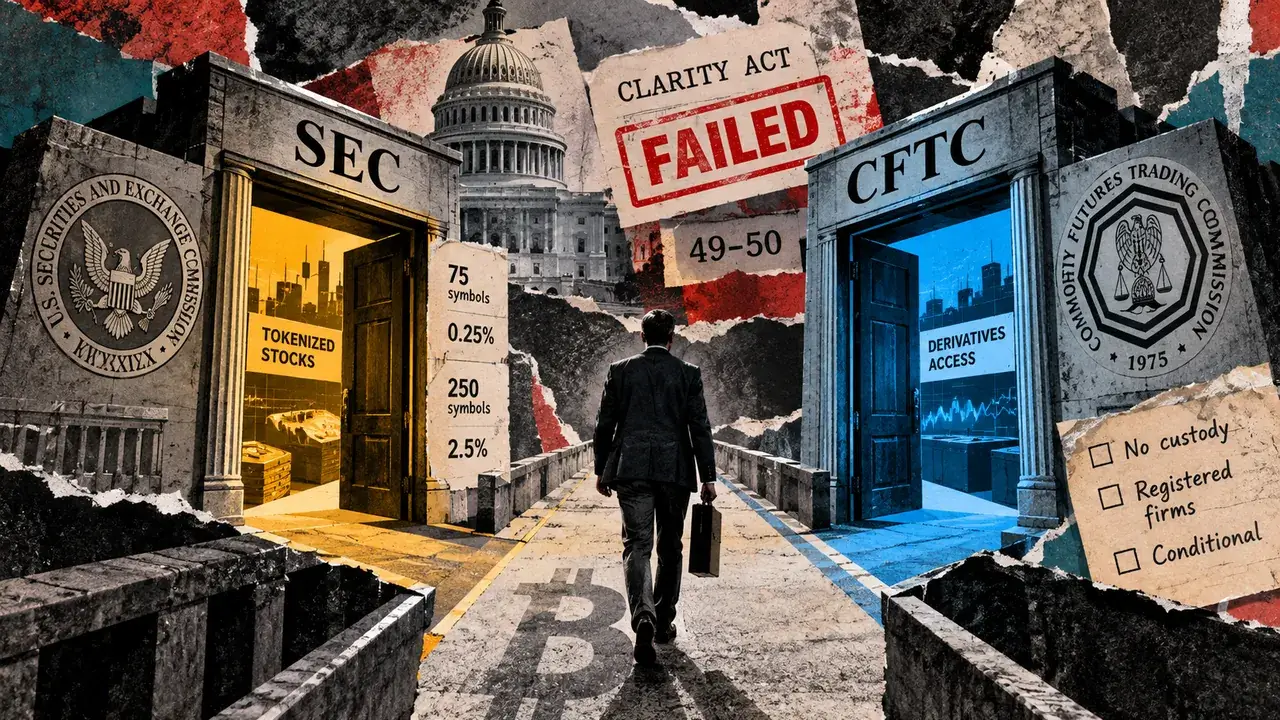
SEC and CFTC bypass Congress to open crypto access after CLARITY Act fails
Why it matters: US regulators are bypassing Congress to avoid losing the tokenization race, but narrow and temporary measures do not replace full market rules.

Deutsche Bank discloses plans for crypto custody services
Why it matters: A major bank entering crypto custody strengthens institutional infrastructure as older exchanges exit the market.

Ethereum Institutional backs shorter Ethereum block times
Why it matters: Faster blocks will cut latency and fees, which matters for the inflow of institutional capital into Ethereum.

XRP at $1.33: bearish structure holds until $1.3726 breakout
Why it matters: A break above $1.3726 would bring the $1.4961 high back into focus, while rejection at resistance keeps the risk of a drop to $1.10 alive.

Hyperliquid Strategies shares jump 8% after SEC approves tokenized stock trading
Why it matters: The SEC decision opens a path for tokenized stocks in the US and boosts demand for onchain infrastructure such as Hyperliquid.

Tokenized assets top $17 billion as onchain finance grows
Why it matters: Onchain finance with built-in compliance is challenging traditional Wall Street infrastructure, but custody and the legal status of tokens remain unresolved.
Strategy shares rise 3% premarket after SEC tokenization exemption
Why it matters: SEC and CFTC regulatory clarity supported crypto stocks even amid the CLARITY Act's failure and the Fed's rate hike.