Crypto news today

PIEVERSE hits $1.87 high, retreats to $1.64
Why it matters: The correction in a low-liquidity altcoin after a 375% yearly rally could deepen if the market weakens further.

ARB retreats 3% to $0.212 after 133% monthly rally
Why it matters: The pullback on record volume at resistance points to profit-taking; a loss of $0.2017 would open the way to the SMA-5 at $0.1929.

MetaDAO: $624.7 million in bids, but only $45.4 million actually raised
Why it matters: The case shows that bid volume does not reflect real demand for tokens and requires scrutiny of counting methodology when evaluating platforms.

TIA rises 8.9% in 24 hours and 21% over the week
Why it matters: TIA's rebound reflects capital rotation into infrastructure altcoins, but the long-term trend remains weak — the price is below the SMA-200.

VET rises 11.85% to $0.0084 amid market rally and Interstellar upgrade
Why it matters: VET's rise is part of capital rotation into altcoins after bitcoin's return to $81,000, but technical indicators point to correction risk.

PEPE rises 8.96% to $0.0000039 on above-average volume
Why it matters: The rise in meme coins on volume signals a return of risk appetite, but the gap from highs indicates a recovery within a bearish cycle.
ALGO rises 9.19% to $0.102 on volume 181% above average
Why it matters: Breaking the SMA-200 for the first time in a while could signal a trend change, but without a fundamental catalyst the rally is vulnerable to a pullback.

SUI rises 14.4% over the week and tests $0.84 resistance
Why it matters: A close above the SMA-200 would confirm a trend reversal and open the way to $0.88; failure would return the price to the $0.78 range.

Canton (CC) falls 2.6% to $0.105 after pullback from $0.113 resistance
Why it matters: The pullback on declining volume looks like profit-taking rather than a reversal: holding $0.104 would keep alive the chance of another test of $0.113.

Ethereum staking queue outpaces withdrawal queue by 13.6x
Why it matters: Locking up a third of ETH supply reduces free liquidity and lowers the risk of a sudden influx of coins hitting the market.

Exchanges received 4,751 BTC in a day as Asia trading volume fell 69%
Why it matters: Rising BTC exchange reserves increase seller pressure, while the drop in Asian activity points to weakening demand in the region.

Saudi Arabia exits China's CBDC-based mBridge payment system
Why it matters: The departure of the largest oil exporter weakens a project for settlements bypassing SWIFT and dollar clearing, reducing risks to the dollar system.

7 million BTC under quantum threat as BIP-360 remains just a proposal
Why it matters: The quantum threat to old bitcoin addresses remains unresolved, which could weigh on holders' long-term confidence.

HYPE holds near $90.64 after record $94.41
Why it matters: Rising protocol revenue and the lending launch support the trend, but falling volume near the high raises the risk of a correction.

Circle CEO: the era of crypto hype is over, blockchain is becoming infrastructure
Why it matters: A signal of crypto shifting from speculation to infrastructure for payments and AI agents, supporting long-term demand for USDC and stablecoins.

Bybit CEO: bitcoin is still far from 'digital gold' status
Why it matters: The view from the head of a major exchange reflects lingering institutional doubts about BTC as a store of value.

Bitcoin holds $80,000 but trading volume drops 46% as exchange inflows rise
Why it matters: Rising exchange reserves and falling volumes point to possible strengthening seller pressure around $80,000.
Vitalik Buterin pushes back on 'death of privacy' claim
Why it matters: A signal that privacy remains a priority for Ethereum amid growing interest in Zcash and private solutions.

Robinhood Chain generated $4.5M in fees while Ethereum got just $400
Why it matters: Growth of L2 networks does not bring Ethereum commensurate revenue, calling into question its economic model and ETH holder income.
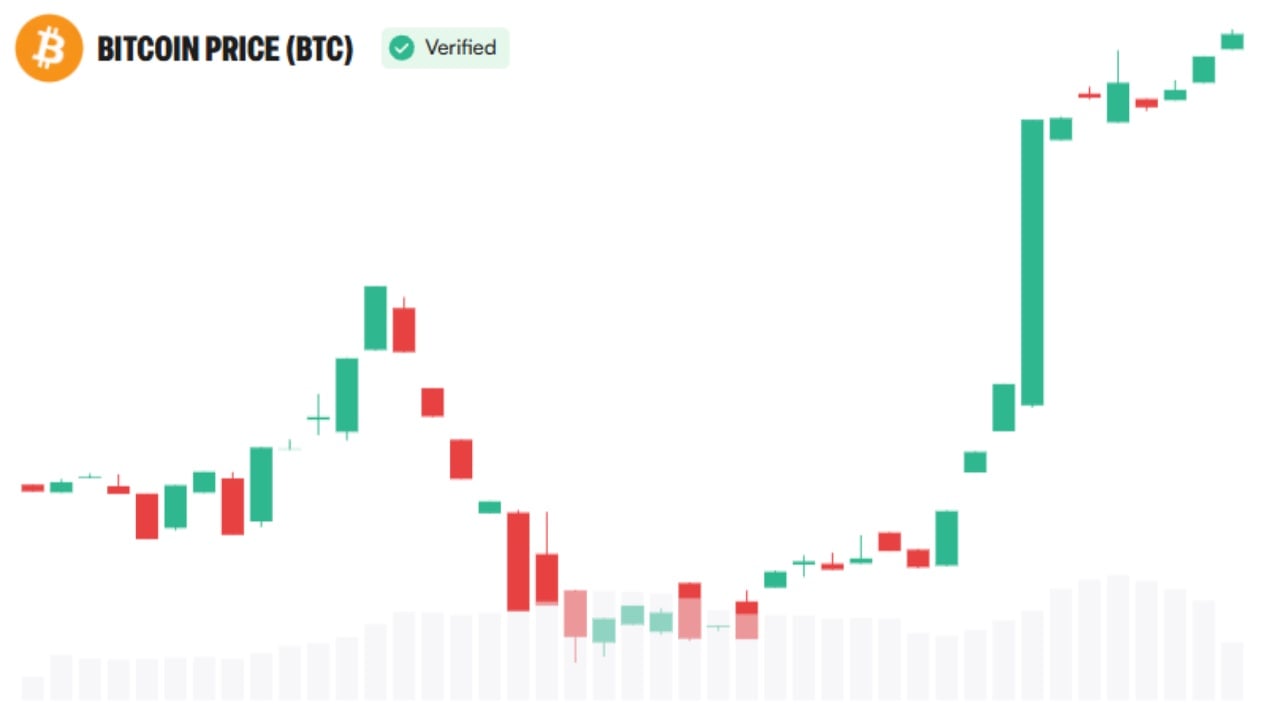
Arthur Hayes calls CLARITY Act 'nonsense' as bitcoin tops $80,000
Why it matters: Hayes puts money flows above regulation: rising rates support demand for risk assets, though his own forecast allows for a drop to $50,000.